•
•3mo ago
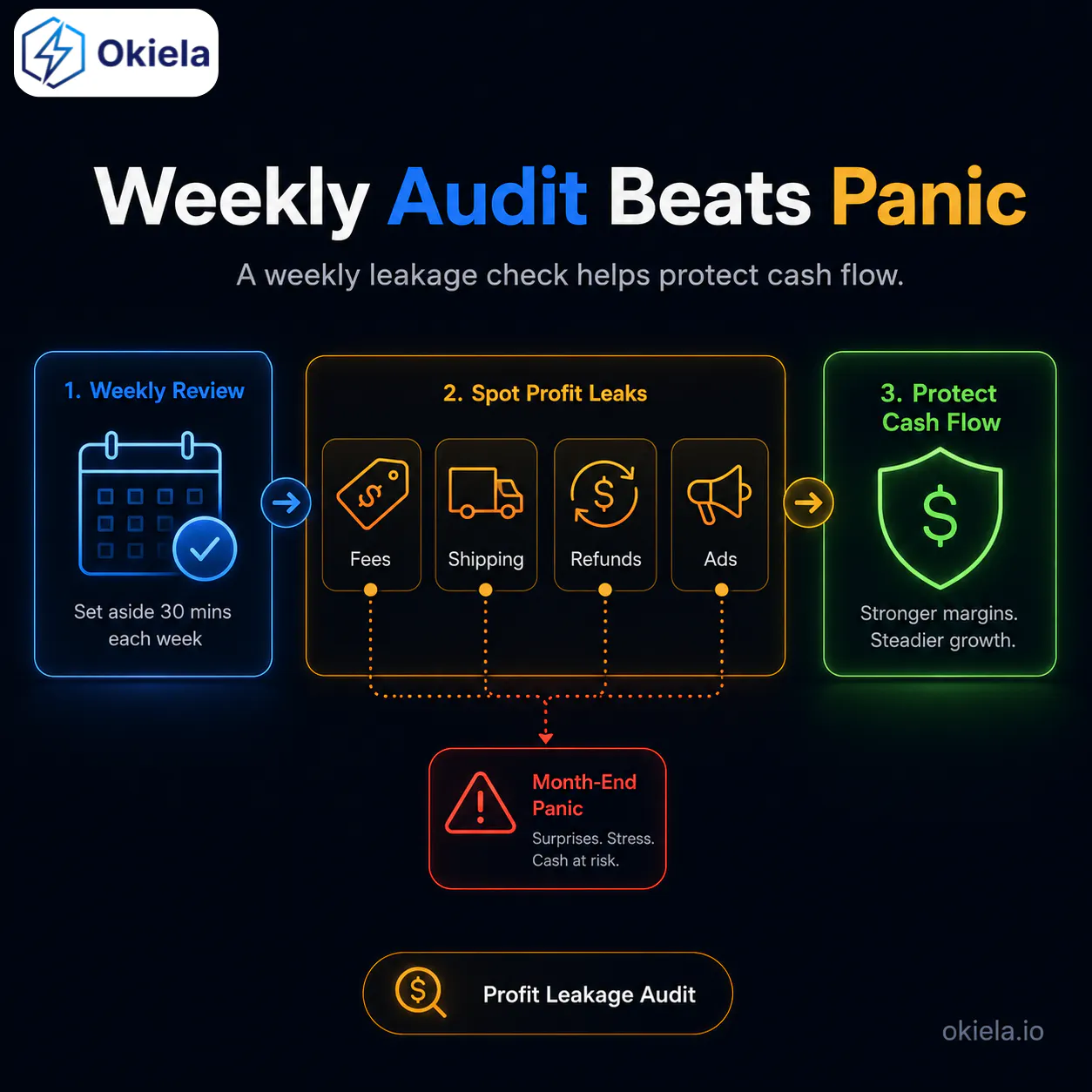
Weekly audit BEATS month-end PANIC...
Weekly audit beats month-end panic.
For ecommerce sellers, waiting until the end of the month to review profit can be too late.
By then, many small leaks may already have affected cashflow:
COGS gaps
payment fees
shipping subsidies
refunds
ad spend
discount stacking
low-margin bestsellers
A weekly profit leakage check does not need to be complicated.
It should answer a few practical questions:
What changed this week?
Which SKU became weaker?
Which offer got too expensive?
Which cost layer moved?
Which orders looked good on revenue but kept less profit than expected?
Month-end reporting explains what happened.
Weekly leakage review helps sellers catch what is happening.
Okiela helps ecommerce sellers find hidden profit leaks by SKU, order, and channel.
Find the hidden profit leaks draining your store. Send one order export and get your 3 biggest profit leaks in 48h: okiela.io/audit
#EcommerceProfit #Shopify #DTC #Okiela
 •
•3mo ago
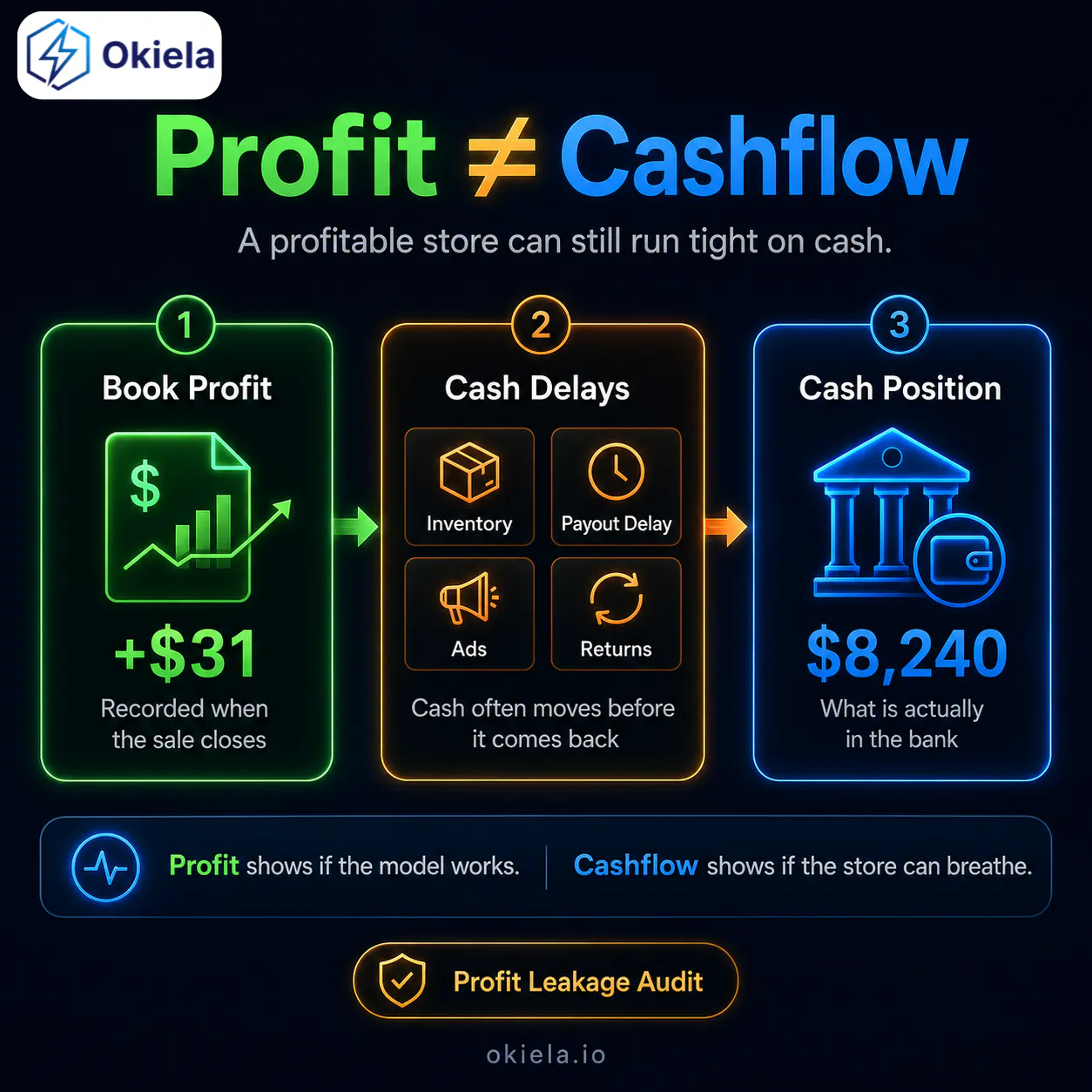
Profit is NOT cashflow...
Profit is not cashflow.
For ecommerce sellers, this distinction matters.
A store can look profitable on paper and still run tight on cash because of inventory, ad spend, payout delays, refunds, supplier payments, taxes, fees, and timing gaps.
Profit shows if the model works.
Cashflow shows if the store can breathe.
That means revenue growth alone is not enough to make good operating decisions.
Before scaling ads, reordering inventory, running a discount, or cutting costs, sellers need to understand what the store actually keeps after every cost layer.
Okiela helps ecommerce sellers find hidden profit leaks by SKU, order, and channel.
Find the hidden profit leaks draining your store. Send one order export and get your 3 biggest profit leaks in 48h: okiela.io/audit
#EcommerceProfit #Shopify #DTC #Okiela
 •
•3mo ago
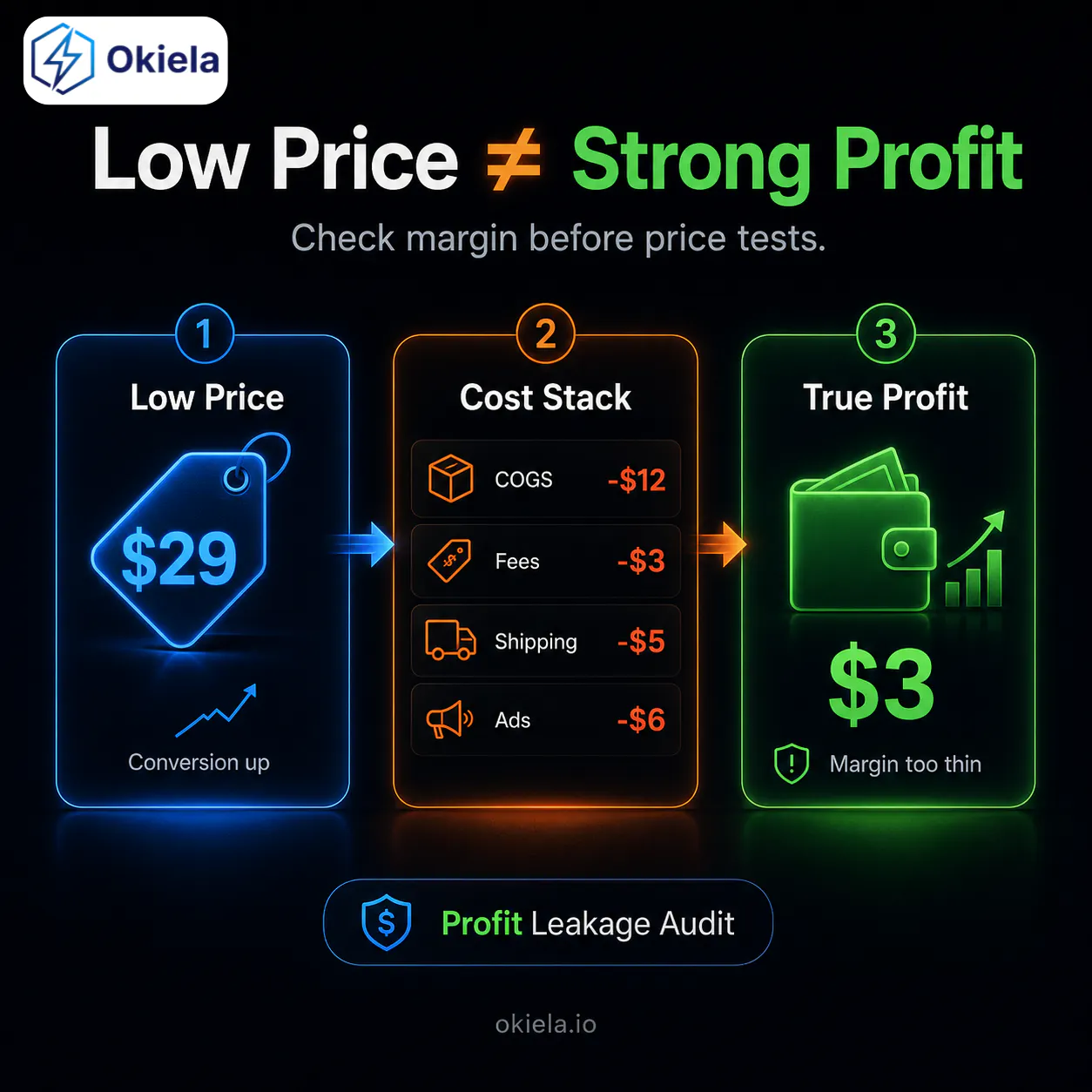
LOW price does NOT always mean STRONG PROFIT !!!
Low price does not always mean strong profit.
For ecommerce sellers, a lower price can improve conversion and still leave weak margin after COGS, fees, shipping, refunds, discounts, and ad spend.
That is why price tests should not only be judged by conversion rate or revenue.
The better operating question is:
Does this price still make sense after every cost layer?
The point is not to avoid low prices.
The point is to know the margin floor before scaling a price test.
Okiela helps ecommerce sellers find hidden profit leaks by SKU, order, and channel.
Find the hidden profit leaks draining your store. Send one order export and get your 3 biggest profit leaks in 48h: okiela.io/audit
#EcommerceProfit #Shopify #DTC #Okiela
 •
•3mo ago
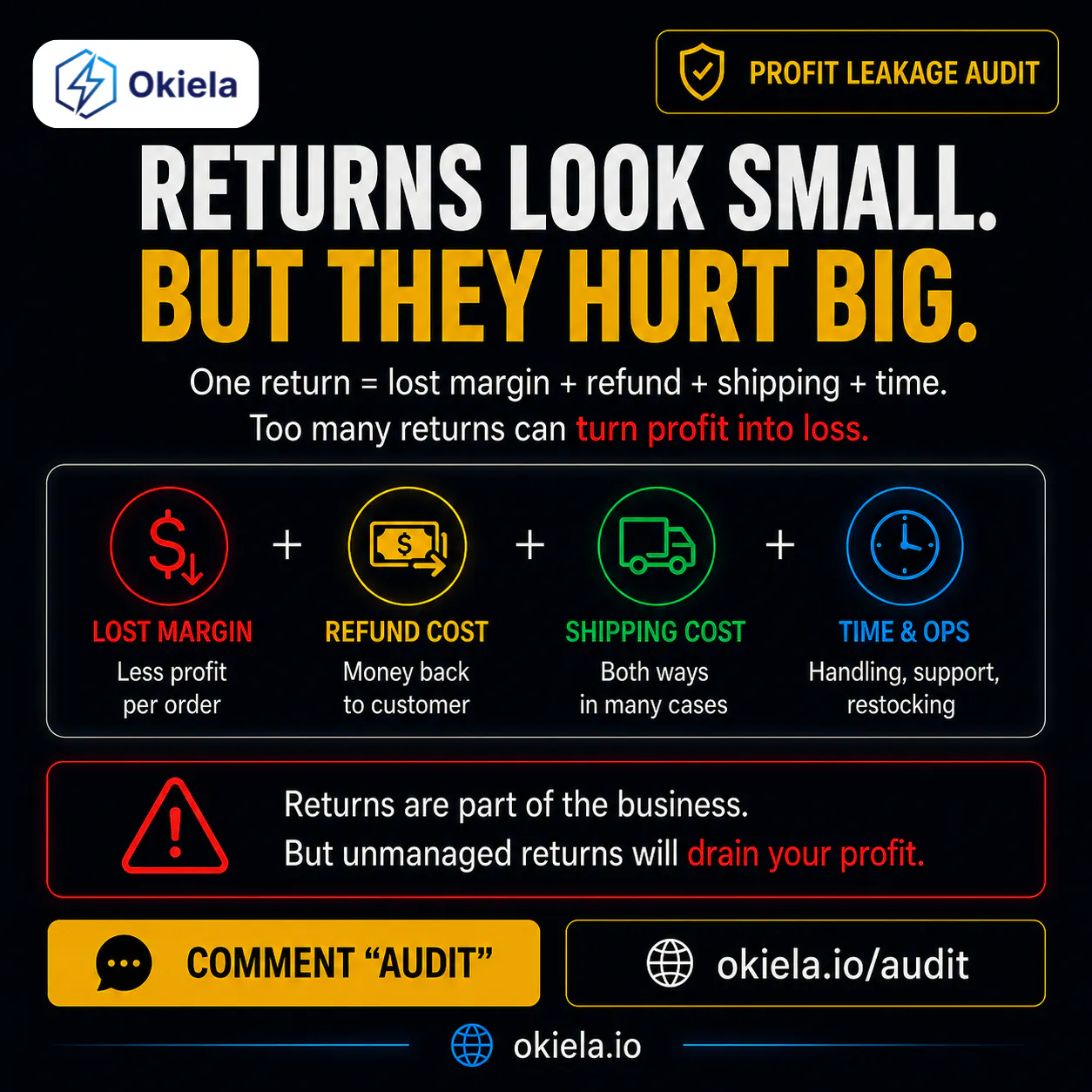
Returns are NOT just refunds !!!
Returns are not just refunds.
For ecommerce sellers, a returned order can leave behind lost margin, shipping cost, fees, support time, restocking work, and possible write-offs.
That matters because a high-revenue SKU can still become a weak-profit SKU if too many orders come back.
The point is not to eliminate all returns. Returns are part of ecommerce.
The better operating question is:
Which SKUs are being hurt most by returns after every cost layer?
Okiela helps ecommerce sellers find hidden profit leaks by SKU, order, and channel.
Find the hidden profit leaks draining your store. Send one order export and get your 3 biggest profit leaks in 48h.
#EcommerceProfit #Shopify #DTC #Okiela
 •
•3mo ago
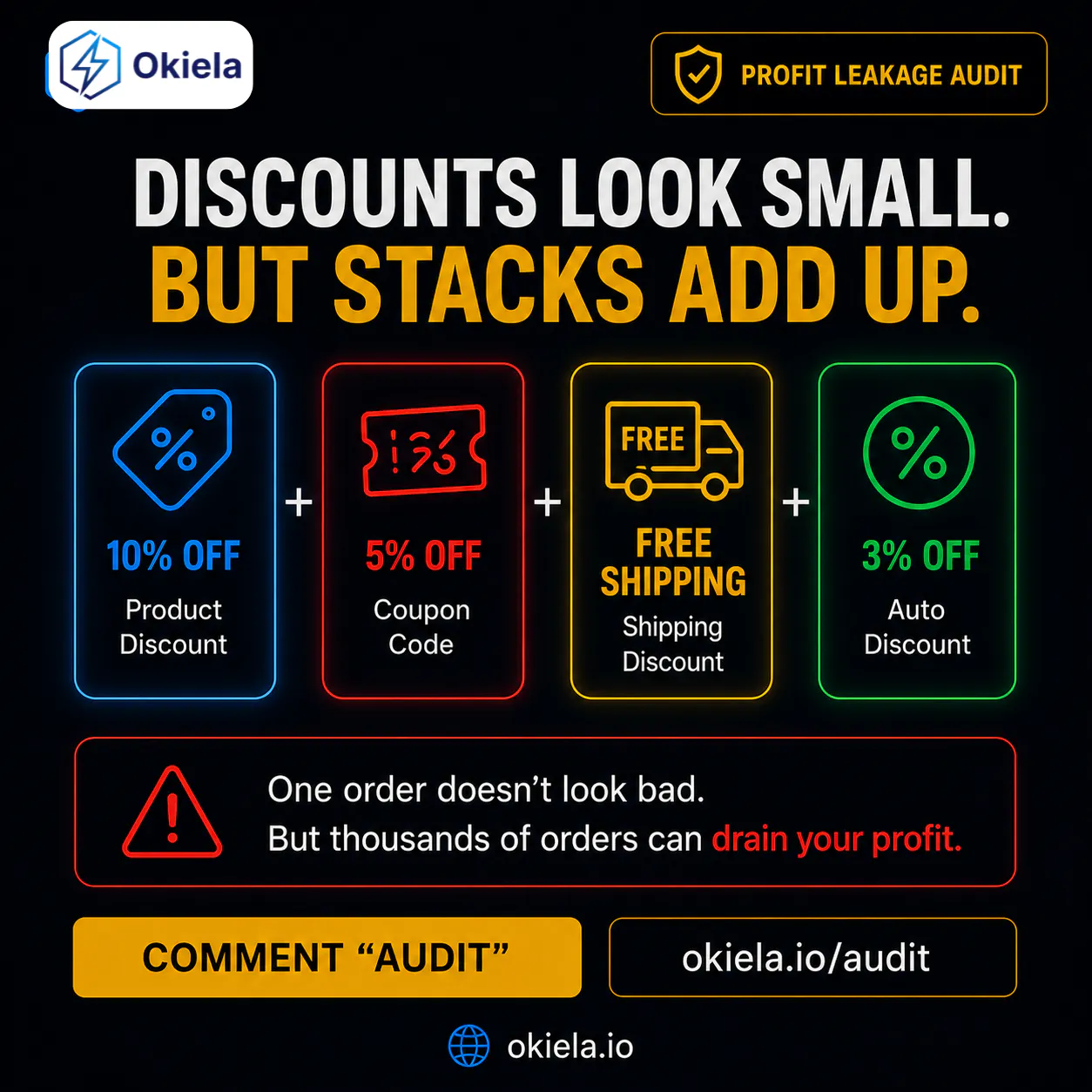
Discounts look SMALL until they STACK.
Discounts look small until they stack.
For ecommerce sellers, a single discount may not look dangerous. But a product discount, coupon code, free shipping, and auto discount can all hit the same order.
The campaign may still drive revenue.
But after COGS, shipping, fees, refunds, and ad spend, the true margin may be much weaker than expected.
The point is not to avoid discounting.
The better operating question is:
Which SKUs and orders can actually afford the discount?
Okiela helps ecommerce sellers find hidden profit leaks by SKU, order, and channel.
Find the hidden profit leaks draining your store. Send one order export and get your 3 biggest profit leaks in 48h: Link in the image
#EcommerceProfit #Shopify #DTC #Okiela
 •
•3mo ago
Free shipping is NOT FREE !!!
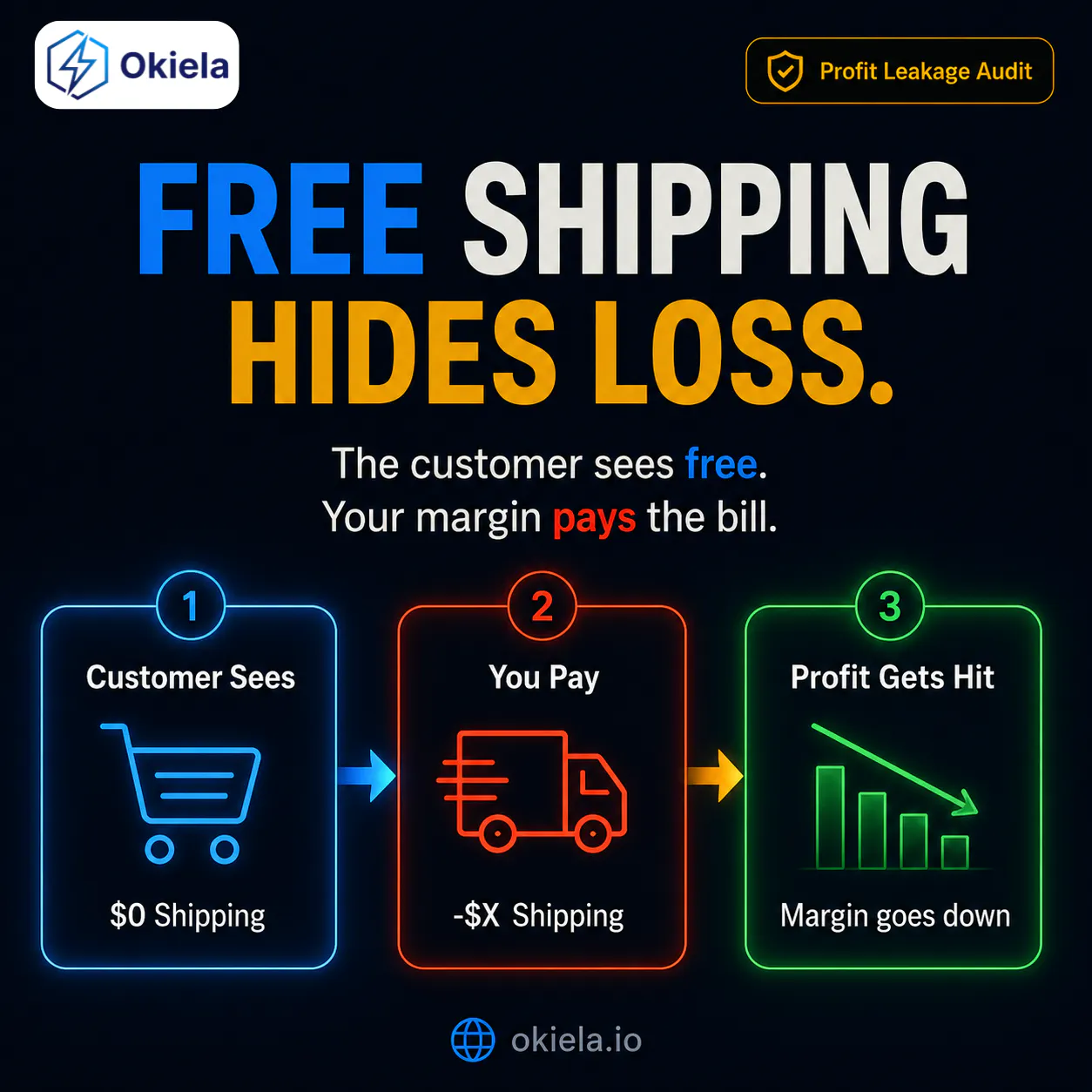
Free shipping is not free.
The customer may see $0 shipping, but the merchant still pays the carrier.
That cost comes out of contribution margin. For ecommerce sellers, the real risk appears when free shipping stacks with COGS, discounts, refunds, fees, and ad spend.
The answer is not always to remove free shipping. The better operating question is:
Which SKUs and orders can actually afford it?
Okiela helps ecommerce sellers find hidden profit leaks by SKU, order, and channel.
Find the hidden profit leaks draining your store. Send one order export and get your 3 biggest profit leaks in 48h: okiela.io/audit
#EcommerceProfit #ShopifySeller #ShippingCosts #ProfitLeak #Okiela
 •
•3mo ago
Your BEST-SELLING product may NOT be your best-profit SKU !!!
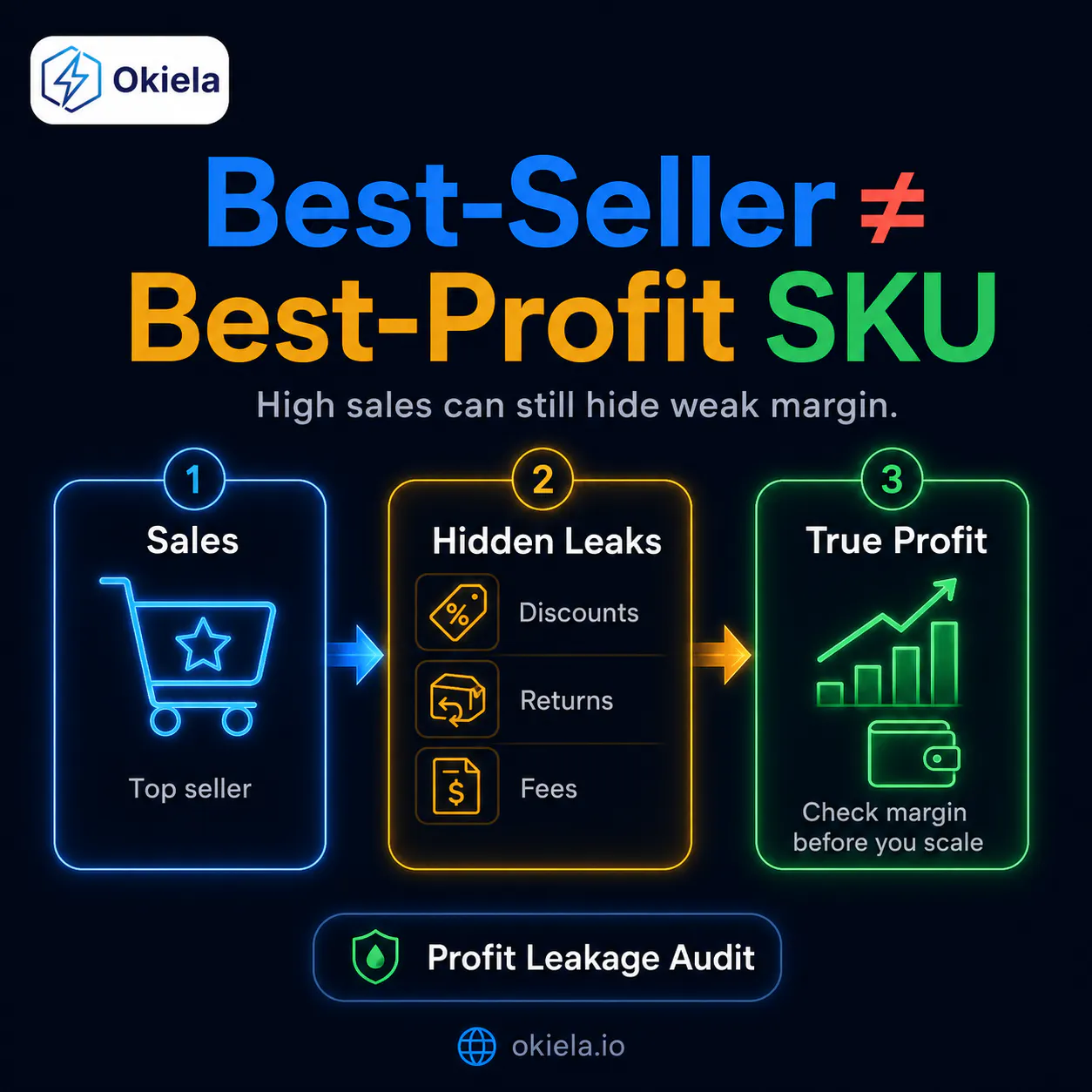
Your best-selling product may not be your best-profit SKU.
Sales volume shows what moved. But true profit shows what was actually worth scaling.
For ecommerce sellers, this difference matters because a top seller can still hide weak margin after COGS, discounts, refunds, fees, shipping, and ads.
Before increasing ad budget or reordering inventory, sellers should know whether their leading SKU is still profitable after every cost layer.
Okiela helps ecommerce sellers find hidden profit leaks by SKU, order, and channel.
Find the hidden profit leaks draining your store. Send one order export and get your 3 biggest profit leaks in 48h: okiela.io/audit
 •
•3mo ago
Revenue up can still mean profit down....
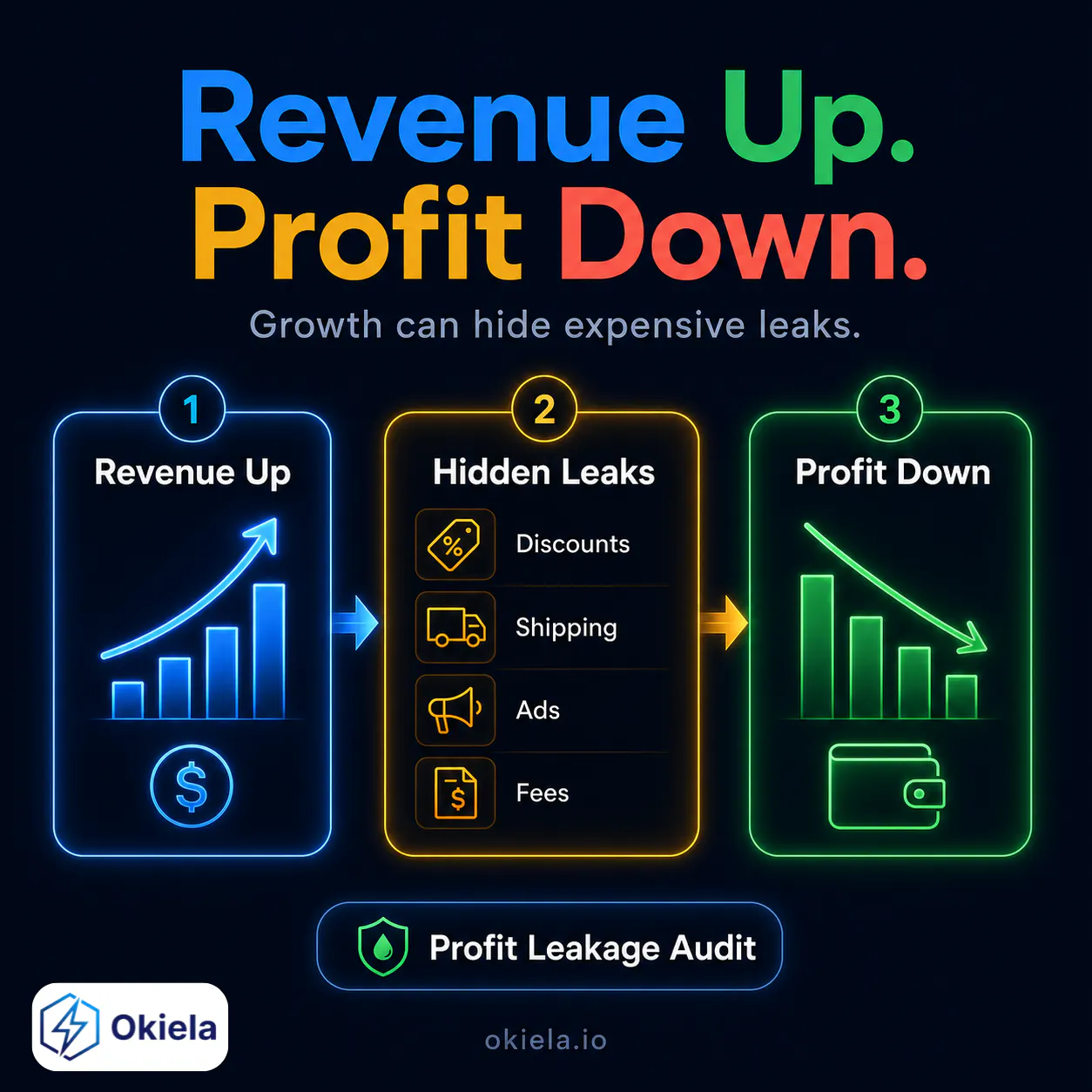
Revenue up can still mean profit down.
A store can grow sales while margin quietly disappears after discounts, shipping, fees, refunds, COGS, and ads.
That is why Okiela focuses on true profit, not surface-level revenue. The goal is to show ecommerce sellers where profit leaks by SKU, order, and channel.
Find the hidden profit leaks draining your store. Send one order export and get your 3 biggest profit leaks in 48h: okiela.io/audit
#EcommerceProfit #Shopify #DTC #Okiela
 •
•4mo ago
Profit can look fine. Revenue can be growing...And the business can still be running OUT OF TIME.
Profit can look fine.
Revenue can be growing.
And the business can still be running out of time.
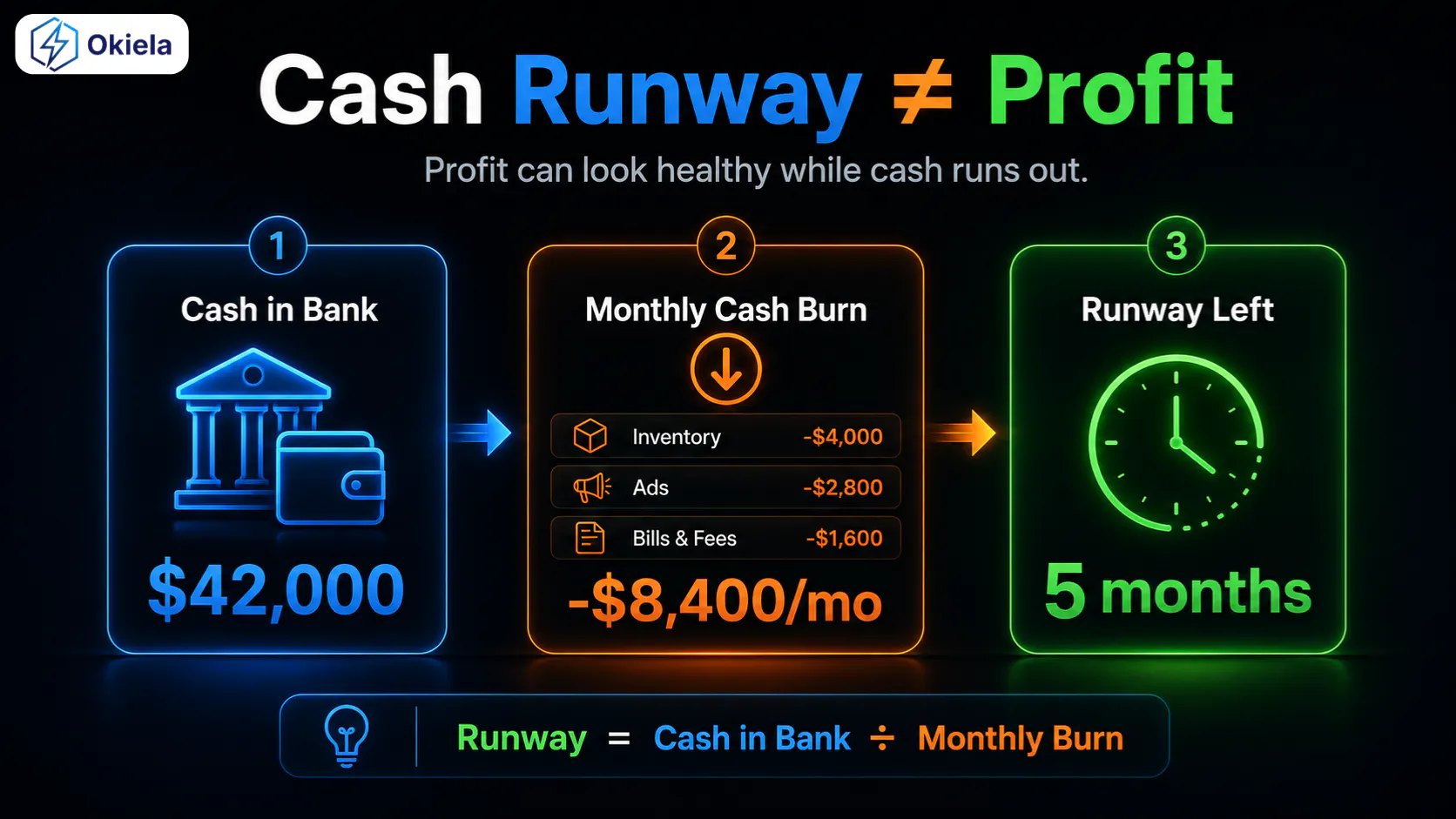
That is why cash runway matters.
Runway is not a vanity metric.
It is the countdown.
How many months can the business survive if the current cash pattern continues?
Simple formula:
Cash Runway = Cash in Bank / Monthly Net Cash Burn
But the key word is cash.
Not profit.
Not revenue.
Not GMV.
Actual cash in the bank.
Actual money coming in.
Actual money going out.
That difference matters in ecommerce because cash often leaves before it comes back.
Inventory is paid upfront.
Ads are paid before the sale.
Payouts arrive later.
Returns and bills still hit after that.
So a founder can say:
We are profitable.
And still be only 2 months away from a cash problem.
I would check runway every Monday:
bank balance
*expected payouts:
- bills due
- inventory commitments
If runway drops below 3 months, it is not time to wait and see.
It is time to act.
Profit tells you if the model works.
Cash runway tells you how long you have to fix the model before the bank account forces the decision.
----------
I'm asking a few shop owners to try it and tell me what's off. Want to give it 60 seconds? =>Details: okiela.io/audit. No pitch unless you ask.
or send me your export and I'll hand-check your 3 biggest profit leaks in 48h, free. No pitch, I just need to learn from real shops.
 •
•4mo ago
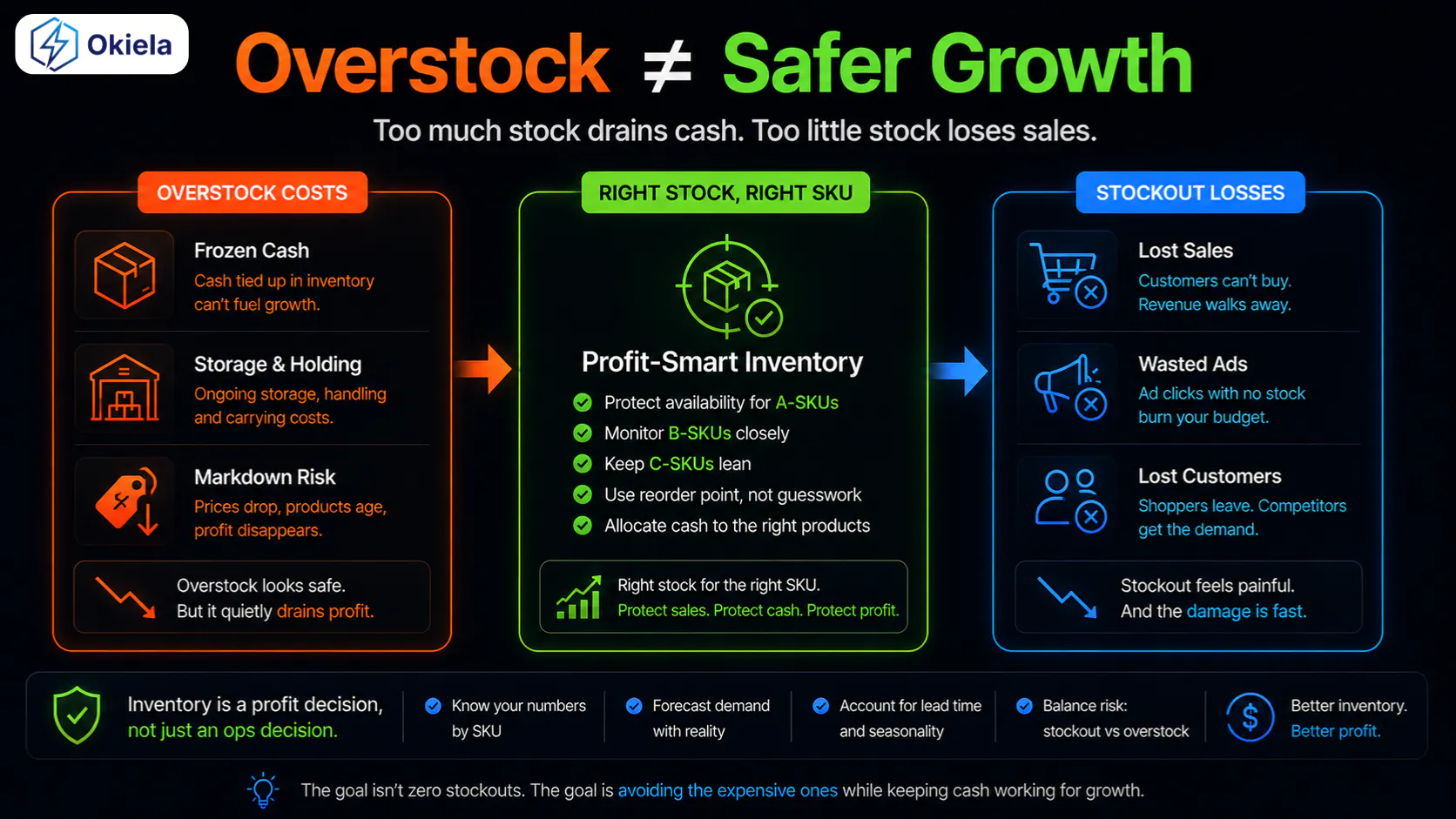
Stockouts are expensive....But not all stockouts are equally bad...
Stockouts are expensive.
But not all stockouts are equally bad.
If your best seller runs out, the damage can be immediate.
Lost revenue.
Wasted ad spend.
Customer frustration.
Competitor purchases.
Ranking recovery later.
That is painful.
But if a slow-moving SKU runs out for a few days?
That may not be the end of the world.
Sometimes it is cheaper than holding too much stock for months.
This is where many ecommerce founders get stuck.
They treat every SKU like it deserves the same protection.
It does not.
A product selling every day deserves a different inventory rule from a product selling twice a month.
The simple check:
How fast does it sell?
How much profit does it keep?
How long does supplier replenishment take?
How expensive is a stockout?
How expensive is overstock?
That is the real decision.
Not more stock or less stock.
Better stock.
For the right SKU.
At the right time.
----
I'm asking a few shop owners to try it and tell me what's off. Want to give it 60 seconds? => Link: okiela.io/audit
or send me your export and I'll hand-check your 3 biggest profit leaks in 48h, free. No pitch, I just need to learn from real shops.