As previous posting, we have intension to launch Paysellable on September 05, 2026.
During development, we face the chicken and egg problem of Paysellable. Less or no users to vote --> less or no data to process --> less or no users to vote. Without data, features of Paysellable will become useless even they are coded well.
We re all builders here, which usually means at some point we looked at something clunky, slow, or frustrating and thought, there has to be a better way. Most products don t start with a grand vision; they start with irritation, curiosity, or firsthand pain.
I d love to learn more about how others here have navigated that journey:
How did you uncover the problem you decided to work on? What signals told you this problem was worth solving? How did you validate (if at all) whether people would actually pay for a solution? Has your product stayed true to the original problem, or did it evolve into something different? What surprised you the most along the way?
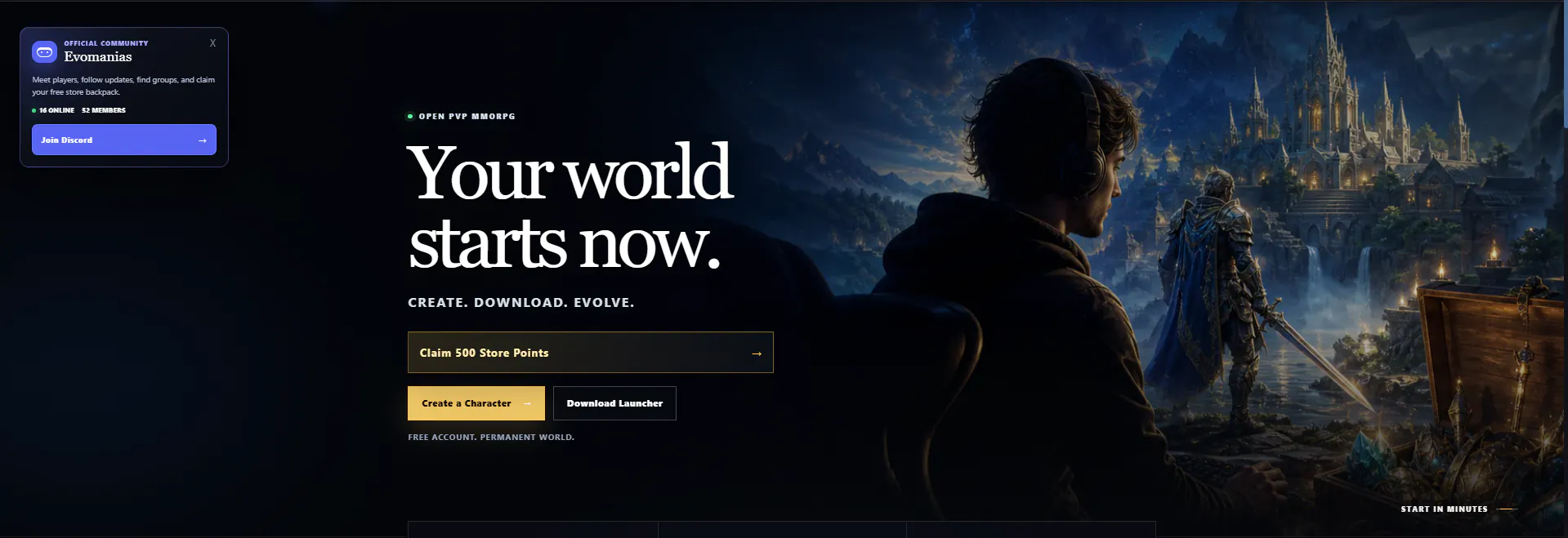
This has got to be a first... launching a fully custom, retro-inspired MMORPG on Product Hunt instead of your typical SaaS tool or productivity app.
Why Evomanias?
For the past few years, I've been deep in the trenches building and scaling Evomanias a passion project designed to bring back the golden era of isometric, hardcore MMORPGs (Open Tibia-inspired) while modernizing the backend, infrastructure, and player experience.
Share the name of your product, a brief description of how it will help the community, and your launch date, and let's support each other and hunt together. Let's get connected on Linkedin: https://linkedin.com/in/boyuan_qian
X (Twitter): https://x.com/boyuan_qian
If you run a dental, aesthetic, or medical clinic, you already know the problem: a patient messages your WhatsApp, nobody answers fast enough, and they book with the clinic next door instead. It happens more than you'd think and it's costing you real patients every week.
Citafy turns your clinic's WhatsApp into an AI receptionist that never sleeps. It answers patient questions instantly, books appointments with zero scheduling conflicts, sends automatic reminders, quotes treatments, and re-engages patients who went quiet all 24/7, directly on the WhatsApp number you already use.
It's not here to replace your team. Anything sensitive or that needs human judgment gets handed straight to your staff you stay in full control of hours, pricing, and rules.
Building roastme.gg, pay to get roasted publicly by Claude and it gets posted to a public leaderboard. Since I'm hanging around the forums anyway: drop your site or X handle in the replies and I'll run it through and paste the roast back here, free, no card needed. Fair warning, the whole point of the tool is that it's not going to be nice.