

Reverse-engineering Kilo's recent Product Hunt launch

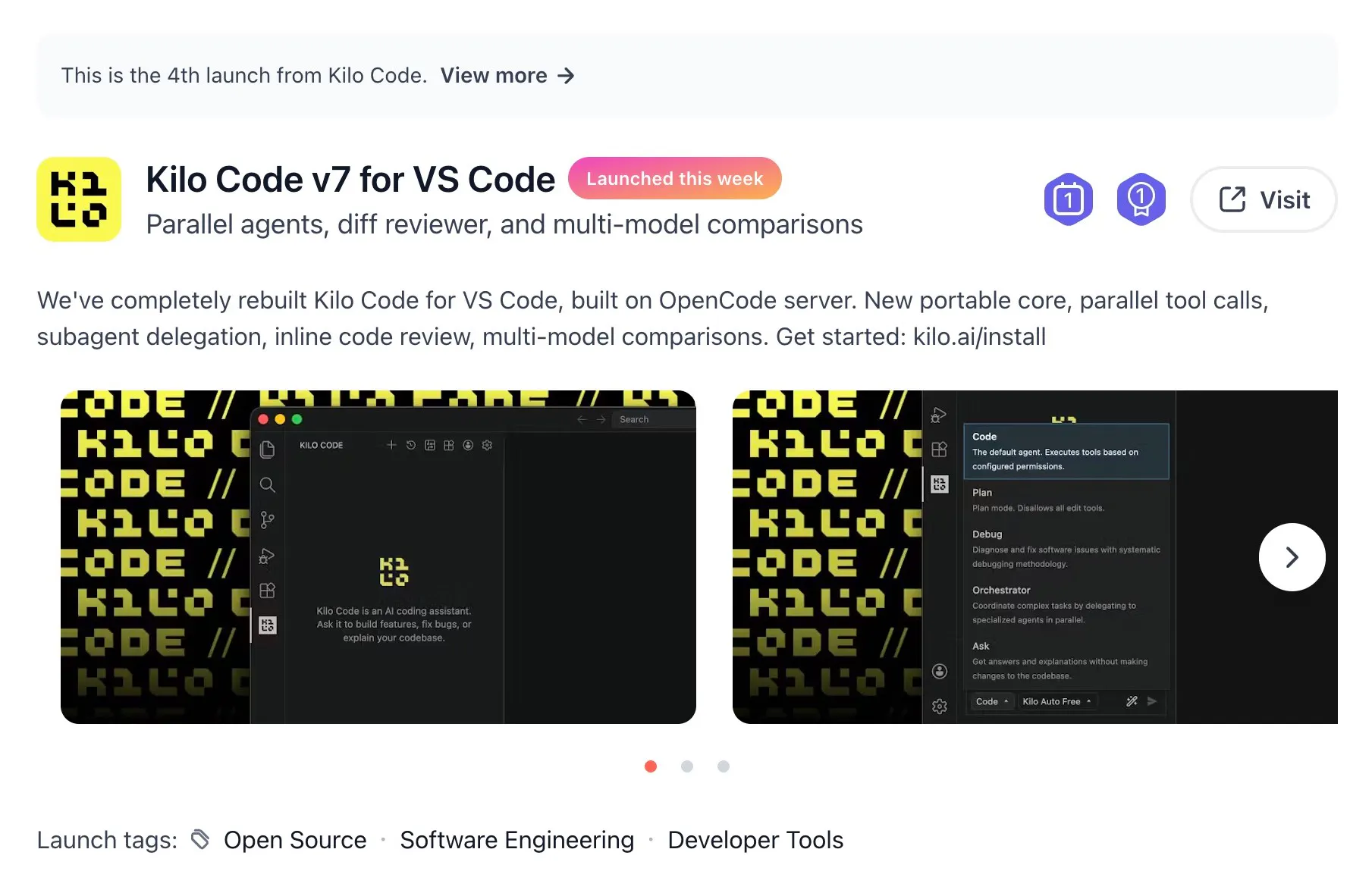
@Kilo Code launched for the fourth time on @Product Hunt, introducing a new VS Code extension. The product ranked #1 Product of the Day, #1 Product of the Week, and #1 Product of the Month.
I had the opportunity to work on this launch. Here's a breakdown of what we did and how to apply it to your launch.
TL,DR
Keep the tagline relatable to your audience
Show the product in your image gallery
Engage with the community thoughtfully
Reverse-engineering Kilo's recent Product Hunt launch
Straightforward tagline. The 60-character tagline might be the most important part of a launch. It's the first thing you see on the front page. Here, we highlighted the features, not the benefits.

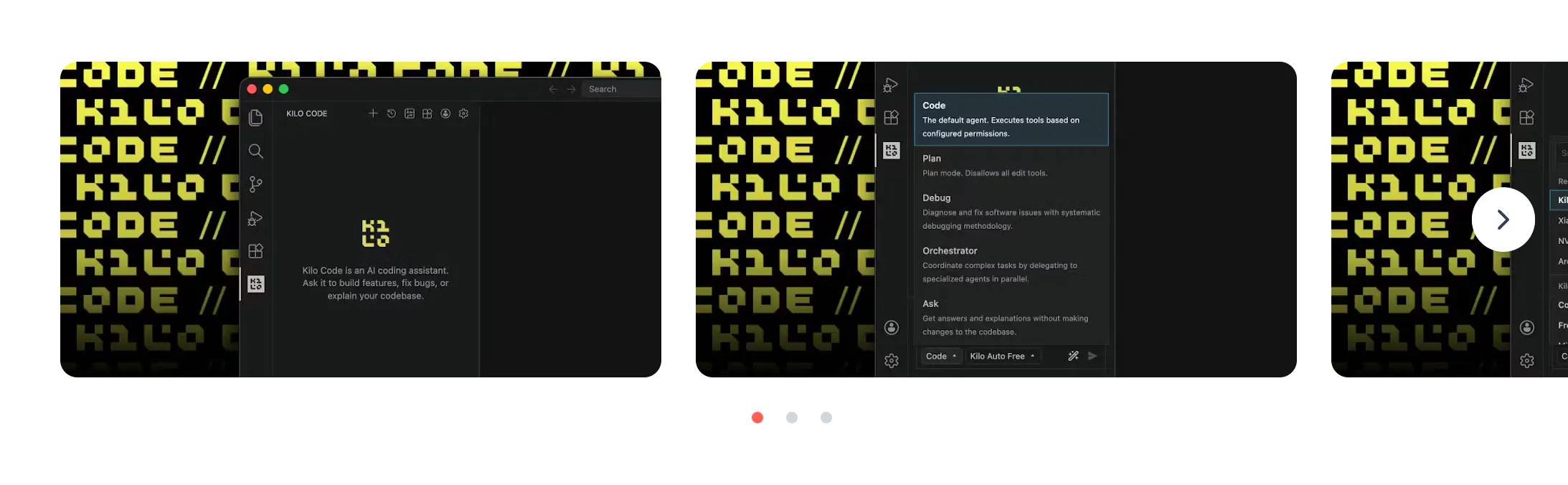
Minimalist visual assets. The image gallery is the first impression of your product. It sets expectations. We highlighted 3 images. No stock images, no marketing fluff. Just product screenshots. Show the product.
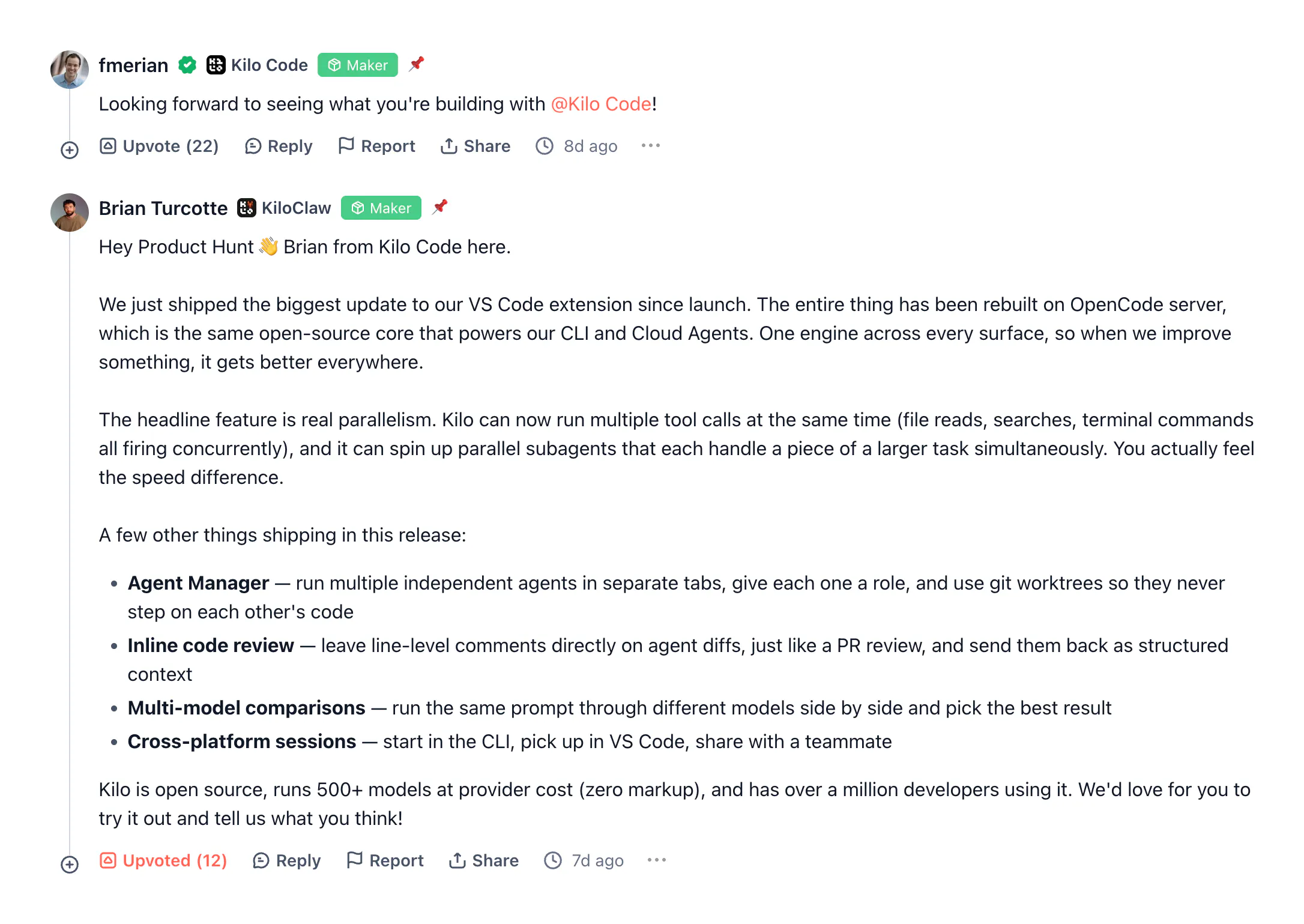
Feedback first. Like the tagline and the visual assets, we kept the first comments simple. No looooooong background stories - the objective is to start the conversation. We upvoted and replied to every comment, curious about what the community thinks of the release.
Keeping the momentum
"Momentum is the new metric." - Source: producthunt.com
There's one more thing we experimented with for this launch. Post-launch, the team started running a display ad campaign. The objective is to keep the momentum going.
Stay curious!

How to apply this to your launch
Keep the tagline relatable to your audience
Show the product in your image gallery
Engage with the community thoughtfully
Wrapping up
That's it! hope you find this thread helpful.
What are your key learnings from your previous launches? What worked, what didn't work from your perspective? happy to swap notes.
@Kilo Code launched a new VS Code extension on @Product Hunt.
Replies
“Show the product” is honestly underrated advice. a lot of launches try too hard to look like ads instead of making people instantly understand what the product actually does. Launching CogniFocus on June 1 actually 😭 first indie project too, so I’m basically learning all of this in public right now. let’s see where it goes
Kilo Code
@qasimkhan exactly - keep it simple and straight to the point.
In your context, and for inspiration, you might also enjoy reading this thread: Launched Ultracite on Product Hunt twice. Here's what I learned.
hope it helps! enjoy your launch, rooting for you
@fmerian appreciate that 🙏 trying really hard to keep the launch focused on “what the app actually does” instead of fake productivity marketing lol and thanks for the thread recommendation, I'll definitely go through it
Kilo Code
@qasimkhan enjoy! rooting for you
Interesting evolution—this pattern is emerging across many AI-layered dev tools. The move toward agentic workflows is becoming a clear theme. Curious which parts of the dev cycle are actually sticking in real projects vs still experimental or too risky.
Great breakdown. I think a lot of founders underestimate how important community engagement is before launch.
People can usually feel the difference between someone building relationships vs someone only showing up to promote.
Really insightful thread 👏
Kilo Code
@rican You're spot on. This was the 4th launch from @Kilo Code here in 12 months. They take @Product Hunt seriously.
Thanks for sharing, definitely useful information - we'll keep this in mind for the next @UXPin launch :)
Kilo Code
thank you - looking forward to your launch! keep it simple, enjoy
Mailwarm
Preparing a launch soon and this confirms something I’ve been noticing: clear positioning beats polished marketing.
For technical products, real screenshots, simple words, and honest community engagement probably create more trust than a “perfect” launch page.
Kilo Code
@thamibenjelloun exactly, keep it simple and straightforward. "Talk is cheap. Show me the product."
Are the graphics as crucial as the product images, or can simple product images suffice as well?
Kilo Code
@ahmad63 In this context of a developer-first product, just product screenshots. Show the product.
@fmerian That makes sense for dev tools. For a product targeting non-technical small business owners, would you lean more toward polished mockups showing the output, or still keep it raw?
Kilo Code
@ahmad63 good q - I really focus on developer tools tho. what would make the most sense for your target audience from your perspective? keep it simple
@fmerian For my audience — small business owners who've never built a page before — I think polished mockups showing the actual output make more sense. They need to trust the result before they trust the tool. Thanks for the framework, genuinely helpful.
Thank you for sharing. I will follow this tips in my upcoming launch.
Kilo Code
go crush it! anything that struck you from this thread?
The parallel-agent workflow feels genuinely useful for larger coding tasks. I especially liked the diff-review feature because it helps build trust in AI-generated code instead of blindly accepting outputs.
Kilo Code
S/O to the @Kilo Code team for the great work! make sure to add your comment to the launch page
BetterClaw
the tagline point hits hard. everyone tries to cram features into 60 characters when really you just need to tell people what it does for them. also didn't know relaunching could work this well.. 337 to 669 points across launches is a solid jump. what changed the most between the two
Kilo Code
Two more launches! This was the 4th launch from @Kilo Code on @Product Hunt.
Each launch builds more followers, reaches more people. It helps future launches. Keep launching!
This kind of breakdown makes launches feel less intimidating tbh. it’s not some secret formula, it’s mostly being intentional about a bunch of small things that add up.
Also shows why “just ship and hope it works” rarely moves the needle on platforms like this
Kilo Code
Thank you! and yes, there's definitely no formula. See this thread on "the best day to launch." No perfect option. Just launch.
In this context, this was the 4th launch from @Kilo Code. Launch, and keep launching. It pays off in the long term.