Start a thread, join a discussion, stay in the loop.
p/nashra-turn-followers-into-clients
by
Mo Hakeem
Hi,
Looking at "Publishing OS" as a new category of software I'm wondering the following:Will working on the CRM worsen our positioning? Is it someone else's territory?The mission of Nashra is turning followers into clients. Mainly for experts.
1
2
p/ota
Adamma
If you ve been following along and want to support us, we d really appreciate a GitHub star: https://github.com/ota-run/ota
If you ve been following along and want to support us, we d really appreciate a GitHub star:
https://github.com/ota-run/ota
The first thing I'd teach an AI coding agent isn't how my code works.
It's what not to do.
4
p/vibecoding
Neeraj H
Noticed something a few weeks into a bigger project. Early on, a prompt like "add a delete button" just worked, one sentence, done. Now the same size request needs four sentences of context just to not break something else, which auth flow to respect, which of the two similar-looking components to touch, which past decision not to accidentally undo.
That's not classic technical debt. The code itself might be totally fine. The debt is that every prompt now has to carry more context just to stay correct, and that context requirement grows quietly, prompt by prompt, without ever showing up as a line in the codebase you'd notice.
The trap is it feels like the project getting more complex, which is normal and expected. But it's actually something narrower: the AI's working memory of your decisions is shrinking relative to how many decisions exist, so you're the one who has to keep re-supplying context it should already "know." At some point you're basically writing documentation into every prompt just to get back to where a one-line request used to work.
The only thing that's slowed this down for me: treating repeated context as a signal, not a nuisance. If I'm explaining the same constraint for the third time in different prompts, that's not me being thorough, that's a sign the constraint needs to live somewhere permanent (a note, a comment, a doc the agent can be pointed to) instead of being retyped from memory every time.
3
p/general
Tery Emilson
After using and implementing AI for the past few years, I've noticed my trust falls into four buckets.
Summarizing meetings
Drafting emails
Finding information across my notes and documents
0
9
p/rankfender
Imed Radhouani
For months, the narrative has been that AI search is a single channel. You optimize for ChatGPT. You win everywhere. The data says otherwise.
A 7-month analysis of citation behavior across ChatGPT, ChatGPT Search, Perplexity, Google AI Overviews, Google AI Mode, Gemini, and Claude found that every major AI engine has a persistent source preference . Not just a trend. A consistent editorial identity that holds month after month.
The breakdown of editorial identities :
ChatGPT Search is encyclopedic. It favors Wikipedia for Education, Recommendations, Comparison, and Purchase queries. If your content reads like a reference section, it surfaces here.
Perplexity is video-anchored. It leads with YouTube for Education and Recommendations. Written content alone leaves citations on the table.
Google AI Overviews is video-biased across six of seven intents. The one exception is Navigational queries, where brand-owned domains take the top slot.
Google AI Mode is the most exploratory engine. It routes users back to Google properties for Purchase queries and cites LinkedIn for Education intent a signal none of the other engines produced .
Gemini is YouTube-anchored across every single intent in the dataset. It is the most consistent YouTube-first engine.
Claude bypasses the social and encyclopedic layers entirely. In early 2026 data, it never surfaced YouTube, Wikipedia, or Reddit. It goes straight to primary sources. Brand domains, institutional sources, and compliance-grade content .
6
p/neuralagent
Khaled Shadid
Two of NeuralAgent's most powerful capabilities are UI Skills and Fast Skills and together, they represent a fundamentally new way for AI to interact with your computer.
UI Skills: Your AI Learns Any Interface
UI Skills are reusable knowledge packages that teach NeuralAgent exactly how to operate specific apps and websites. Instead of guessing where buttons are or struggling with unfamiliar interfaces, NeuralAgent loads a UI Skill and instantly knows the layout, workflows, and interaction patterns of any application.
Think of it like muscle memory for AI. Once a UI Skill is created either by the NeuralAgent team, the community, or yourself NeuralAgent can operate that interface reliably every single time. Browse the marketplace, install with one click, and your AI gains new capabilities instantly.
8
p/paybond
Damilare Olaleye
We just shipped 0.11.11 and rebuilt paybond.ai around a clearer idea: AI agents need transaction infrastructure, not just API keys.Since our last update (0.10.0), here's what's new:
Homepage
The site now walks through the full Paybond stack:
Kit integrates Harbor settles Ledger records Signal builds standing
Omri Ben-Shoham
I've got a function in one of my projects that's been "temporary" for about 4 months now. It works, it's covered by tests, and it's ugly enough that every time an agent touches that file it asks if I want it cleaned up.
Every time I say yes, I regret it a little. Not because the refactor is bad, usually it's genuinely cleaner, but because now I've burned review time on code that wasn't broken, and there's a small chance the agent introduces a subtle behavior change I won't catch until it's in prod.
5
p/dynamicnotch
Evgeniy Petrukovich
Hey everyone!
I ve always felt that the MacBook notch is a wasted space, and existing solutions didn't feel "native" enough or lacked the satisfying, organic feel of the iOS Dynamic Island.
Rhetis - AI Presentation Agent
I launched a product today, and one of the biggest lessons came before the launch:
Building individual features was relatively straightforward. Explaining why they all belonged in the same product was much harder.
The moment the product became easier to explain, a lot of other decisions became easier too: what to remove, what to emphasize, and who it was really for.
Have you ever built something that worked well, but was surprisingly difficult to explain clearly?
Ayden Lim
This is pre-launch, but I am afraid that I will struggle finding even my first user for my SaaS. Do you have similar experiences? I have been reaching out to my ICP for days now.
16
p/octoscope
Giovambattista Fazioli
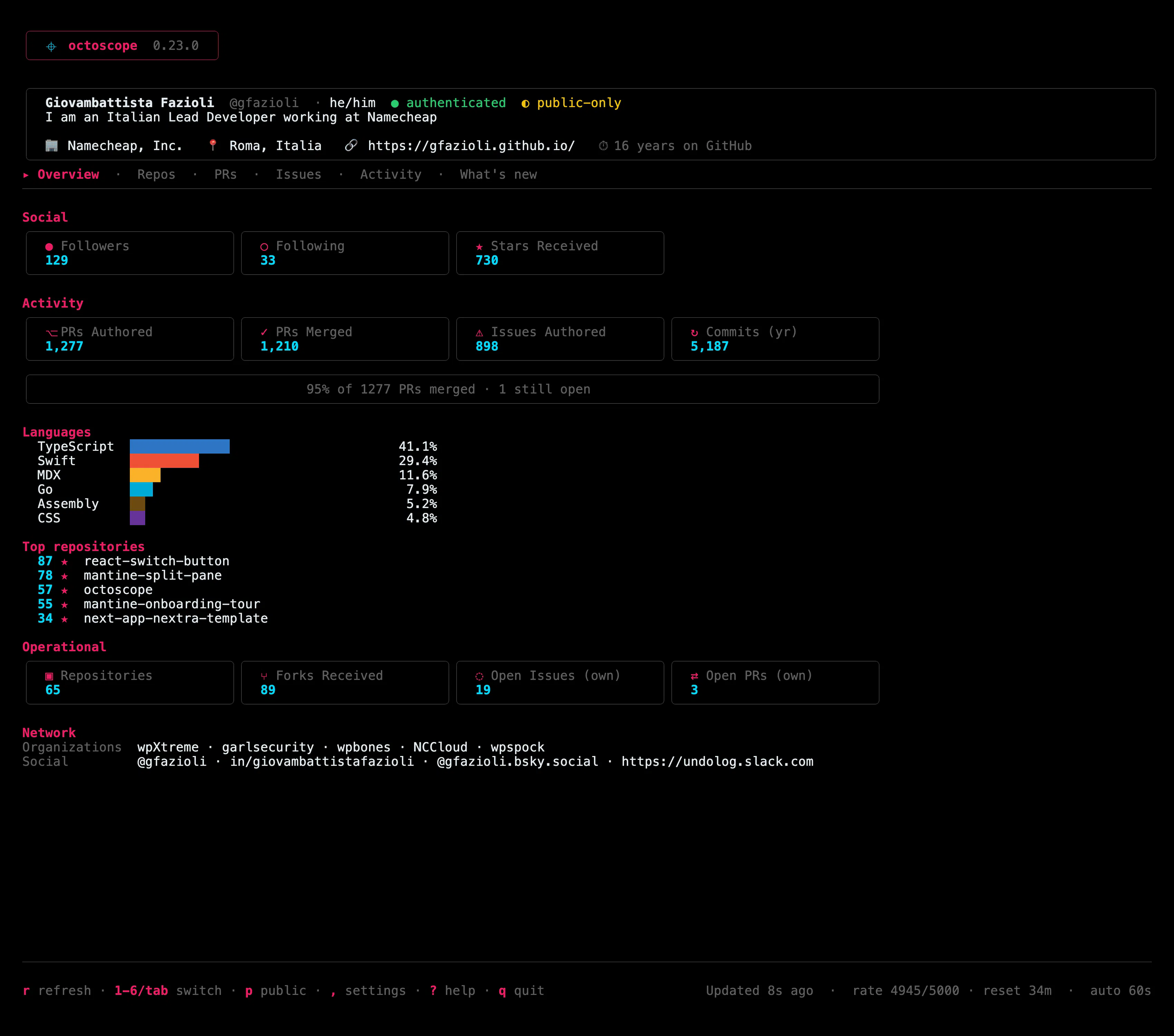
octoscope v0.23.0 Polish & reliability
octoscope is a terminal dashboard for your GitHub profile, repos, PRs, issues, activity, all in one TUI.
Orkhan Ilyas
I use AI every day as a Product and UX/UI Designer, and it saves me hours every week. But sometimes I spend 20 minutes trying to get AI to do something I could finish manually in 5. I am sure every profession has tasks like this.
What is that one task in your workflow where AI is still slower than doing it yourself?
Stacy Wycoff
Not a slow realization, an actual moment. Mine was a weekend away with no laptop, and by Monday there were three things that only I knew how to answer, a pricing question, a scheduling conflict, and a client who wanted to know why nobody had followed up. None of it was an emergency on its own. All of it together made me realize the business was running on what was in my head, not on anything anyone else could pick up. Curious if there was a specific day that did it for you, or if it built up slowly until you just could not ignore it anymore.
My terminal coding agent had hit its weekly limit and I had a small bug sitting in my queue, the kind of thing that would normally take one prompt and thirty seconds, so I figured I'd just fix it myself while I waited.
Took me almost the full thirty minutes. Not because the bug was hard, it genuinely wasn't, but because I kept reaching for a keyboard shortcut that wasn't there and realized I'd forgotten the actual syntax for something I used to type without thinking. Had to look up documentation I would've known cold two years ago.
Got it fixed right as the coding agent's limit was reset and honestly felt a little relieved, like I'd passed some test I didn't know I was taking. But it also left me wondering how much of that muscle is still in there versus how much I've quietly outsourced without noticing, since it's not like there was ever a single moment where I decided to stop practicing it.
Has anyone else tried this on purpose, going a day without the assistant just to check? Would you actually want to know the answer, or is it better not to look too closely at how much you've forgotten?
Shashi Ranjan Kumar
Been running a lot of outreach experiments lately and the data keeps surprising me.
LinkedIn DMs are getting better reply rates across the board. But cold email still books more meetings when the list is tight and the message is specific.
Cold email inboxes are just flooded right now. AI-generated copy everywhere and buyers have learned to ignore it. Standing out is harder but the upside is still real if you get the targeting right.
LinkedIn DMs feel more personal so people actually respond. The problem is connection request limits and platform crackdowns are making it painful to scale.
12
Max Musing
I went through YC as a solo founder and I'm 6 years in now. I sometimes wonder whether I'd go solo again if I started a new company.
The good parts are obvious. No cofounder conflict, fast decisions, all the equity.
11
I have run a software company, a care home, and a cafe at different points, sometimes more than one at once. None of the numbers I actually watched closely lived in a report. Revenue and margin mattered, obviously, but the thing that actually kept me up was smaller than that, a client who had gone quiet, a shift that was one call away from falling apart, a lead I told myself I would follow up with and then did not. None of that shows up on a P&L until it already cost something.
Curious how other people running a small or solo operation actually track that layer. Do you keep it in your head, write it down somewhere, or has anyone found something that actually surfaces it before it becomes a problem?
p/weather-mini-for-mac
Kai
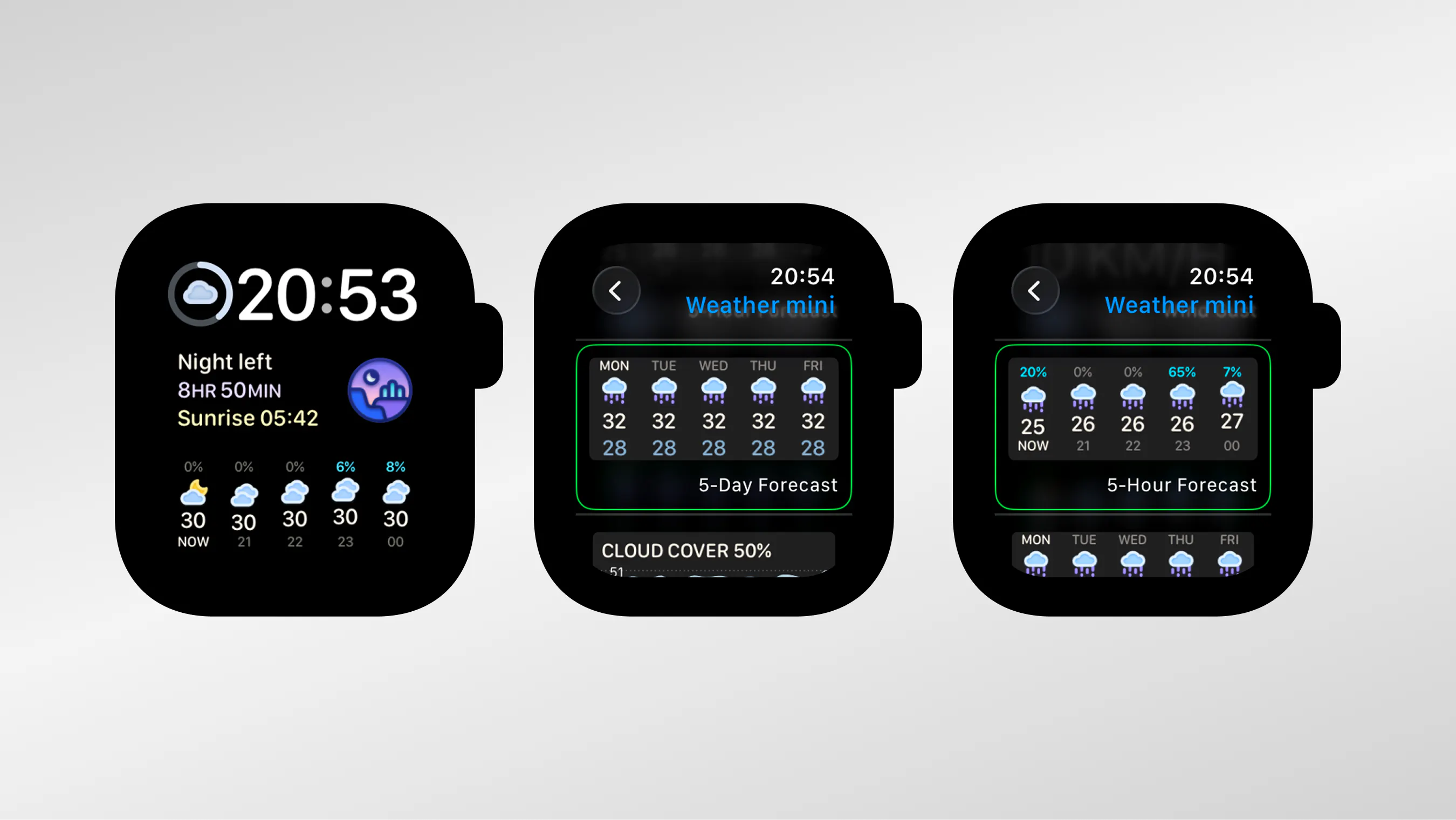
Weather on the wrist is usually about small questions, answered quickly. What is the weather doing later today? What does the week ahead look like? Weather mini 3.5 adds a new complication for each of those moments.
p/lineage-lens
Praveen
I started building LineageLens because I kept asking a question that nobody on my team could answer: if a CVE gets traced back to an AI-generated line in production next week, what evidence do we actually have?
Not "we use Copilot and review everything." Machine-readable evidence: which model generated which lines, with what prompt, at what confidence, and whether a human reviewed the AI context before it shipped.
For most teams, the answer is nothing. The Cloud Security Alliance put a number on it this month: 81% of organizations have no complete visibility into where AI-generated code lives in production. That gap grows larger every sprint.
LineageLens intercepts AI tool traffic at the proxy layer to capture provenance records at generation time -- the only moment when model, prompt, file path, and edit context all coexist. Then the blame engine maps those records onto current file contents:
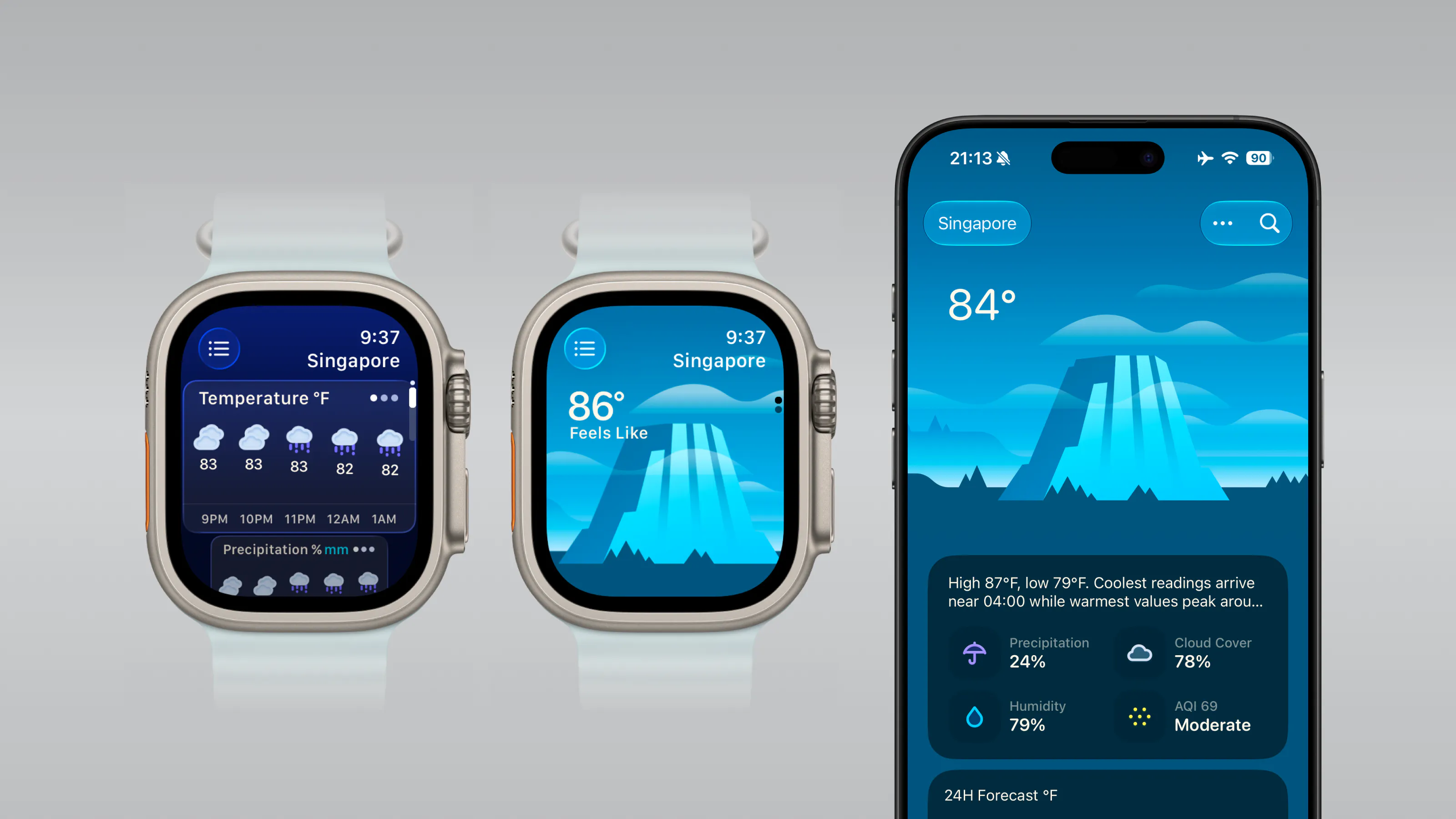
This update brings the Apple Watch app into the main Weather mini app, together with AQI support for all users.
I had (what I thought was) a great product idea, so I described it to Fable 5 and asked for its thoughts. It basically called the idea trash and explained why, then gave me a tweaked version that it said was better.
I thought through the tweaked version and it was actually way better than my original idea.
p/meetpoint-2
Florens von Buchwaldt
Yesterday you asked great questions about how Fairest mode works. We listened and shipped:
"Fairest" now scores each traveller by flight cost + travel time + layovers not just price. The person paying least is no longer automatically winning if they're doing 3 connections and 11 hours.
p/basedash
10
p/writulos
Neville Mathew
Writulos already auto-generates technical docs on every push via GitHub Actions.
We're now exploring expanding it beyond developers. The idea: every file in your codebase can also generate a plain English version. Not code docs, but a "here's what this does" explanation for a client, a product manager, a design partner, or a new teammate who doesn't read code.