We're building a single environment for helping creative minds to organize work, hit deadlines, have an environment to think, brainstorm and collaborate - without juggling 5 different tools. Solo or with a team.
It has workspaces, where you can separate your work, personal goals, family, health - whatever you want in one place.
There is collaborative board, reviewing tool for all kind of media, filtered forums, project and tasks with related contexts - so you never miss any information.
I've been building MetricSync as a solo dev because I kept seeing the same issue: people do not quit nutrition tracking because they hate the goal. They quit because the logging loop gets annoying or stops feeling trustworthy.
The current bet is simple:
cheaper than CalAI
3 day free trial
focused on faster logging and easier corrections
trying to make AI nutrition tracking feel useful after week one, not just magical on day one
I'd genuinely love feedback from anyone who has tried CalAI, MyFitnessPal, or Cronometer.
The version I just shipped tries to fix that. Vendors and couples can follow each other, chat once they're connected, and book and pay directly on the platform. The part I spent the most time getting right is the payment flow, the vendor doesn't get paid until the couple confirms the job's actually done, so it's not just "pay and hope." It's still early, and I built the whole thing myself as a custom WordPress plugin rather than using off the shelf marketplace tools, so I'm sure there are rough edges I can't see anymore. If anyone here has built or used a two-sided marketplace before, I'd be curious how you handled trust between buyers and sellers, is a confirm-then-pay flow like this enough, or is there something you'd add? Happy to share more about how it's built if that's useful too. wedlift.com if you want to poke around.
Hey everyone, Brandon here. Spent most of my career in security, testing platforms at scale, and the pattern that always stuck with me: nobody has time to check everything every day, so problems sit unnoticed until they've already cost money.
That's the exact thing we built DailyHelm to fix, it checks your whole business overnight instead of one tool at a time, and hands you a short list each morning of what's broken and what's wasting money. Launching here soon, but before that I'd genuinely like to know from this community: how many separate tools or dashboards do you personally check in a normal week just to feel like you know what's going on? And is there one you'd cut immediately if you could?
I got tired of budgeting apps charging a monthly fee to categorize my own transactions often by sending my bank data to a cloud API. So I built ClearBudget, a personal budgeting app for Windows that runs its categorization AI entirely on your machine (via Ollama). No cloud, no API costs, no subscription.
Over the past year, we've been building ButaGYM OS, a platform for gym owners to manage memberships, payments, member access, staff, and day-to-day operations from one place.
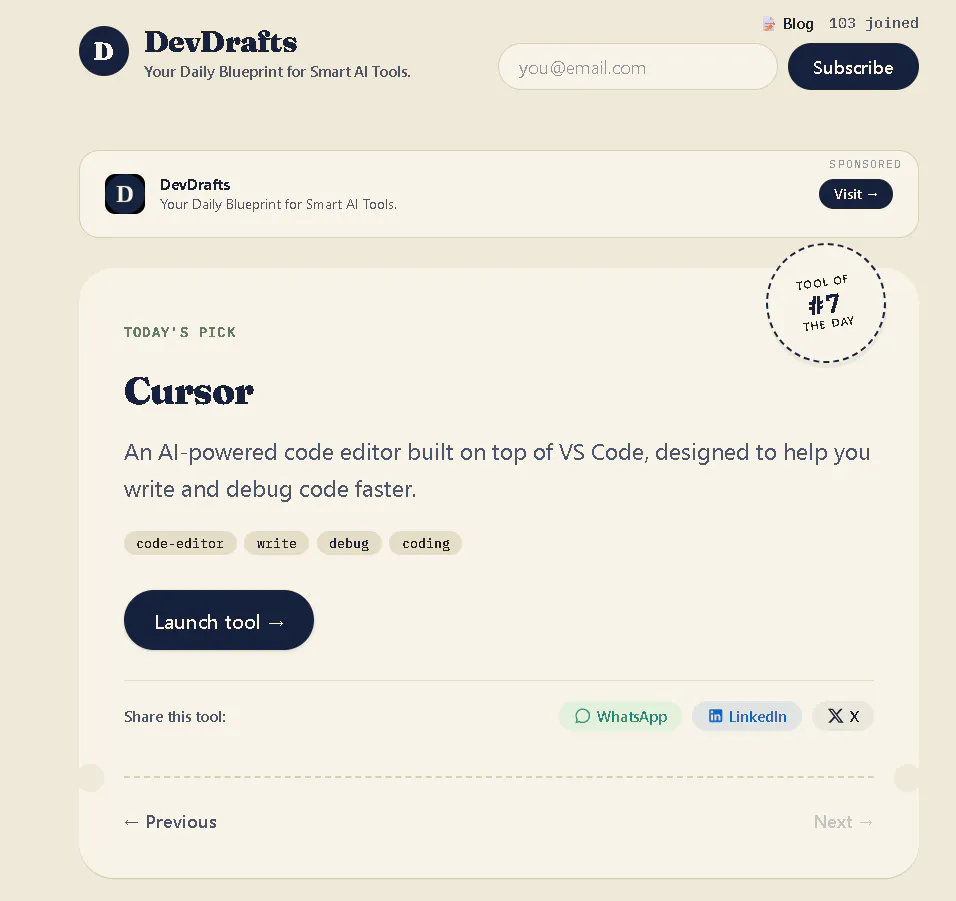
With thousands of new AI tools launching every week, directory overload is real. Scrolling through endless lists often leads to decision fatigue rather than actually finding useful tools.
I built a simple side-project called DevDrafts (https://devdrafts.netlify.app/) to solve this exact problem delivering just one hand-picked, high-value AI tool or blueprint every day.
How do you currently discover new AI tech for your workflow?
Do you prefer massive searchable directories, or curated daily/weekly highlights?
Would love to hear your thoughts and get feedback!
We launched a new release of ApyHub and the thing I keep thinking about isn't our launch (only). It's the providers.
While building our catalog we kept finding the same story. A solo dev builds a genuinely great API. A holiday data service. A screenshot renderer. A receipt or resume parser. Technically excellent, solving a real problem, and almost nobody knows it exists. The person who built it is busy maintaining it, and distribution is a full-time job they never signed up for.
Most companies waste 20 30% of their SaaS spend on licenses nobody's opened in months and nobody's tracking it because the data's scattered across credit card statements, SSO logs, and admin panels nobody cross-references.
I built a tool that pulls it all into one place: subscription costs, actual login activity, unused seats, renewal dates, and duplicate tools and shows you exactly how much you're wasting in $.