
 •
•2d ago
HtmlDrag: finish your HTML pages visually

HtmlDrag is back on Product Hunt today.
Once you have an existing or AI-generated HTML page, there are often a few things left to fix: an image, some text, or part of the layout.
I built HtmlDrag to make that editing pass more direct. Upload or paste your HTML and make visual adjustments. When you want AI s help, select the elements you want to work on, describe the change, and review the result.
•5d ago
Small HTML Changes Shouldn't Trigger Full-Page AI Rewrites
Your HTML page is almost finished. You just want to change one image or a few lines of text. That shouldn't turn into another full-page AI rewrite.
With HtmlDrag, you point to the elements you want to change, then describe the update. AI Refinement scopes edits to your selection while preserving the surrounding HTML structure.
You can show AI exactly where to work instead of spending a long prompt explaining the location and what should stay unchanged.
This short demo shows replacing one image, then translating five selected lines into Spanish. Review each result, continue in the visual editor for manual adjustments, or download the updated HTML.
•10d ago
Update an AI-generated pricing page without rebuilding
A pricing update is more than changing one card. Keep plan allowances consistent across cards, comparison tables and FAQs while retaining the useful design.
This guide combines a concise plan brief, scoped AI edits and visual HTML editing for precise finishing work. It also includes a review checklist for repeated values, links and layout.
Read the guide:
https://htmldrag.com/blog/how-to...
•17d ago
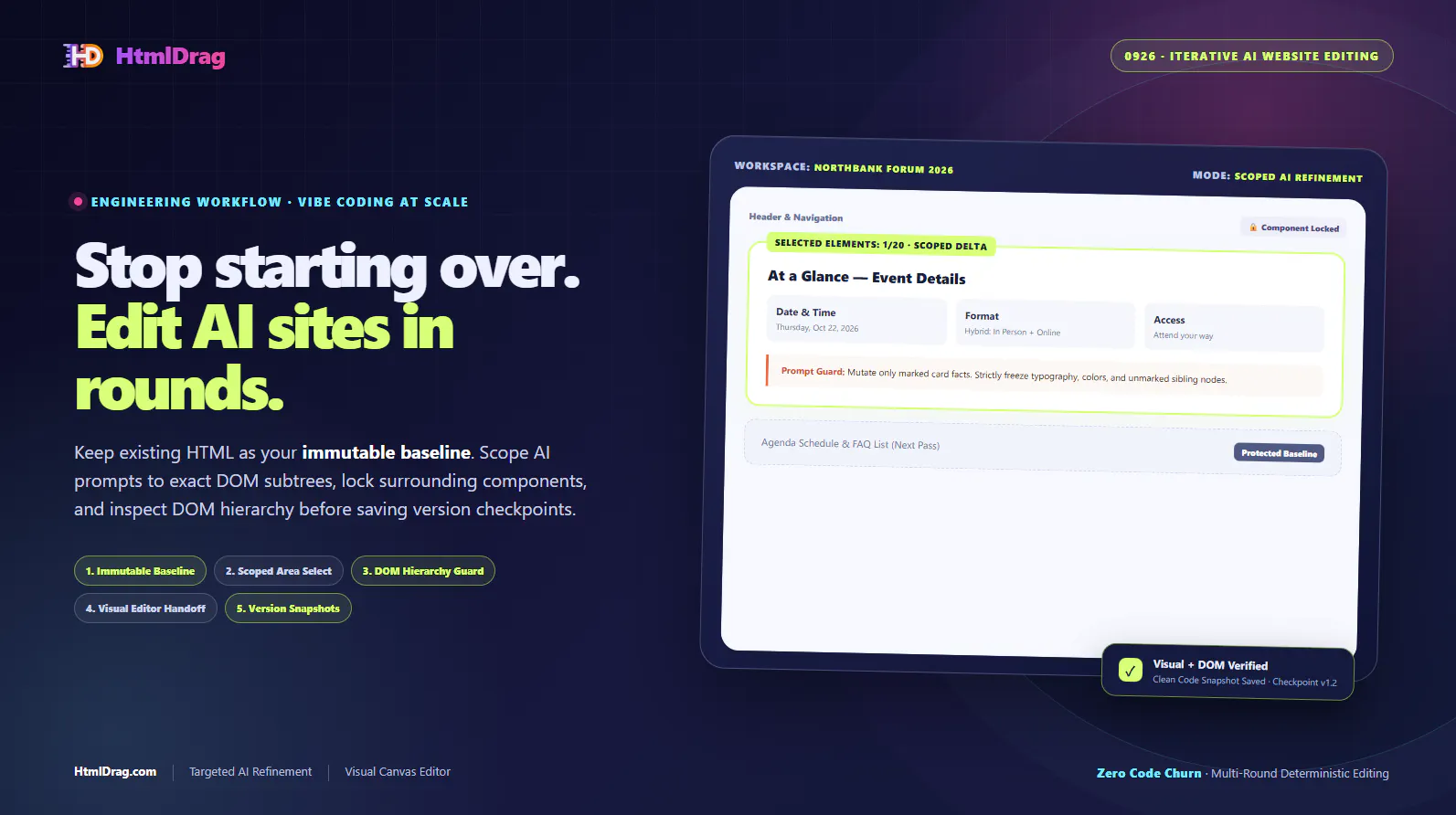
Refine AI Websites in Multiple Rounds Without Starting Over
AI can generate a useful landing page in seconds, but real-world revisions are rarely finished in one prompt. Regenerating the whole page for a small update destroys previous styling tweaks, hallucinated CSS classes creep in, and teams face review fatigue.
HtmlDrag provides a deterministic iterative refinement loop: load existing HTML as an immutable baseline, scope AI edits strictly to target DOM subtrees, guard surrounding components, and verify DOM integrity before saving version checkpoints. When fine-tuning requires visual judgment, switch directly to the visual editor for component locking, tag cleanup, and clean HTML export.
 •
•2d ago
HtmlDrag - Edit HTML visually, refine with AI, turn files into webpages
•1mo ago
Visually edit existing and AI-generated HTML
We built HtmlDrag for the moment after AI has produced a page that is nearly right but not quite. A founder, marketer, or designer can see that a headline, image, CTA, table, or link needs work, yet a full re-prompt can rewrite sections that were already useful.
With Paste Code, you start with the HTML you already have and work from the rendered page. You can refine supported visible text and layout, replace images, add links, insert and edit tables, lock completed elements, remove distractions, preview the whole page, and export Edited HTML for the next stage.
We would especially value feedback on:
- Which last-mile visual changes make you return to code or AI today?
•24d ago
Refine AI Landing Pages Without Rewriting the Page
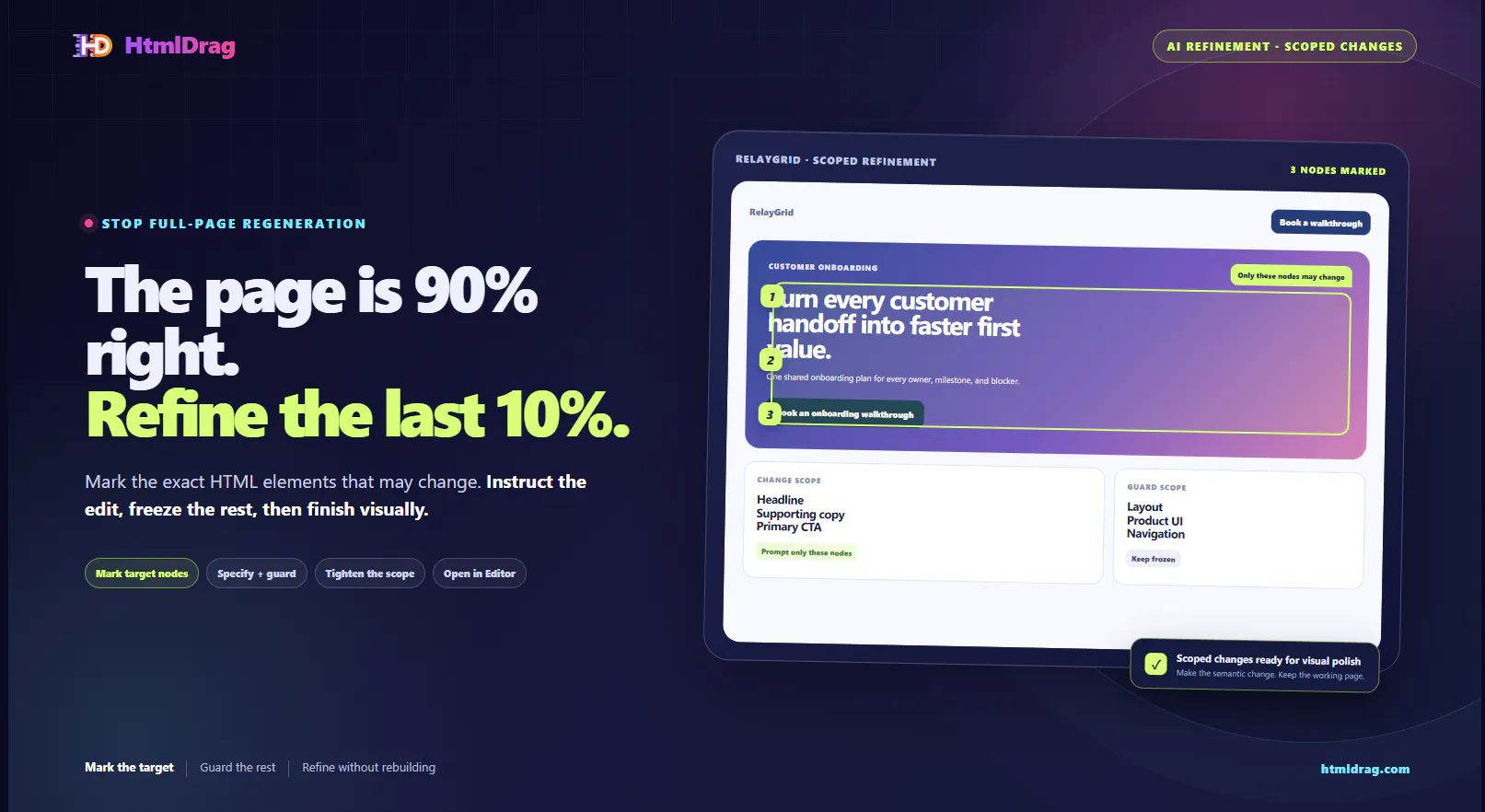
AI can produce a strong first landing-page draft. The final step should not be a risky full-page regeneration just because one headline or CTA needs work.
HtmlDrag lets you load the existing HTML, mark the exact DOM nodes that may change, keep the rest of the page protected, and work in smaller refinement passes. Then move to the visual editor for tables, links, locking, cleanup, versioning, and clean HTML export.
•3mo ago
Finish AI-generated HTML pages visually.
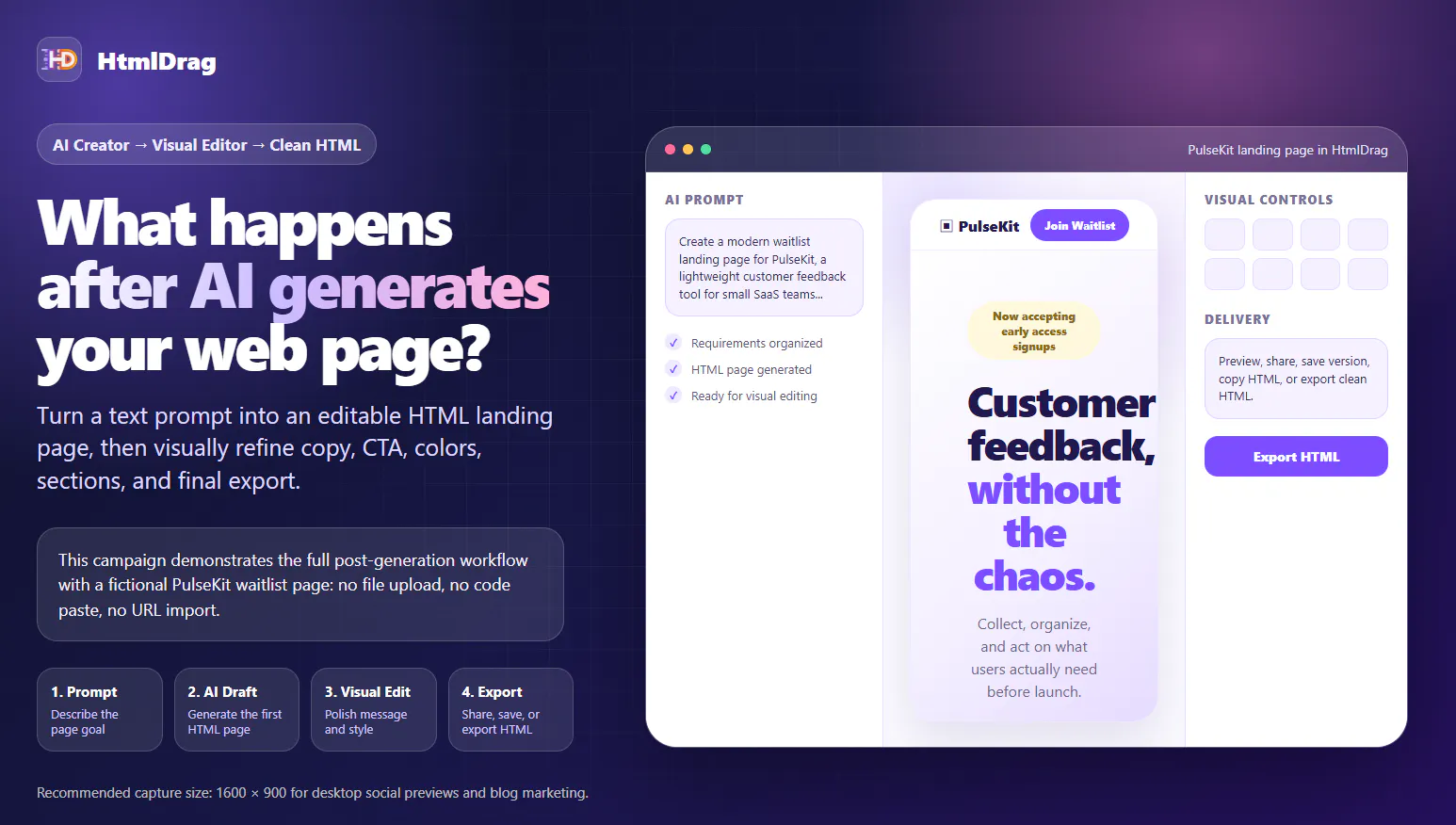
AI can generate a web page quickly, but in real work the first draft is not the end of the process.
After generation, teams still need to review the structure, rewrite copy, improve CTA wording, adjust colors, inspect sections, and prepare the page for sharing or delivery.
•1mo ago
Give AI-Generated Landing Pages a Final Visual QA Pass
AI is great at producing a first landing-page draft. The last mile is still human: make the promise specific, make the CTA match the next action, remove repeated filler, add a link or table only when it helps a visitor decide, preview the whole page, and export the reviewed HTML.
HtmlDrag gives teams a visual working copy for that focused pass. Keep the HTML that already works instead of restarting the page because one visible decision needs correction.
 •
•3mo ago
Edit complex HTML visually without losing the structure
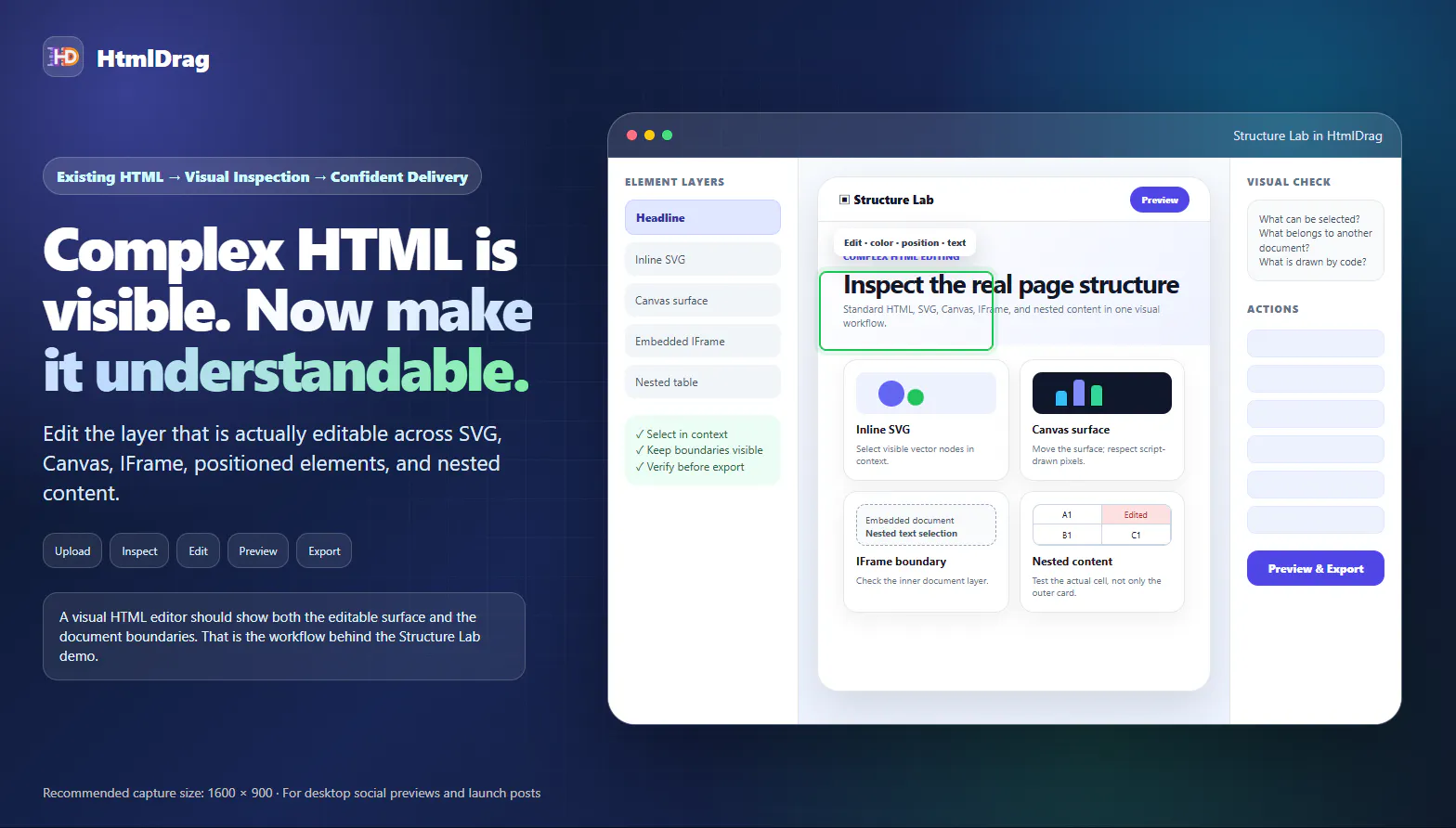
Existing HTML can look complete in a browser and still be difficult to edit. The challenge becomes clearer when one file combines standard HTML with SVG, Canvas, IFrame content, positioned elements, and nested tables.