but I recently came across an article describing how someone used Claude Code to access robot vacuum devices across 24 countries and potentially observe their environments.
18 months ago, I barely scraped a C in introductory college coding and swore off development entirely. As an Economics grad, my plan was strictly research.
Then I landed a Revenue Operations role.
Suddenly, my job demanded working automations: Clay workflows, HubSpot APIs, and dashboards that actually had to function. Opening VS Code for the first time felt completely foreign.
Instead of quitting, I used Claude as an infinitely patient technical pair-programmer. Fast-forward to today: I have shipped 20+ automations managing 5,800+ live contacts.
Hey! I'm Yas, solo founder of Semita an AI travel planner that generates a full day-by-day itinerary in under 60 seconds.
A few things I learned building and launching solo:
Distribution is harder than building the product took months, getting people to see it is a whole different challenge
User feedback surprises you I assumed collaboration would be the most popular feature but Hidden Gems mode got way more attention than I expected. Goes to show that what you think users want and what they actually care about can be completely different
Plan your launch day better than I did it is chaotic trying to make sure everything works while also getting posts out everywhere. I got so caught up checking the product that I missed the time and lost the first few hours of momentum. Lesson learned schedule your posts in advance
Getting people to respond is hard I personally emailed early signups hoping for feedback and heard nothing back. Apparently that is normal but it is still a humbling reminder that getting people to engage takes way more effort than you expect
Would love to connect with other founders what was your biggest lesson from your own launch?
I have build close 2-3 applications till now, none succeeded. But, while starting building or even starting to market, I never thought of making it big enough. It is simply because I was working on small problems and creating small solutions for it and to be honest, never wanted to raise investments.
But, in the startup and saas scenario, there are companies and saas with minimal idea have taken investments. For me, investments are a way with which you come under pressure of increasing your numbes faster. While indie saas owners can benefit all the profits themselves while never have to be under pressure when app or startup is down etc.
What do you think? Raising investment is a good choice for founders or when is investment needed?
I m curious how other makers handle recurring payments across work and personal life.
Do you audit them monthly, use a bank alert, keep a spreadsheet, or mostly notice only when a renewal hits?
I ve found the hard part isn t a single expensive tool; it s the small services that keep renewing after you stop using them. What system has actually worked for you?
Hi there! I've been working in content marketing & SEO for almost a decade - and while I've seen many announcements of the death of SEO, the current search climate, combined with the latest announcements from Google are strong signals that SEO may (finally ) be over.
What do you think? Is "answer engine optimization" the answer?
I continue building UI pages for my email marketing platform using AI, and I wondered if AI generated UI designs are good enough for production apps?
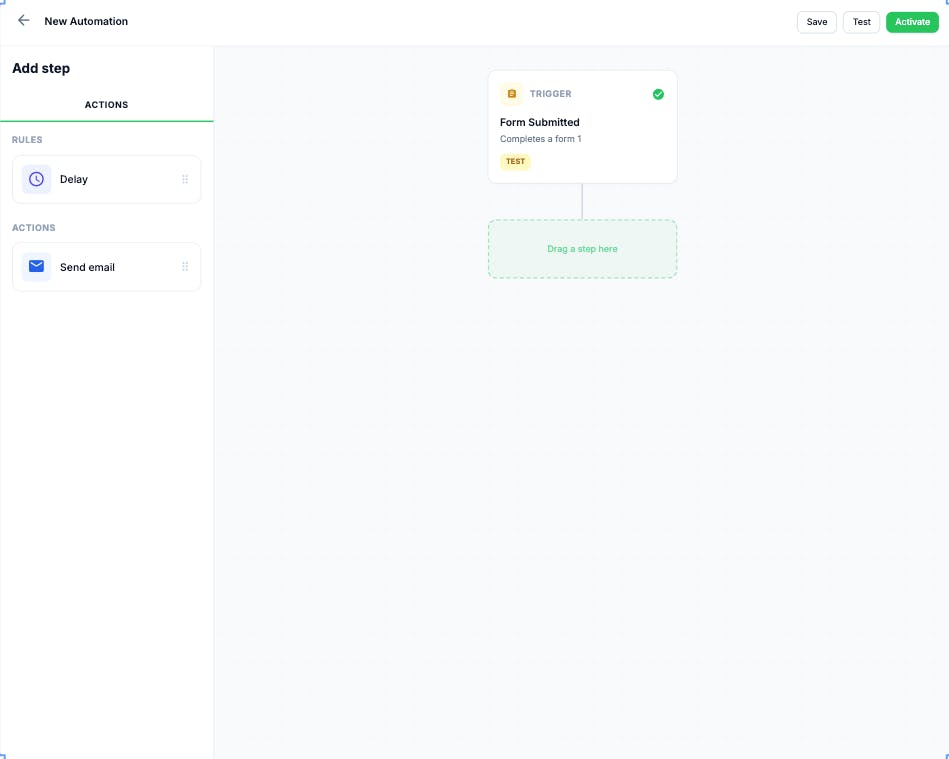
They seem to work great on mobile devices and desktop screens. They load fast. They behave normally. I m personally perfectly fine and happy to use them in production, but what is your opinion? Am I missing something? Should I be worried about using them in production? To build UI I use Lovable and Google Stitch. I go feature by feature, and for each feature I create a separate Git branch. This way I m more careful that one update does not break my entire website. P.S. The attached screenshot is a work in progress design that I created using Google Stitch for the Email Automation and Sequencing feature.