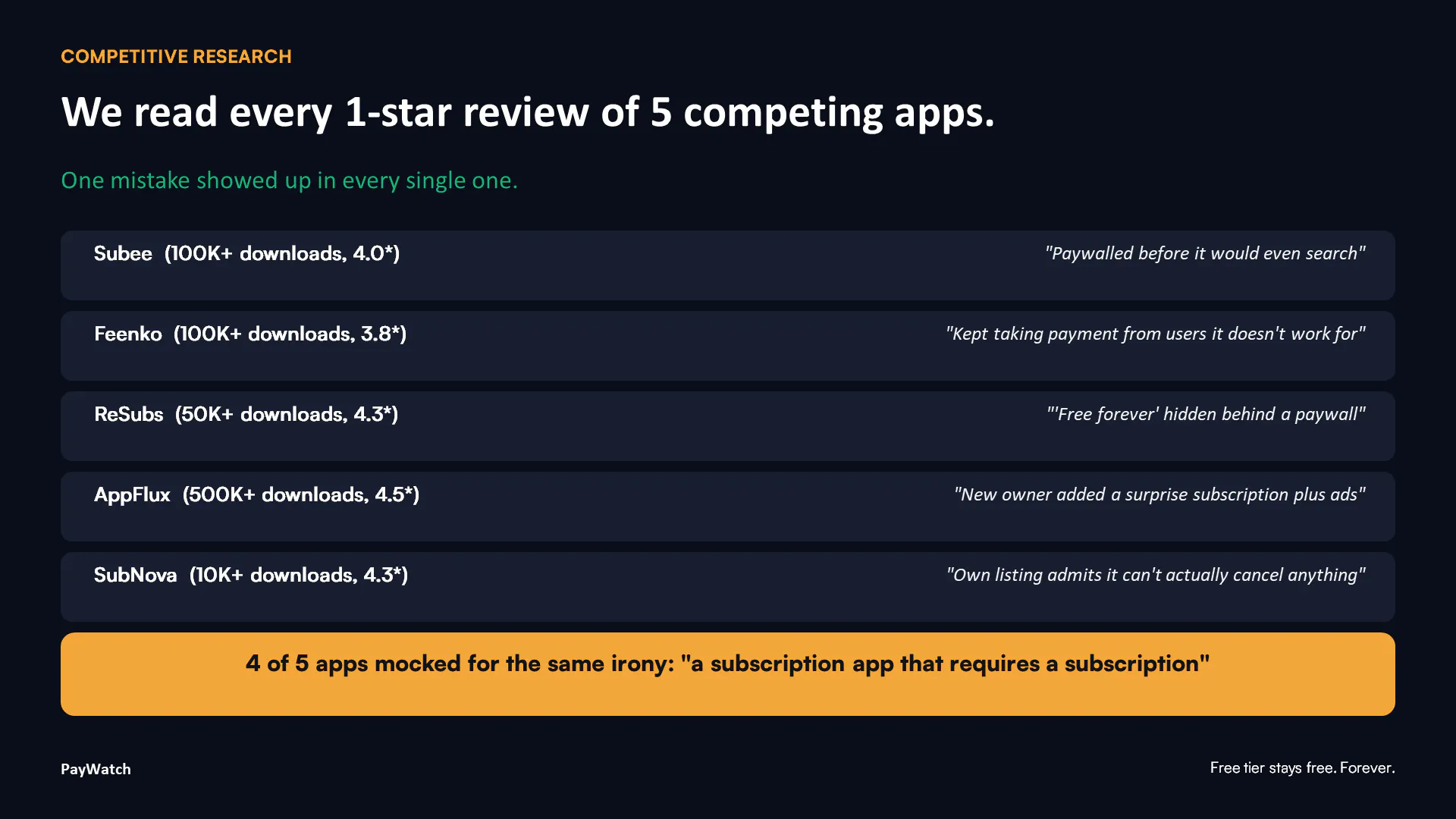
Before building PayWatch (a subscription tracker), we scraped and read the negative reviews of 29 competing apps on the Play Store. Across the 5 with real usage, one failure mode showed up in every single one, independently: they're subscription-tracking apps that paywall the free trial before showing you anything useful. Users mock this exact irony across four different apps' reviews, "a subscription app that requires a subscription."
It's a strangely consistent category-wide mistake, and it directly shaped our free tier: full detection and dashboard, free, forever; the paid tier only adds depth. Happy to share the raw pattern breakdown if anyone building in fintech/consumer subscriptions wants it, and if you want to see where we landed: https://thepaywatchapp.com
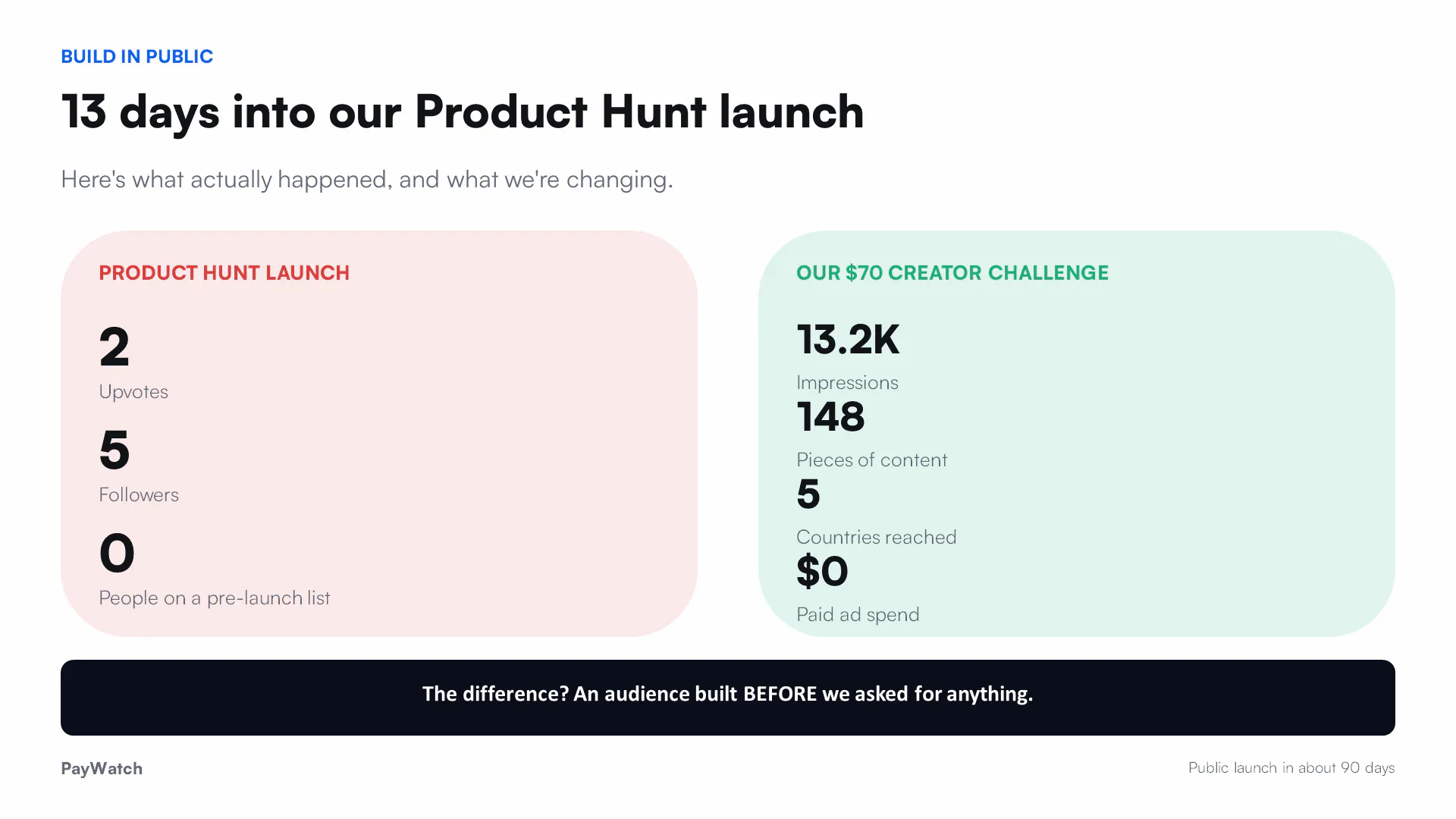
We launched PayWatch here two weeks ago: 2 upvotes, 5 followers. Not the outcome we hoped for, and we think we know why: we launched without building any audience beforehand, which basically every "successful launch" post here says is the #1 mistake.
Rather than pretend otherwise, wanted to share what we're doing about it: we ran a small creator campaign before this ($70 budget 13.2K impressions, 148 pieces of content, 5 countries) and are folding those lessons into our actual public launch in a couple of months, this time with a real pre-launch list instead of showing up cold.
Curious from other makers here: for those of you who've relaunched after a quiet first shot, what actually moved the needle the second time?
I m curious how other makers handle recurring payments across work and personal life.
Do you audit them monthly, use a bank alert, keep a spreadsheet, or mostly notice only when a renewal hits?
I ve found the hard part isn t a single expensive tool; it s the small services that keep renewing after you stop using them. What system has actually worked for you?