At the beginning, my reason was very simple: I needed a job and I genuinely liked the product.
I graduated with a Marketing degree, but I never felt like I belonged in agencies or similar environments. It just wasn t for me. At the same time, I didn t have much experience in tech either. So I took a leap of faith and applied for a Customer Support role, almost blindly.
The early days were tough. I had no technical background, no real understanding of how apps were built, and everything felt overwhelming. But the product itself became my motivation. I started from the most basic things: learning simple technical terms, understanding how an app is structured, and slowly exploring how everything works behind the scenes.
If your launch does not go as planned, do not judge it too quickly. Avoid the instinct to immediately add more features or pivot the product.
Instead, pause and evaluate what already exists. Check whether the core features are clearly communicated, fully polished, and genuinely solve the intended problem. Often, the issue is not the idea, but the execution, positioning, or user experience.
Refine what you have. Improve clarity, usability, onboarding, and messaging. Then relaunch with focus and confidence.
Many products fail not because they were wrong, but because they were unfinished, unclear, or rushed.
Yesterday, I came across a job posting from a specific SF company that offered Yesterday I came across a job posting from a specific SF company that offered a salary of 250k 1M (including equity), but realistically, I don't think they have that money; they're just grinding to satisfy investors and succumb to too much hustle culture.
Requirement: be available on-site from 9 AM to 9 PM 6 days a week in the office (and I bet even Sunday would be dedicated to meeting some team members in "free time"). In addition, they were willing to hire those who would relocate to SF.
We were lucky to land in the Top 10 on Product Hunt totally unexpected and honestly motivating.
Even better was the feedback. One of the most requested features was real-time alerts, especially Slack notifications when something sensitive is exposed.
Hi everyone! I m Hansi, founder of You2Mentor. I started this platform to bridge the gap in mentoring. Most people either don t have access to mentors, or the mentoring they get is limited to the organisation or the department they work in.
We re building a platform that helps individuals find mentors and supports organisations in running structured mentoring programs. Users can set goals, track progress, and grow skills in a meaningful way.
For me, productivity means getting (more) results faster in less time. My goals for 2026 are closely linked to the fact that I want to learn a lot of things, which will require a lot of concentration.
Therefore, I think that a large part of what I want to gain will be ensured by:
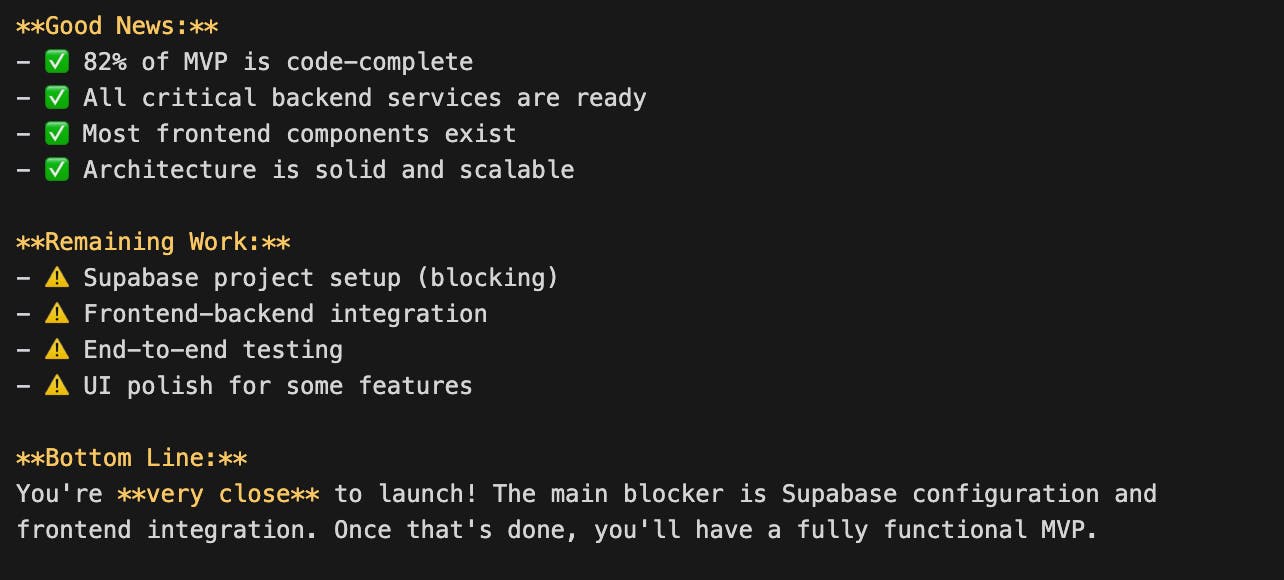
I'm Vasyl, and three days ago I couldn't code. Well, today nothing changed lol. It would be great to hear some advice, how you guys as low Cursor credits as possible. Today I'm 82% done with a web app full-stack mentorship platform. WHAT IS IT: a mentor-mentee matching web app where professionals can find the right guidance and mentees can connect with experienced mentors in their field. THE TWIST: I'm building this entire thing with zero coding background, using Cursor IDE + Claude AI, and documenting every single day publicly. WHERE WE'RE AT (Day 3): - Backend: 100% complete (auth, payments, messaging, reviews) - Frontend: 70-100% depending on feature - Dashboards: Fully functional - One blocker: Database setup (2 hours away) - Launch: ~20 hours of focused work WHY THIS MATTERS: Not trying to sell you on the app yet (it's not even live). But the meta-story is wild - AI just changed what's possible for non-technical founders. The barrier between "I have an idea" and "I shipped a product" collapsed.
FOLLOWING ALONG: Building in public on X (@VasylK23416) and LinkedIn. Every day. The wins, the bugs, the "why doesn't this work" moments. Launch coming next week. Would love your thoughts, feedback, or just follow the chaos. What was your experience learning to build your first product? #buildinpublic #AI #nocode #mentorship
Ten years ago, if a Facebook post didn t receive enough reactions, I would delete it immediately.
Yep, 18-year-old Nika was terrified that people would notice her failure. Reality check: when a post flops, almost nobody sees it anyway. The only person who actually suffers from the low engagement is the original poster.
Hey hey PH community We kicked off a little Made with Metabase contest on Reddit and would love to see what you ve been building.
If you've shipped something with Metabase (dashboards, internal tools, data stack, or scrappy MVPs), this is a nice excuse to turn that work into a limited-edition Metabase mechanical keyboard Join in here: https://metaba.se/made-with-meta...
Everyone has their favourite routine to perform at their best.
Some are advocates for the Pomodoro technique (25 minutes of intensive work, with a 5-minute short break), others love time-blocking, a few plan the entire week on Sunday, and there are even people who say ice-cold showers la Wim Hof help them focus.
Quick question for everyone following PlanEat AI. If you could eliminate just one pain in your cooking routine, what would you pick, and why? Examples: deciding what to cook, planning the week, building a shopping list, staying consistent, or anything else.
For most teams, it stops being optional the moment support volume grows faster than the team can scale. When repetitive questions start taking up the majority of agent time, response times slip, costs rise, and hiring becomes a constant reaction instead of a plan. That s usually the tipping point.
AI becomes a necessity when customers expect instant answers across channels, when agents spend more time copy-pasting than solving real problems, and when managers lose visibility because tickets pile up faster than they can be triaged. At that stage, automation isn t about replacing people, it s about keeping quality and consistency under control as the business grows.
Guys, over the past 3.5 months, we encountered one significant problem at ProblemHunt:
Many contributors who shared problems aren't very motivated to provide feedback to developers for various reasons. Even among those willing to give feedback, not everyone agrees to work with more than 3 5 different developers (for context: currently, one contributor receives messages from 7 15 people on average). And without quality feedback, it s difficult to clarify all the details and build a great product.
To solve this problem, we talked to some of the contributors and found out: they are willing to provide feedback much more actively if they can receive 1% equity in the future startup. According to them, this would give them strong motivation to help with advice and actively participate in testing.
Therefore, we decided to run an experiment over the next few months. Now, in the problem submission form, contributors can optionally indicate that they want to receive 1% equity in the future startup. And we will mention this in the publication for you.
By the way, if you currently have a problem and also want to get 1% equity in a future startup, you can seize this opportunity right now on ProblemHunt!