
 •
22d ago
I built xReach on my own. Now I'm trying to get the right people to use it.
I'm Sri, a solo developer from India, and I recently launched xReach. I've spent the past few months building it, fixing bugs, figuring out payments, and trying to get everything ready. Honestly, getting the product live took a lot more than just writing code.
The best moment so far? Getting my first payment just 6 hours after launch.
 •
22d ago
TutorialPin 0.3.0 is live — turn web tutorials into actionable checklists
I ve just released TutorialPin 0.3.0 a Chrome extension that turns web tutorials and instructions into step-by-step checklists in Chrome s Side Panel.
The idea is simple: when you re following a long coding tutorial, setup guide, documentation page, or study material, TutorialPin helps you keep your place and track what you ve already completed.
What s new in v0.3.0:
Better parsing of numbered and bulleted instructions
Duplicate existing checklists
Export checklists as Markdown
English, German, Japanese, and Ukrainian localization
Small usability and stability improvements
 •
22d ago
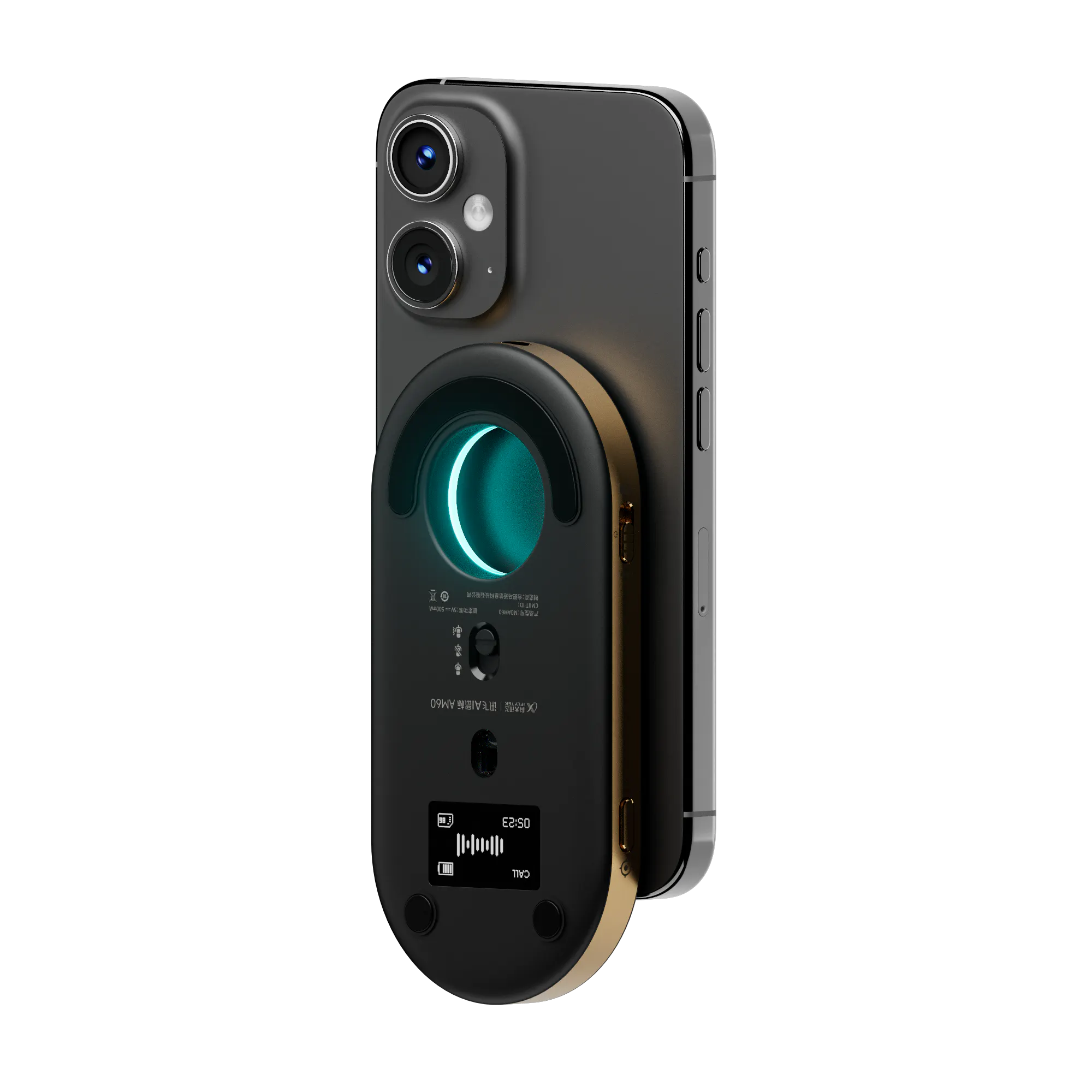
What should a mouse never compromise for extra features?
A mouse is used constantly, while meeting recording is occasional. That makes me think the core controls should come first: scrolling, comfort, and reliable tracking.
The AM60 explores this trade-off with a touch strip instead of a conventional scroll wheel, alongside built-in meeting and phone-call recording. I m affiliated with the product, so this isn t an independent review.
If an extra feature changes a control you use all day, what would it have to do exceptionally well to earn its place? Would you prioritize familiar scrolling, comfort, or having fewer separate devices?
 •
3mo ago
Tired, but wired? Would you use a sleep mask that you control with your eyes?
Most sleep technology tracks your sleep. Cool, but what if you need help falling asleep in the first place?
We're building for the period when you're still awake. Think of it like an off-ramp for your busy mind.
 •
22d ago
Can an AI agent join a team without starting as a blank slate?
Hi everyone
Nice to meet you here, and congrats to everyone launching today.
We ve been exploring a question that came up while a human and an AI agent were building things together:
 •
3mo ago
We're using our own product on our own blog to enhance our AI search visibility | HarperFlow
Last spring, I asked ChatGPT, Perplexity and Gemini the same buyer questions ("best X for Y") via live API and logged who they recommend. Two numbers rewired how I think about AI search visibility:
On ~98% of commercial questions, the engines name specific brands.
All three engines agreed on a common pick on just 56% of questions.
Bonus: Perplexity's most-cited source is Reddit on ~87% of questions.
 •
22d ago
Are people using AI voice chat more in their daily lives?
We re trying to figure out the best form factor for an AI friend who's a market wizard. Leaning heavily into voice now. Voice is really expensive to run (esp for free products), but building your own pipeline can get the cost down 10x from a e2e hosted solution on xAI or OpenAI, and give you more flexibility for tooling etc.
Here s some of what s been working for us:
- Since increasing the expressiveness of our voice model's output, we ve seen double-digit percentage growth in next-day retention among users who have had a call experience.
- Knowing the assistant is hearing you clearly is a key part of perceived speed. Using Apple s local live voice capture to render words as you speak has significantly improved perceived speed, even though actual reply times haven't changed.
- Our onboarding has reached an 88% notification opt-in rate by reframing the question from whether users want notifications to how often they d like to be notified. As a new app on someone s phone, you need to repeatedly show value to become part of their financial routine.
Download it on the ios app store we would love feedback => https://apps.apple.com/au/app/ma...
 •
22d ago
Why is it so difficult to go from learning AI to actually building AI applications?
I've been working on a learning platform to address a problem I've experienced while exploring AI development: there are plenty of tutorials, documentation pages, and individual courses, but figuring out what to learn first, how the pieces connect, and what to build next can be overwhelming.
I'm organizing a curriculum that starts with programming fundamentals and progresses through APIs, databases, machine learning, LLMs, RAG, tool calling, LangChain, LangGraph, MCP, fine-tuning, n8n, and multi-agent systems. The platform is being designed around 3,200+ practice exercises, hundreds of practice projects, interview questions, and portfolio projects, with a path from beginner concepts to advanced topics.
One thing I'm trying to get right is the progression: learners shouldn't just recognize terminology; they should be able to apply concepts and build things independently.
 •
7mo ago
Stop guessing your AI bill. 📉 Build profitable AI products instead.
Hi Product Hunt!
I m the maker of aicostlabs.com.
The idea for this project started out of sheer frustration. As I was building my own AI wrappers, I kept hitting the same wall: AI unit economics are hard.
API prices change every week, token counting is confusing, and calculating if a feature is actually profitable often feels like guesswork. I got tired of messy spreadsheets, so I built a suite of tools to solve it.
 •
7mo ago
"What should we eat?" the hardest question to answer.
Hello everyone!
I m thrilled to announce that SoloPlate will launch tomorrow, an AI-powered meal assistant built to kill "Decision Fatigue." I created this using @Base44after realizing that for many of us, the hardest part of cooking isn't what you cook with, it's figuring out what to make. After a long day of work, the last thing you want to do is have to do more work.
SoloPlate is designed to be your digital sous-chef.
Decision-Free: AI helps you pick the perfect meal instantly.
Beginner-Friendly: Simple instructions for those new to the kitchen.
Watch & Learn: A dedicated video section for those who prefer visual guidance.