trending
β€’

1mo ago

One check-in is a moment.

Repeated check-ins reveal a pattern.

  • One mood score does not tell the full story.

  • One low-energy day can be normal.

  • One stressful moment can pass.

  • One busy week can be temporary.

But repeated signals reveal patterns.

That is where Pulseboard becomes useful.

β€’

1mo ago

People only share honestly when the system feels safe.

That is why Pulseboard starts with trust.

A wellbeing tool only works if people trust it.

If employees feel monitored, they will protect themselves.

If managers only see scores, they may misread the human context.

β€’

1mo ago

Async teams need async signals.

Not everything should wait for the next meeting.

In async teams, people work across different rhythms.

  • Different locations.

  • Different focus blocks.

  • Different time zones.

  • Different energy levels.

That makes it harder to see how the team is really doing.

β€’

1mo ago

Team wellbeing does not have to feel heavy.

It can start with one small question.

Wellbeing is often treated as a big topic.

  • Big programs.

  • Big surveys.

  • Big reports.

  • Big interventions.

But teams often need something much smaller first.

β€’

2mo ago

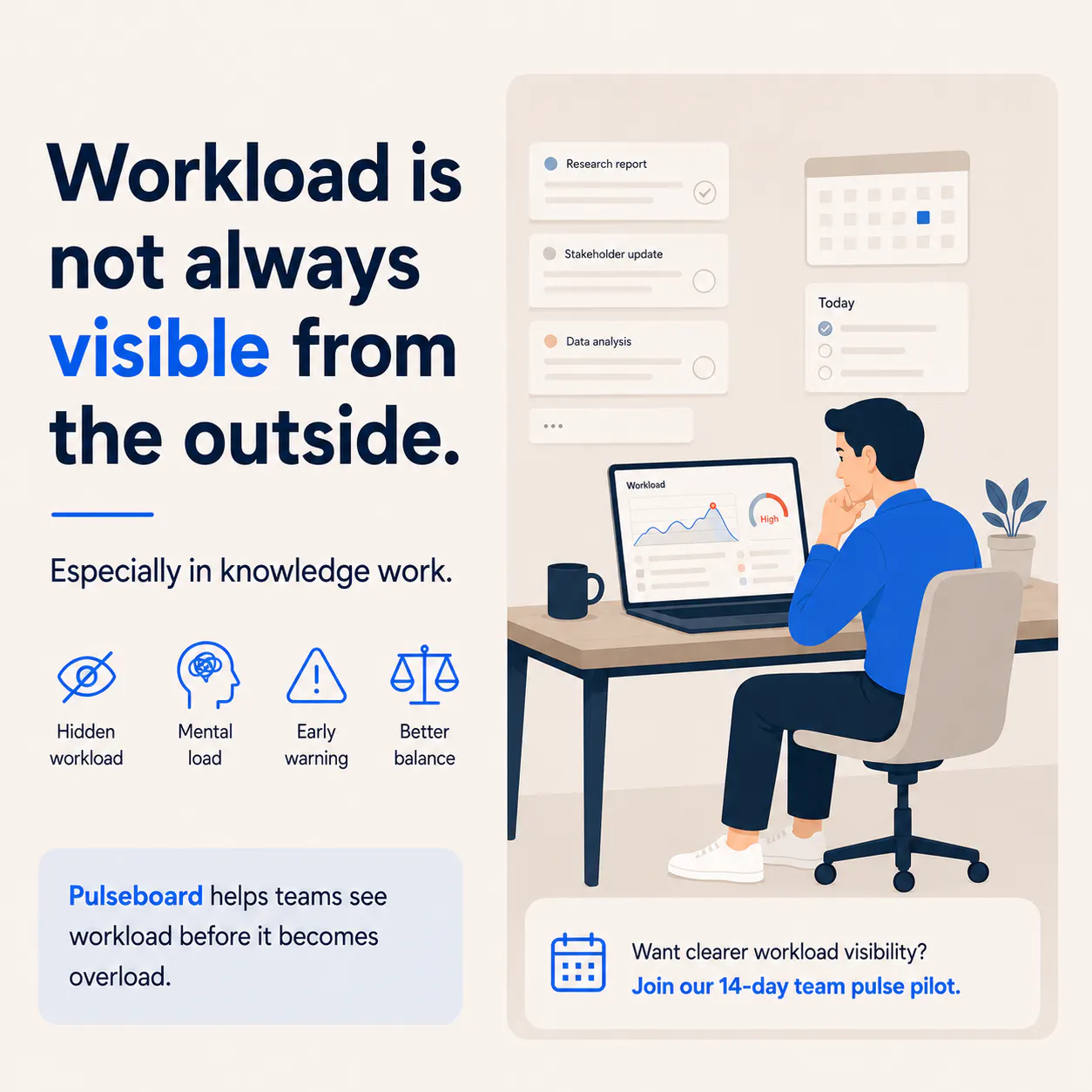
Workload is not always visible from the outside.

Especially in knowledge work.

In knowledge work, workload is often hidden.

β€’

2mo ago

Not every team signal needs a meeting.

Sometimes a 30-second check-in is enough to start.

Teams already have enough meetings.

Pulseboard is not designed to add another one.

It is designed to create a small moment of visibility.

β€’

2mo ago

Most teams react too late.

Pulseboard is built for earlier action.

Many team wellbeing actions start after the problem becomes visible.

  • After stress rises.

  • After someone drops out.

  • After conflict escalates.

  • After engagement falls.

Pulseboard helps teams shift from reaction to prevention.

β€’

2mo ago

β€œI’m fine” is not always a signal of health.

Sometimes it means: I don t know how to say it.

In busy teams, I m fine can mean many things.

  • I m okay.

  • I m tired.

  • I don t want to bother you.

  • I m overloaded but managing.

  • I don t know if this is worth mentioning.

Pulseboard helps teams move beyond vague answers.

β€’

2mo ago

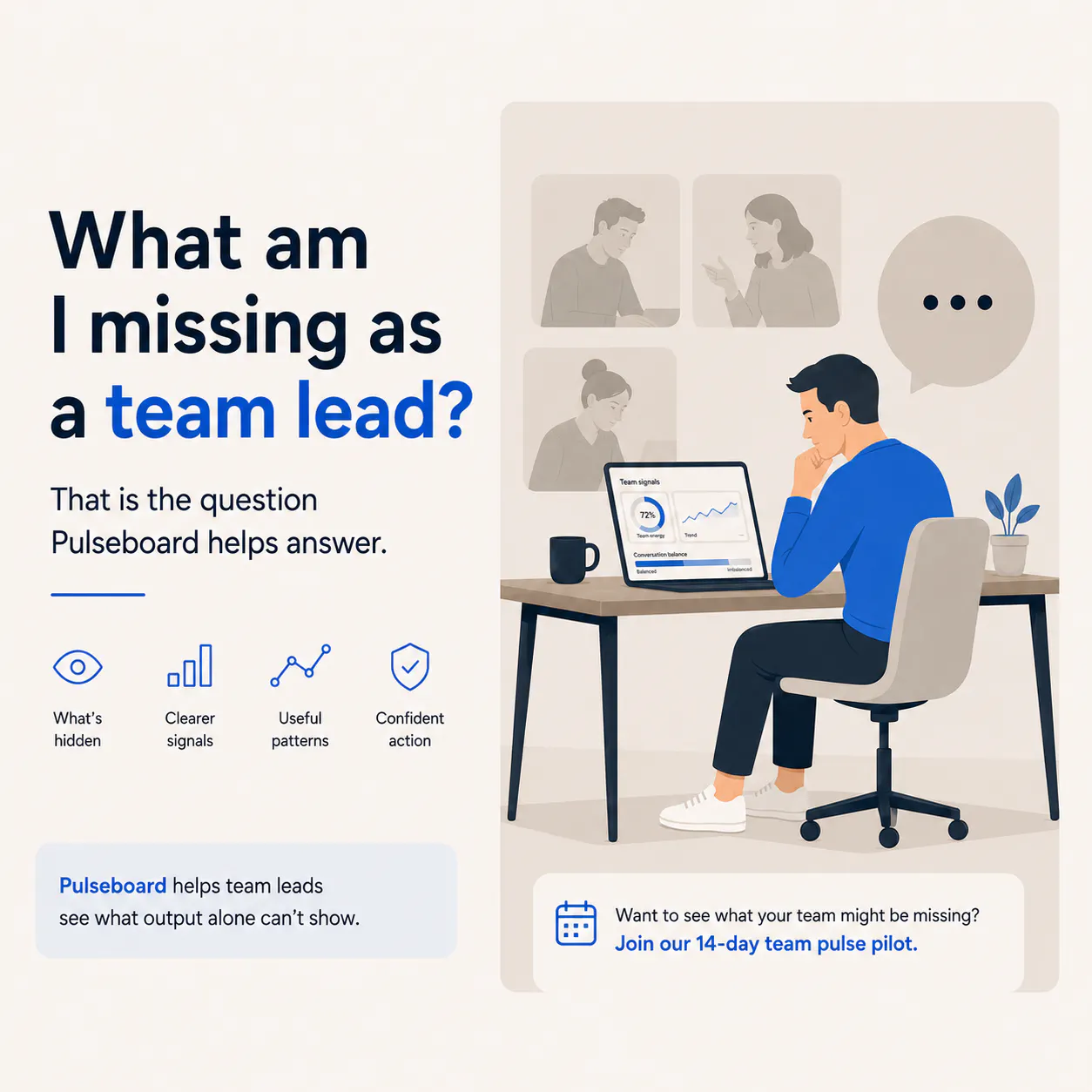
β€œWhat am I missing as a team lead?”

That is the question Pulseboard helps answer.

A team lead can see output.

β€’

2mo ago

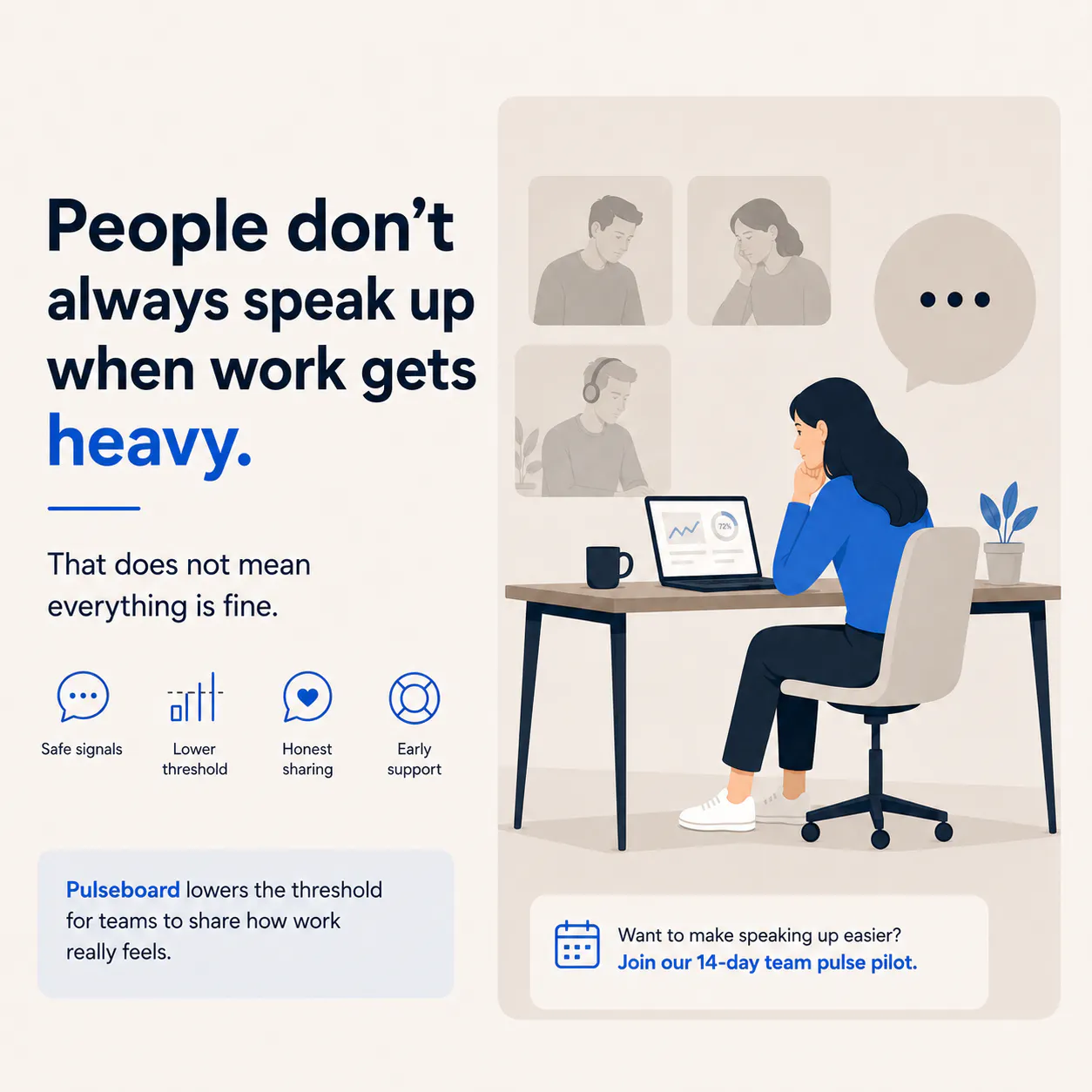
People don’t always speak up when work gets heavy.

That does not mean everything is fine. In many teams, people stay quiet when workload increases. Not because they don t care. Not because they want to hide something. But because they don t want to complain, disappoint or slow others down.

Pulseboard creates a low-friction way to share signals without turning every concern into a big conversation. A small check-in can lower the threshold. And sometimes that is exactly what a team needs.

First
Previous
123
β€’β€’β€’
Next