I still reply to every comment manually. Reddit, LinkedIn, Product Hunt, forums, Twitter, Discord. Every single one.
AI could do this. There are tools that generate replies, post on schedule, analyze sentiment, even mimic your brand voice. But I don't use them. Here's why.
A 2024 study on community engagement across 500 brands found that personalized responses drive 3.2x higher retention and 4.7x more repeat interactions than automated replies. People can tell when a response is copy-pasted. They can feel when no one actually read their comment. The average user only needs 2-3 automated interactions before they disengage entirely.
As founders, calls are part of our daily life. Brainstorming, quick updates, random discussions with the team and there s always value in those moments. But most of the time, all that value just disappears after the call. By connecting Prodshort to your calendar, it automatically joins your calls and turns them into ready-to-post content.
If you're a founder and want to create content, I'm doing short discussion calls. Let's connect !!
Just wanted to share a little "behind the scenes" pain from the OptiClear launch. We all know the Apple App Store review process can be a rollercoaster, and I definitely hit a loop.
I had built this sweet "Invite a Friend" feature. The logic was simple: generate a code, share it with a friend, and both of you earn free premium days. A classic, organic growth loop, right?
Well, Apple hit me with a rejection. Apparently, unlocking premium features outside of their standard In-App Purchase flow (even as a reward) is a big no-no.
TwelveLabs just introduced Pegasus 1.5, their most significant leap in generative video AI, transforming video into a queryable, structured data asset.
@Wispr Flow launched on Product Hunt back in 2024. Since then it has become one of those tools that quietly sticks. It's the AI dictation tool a bunch of us here use day to day (yes, there are still a few people committed to typing everything out). It works anywhere on your Mac or PC, so you can just talk and have clean text land wherever your cursor is.
For the next three days, it is showing up on the leaderboard in a different way. From April 14 to 16, you can upvote and comment on Product Hunt using Wispr Flow directly. If you use dictation, those upvotes and comments will carry a bit more weight. Try it out by clicking the Wispr Flow unit on the Leaderboard and telling it to upvote a product name
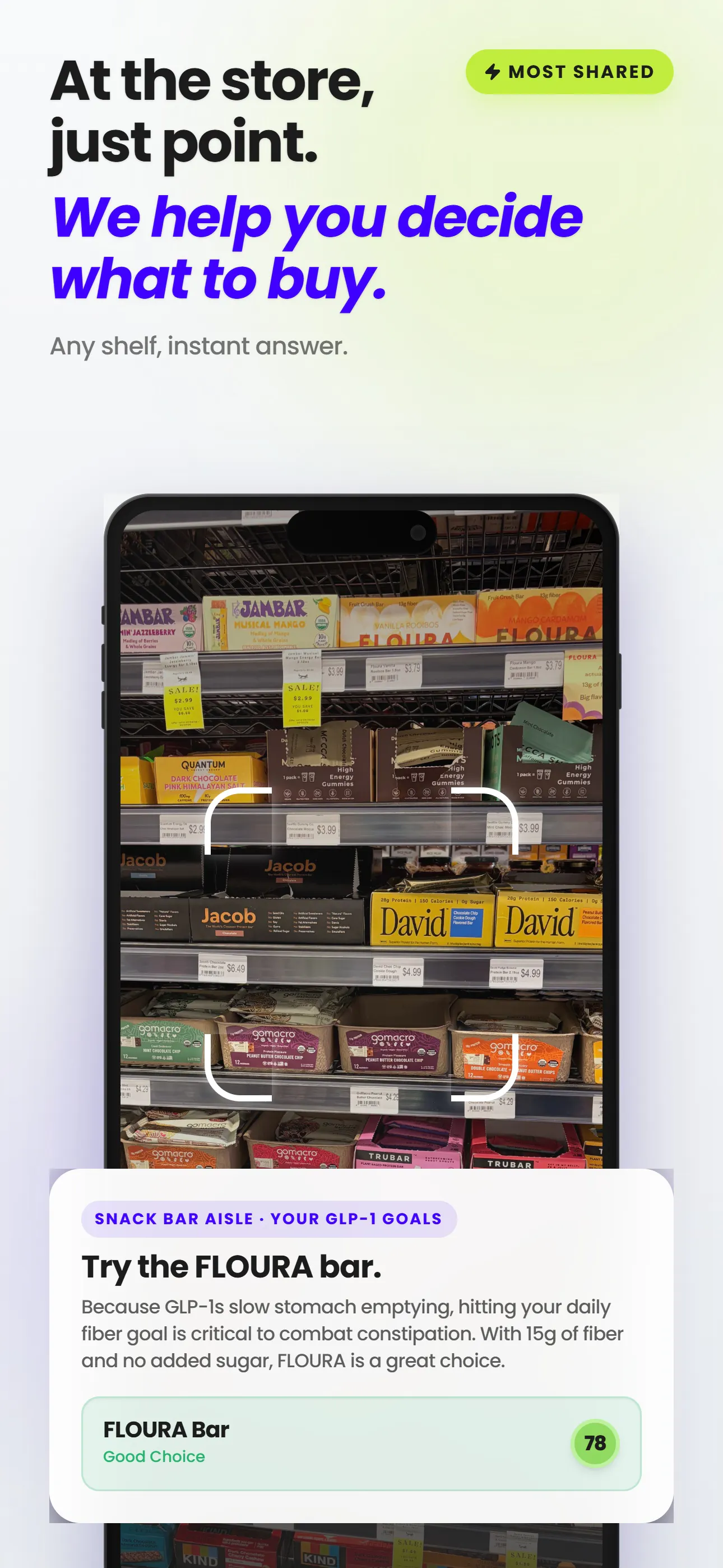
If you're on a GLP-1 (Ozempic, Wegovy, Zepbound, etc) and figuring out what food to buy/eat is absolutely confusing, we'd love to have you as a beta user on our new app. If you're not on a GLP-1, but you have a health goal (ie: eat more protein, more fiber, less sugar, etc) we'd love you as beta users, too! Drop a comment if you want to be added to the Testflight beta group. Beta testers who submit feedback get free access to the app for an entire year :)
We re trying something new on Thursday: Alpha Day.
The idea is simple. If this is the first time you re launching your product anywhere, you can tag it alpha and get a boost to your points (and land on a special leaderboard).
Lately, I ve been looking closely at how independent builders and small teams are managing AI knowledge bases. It feels like the default "industry standard" is to immediately reach for a complex RAG pipeline and a heavy, paid Vector Database.
But I'm starting to wonder if we are over-engineering this for 90% of standard use cases.
Vector DBs are incredibly powerful for massive scale, but for smaller or non-massive datasets, they can be expensive, complex to query, and act as complete black boxes. If a search returns a weird chunk, diagnosing it is often a nightmare.
I genuinely love listening to podcasts. It's one of the best ways I've found to stay on top of new trends, pick up strategies I wouldn't have discovered otherwise, and come across founders and operators I'd never stumble on through regular reading.
So I'm always on the lookout for new ones worth adding to the rotation.
It featured individuals who managed to build significant profit while running their businesses solo, without employees. Until now, I ve seen these more as exceptions rather than the norm.
Six months ago, we ran an experiment with our own data.
At Rankfender, we tracked 5 of our own competitors across 8 AI systems. We log their share of voice, citation velocity, content gaps, platform variance. Months of raw numbers sitting in a dashboard.
I pulled 6 months of data and fed it into Claude. One question: "Based on this, who is most likely to overtake us in the next 6 months? Show your work. Use the data. Don't summarize. Give me the numbers."
Everyone tells you to ship fast. Move fast and break things. Get to market before someone else does.
I believed this for a long time. When we were building Murror, speed was everything. We pushed features weekly, sometimes daily. We celebrated every deploy like a small victory.
As builders, we love tracking daily metrics: MRR, GitHub commits, daily workouts, Inbox Zero. Standard habit trackers are incredibly optimized for this gamification.
But lately, I've realized my "mental RAM" gets completely eaten up by the irregular tasks. The stuff you only need to do every few weeks or months:
Changing the AC filter
Watering specific houseplants
Following up with that one dormant enterprise lead
A few years ago, getting a VC check was the ultimate shortcut. The fastest way to scale. The signal that you'd "made it." But with AI is a little bit different.
Global VC funding declined 30% in Q1 2024. One of the lowest quarters since 2018. And bootstrapped startups are quietly catching up. Recent data shows bootstrapped businesses are growing as fast as VC-backed startups, while spending only about one-quarter as much on customer acquisition.
If you re still sitting on your launch, this is the push.
YC made a special exception for this community: one or more companies that launch tomorrow will get a YC interview and potentially funding. A YC partner will review every eligible launch.