One thing we've been working on with AgentCost is making observability useful closer to where developers actually work.
We've expanded our coding-agent integrations to cover Claude Code, Codex, and Antigravity, with a focus on understanding usage at the session level rather than looking only at an aggregate API bill.
Been thinking about this after a few good conversations here lately: there's a real tension between building something that flags "this looks off" for you automatically, versus just surfacing the raw signal and trusting the human to interpret it.
Too much automation and you risk false confidence, the tool says everything's fine, so nobody looks closer. Too little, and you're back to relying entirely on someone's attention, which doesn't scale past a certain team size or number of ventures.
With Trackly, I've mostly leaned toward showing the raw signal (check-ins, timing, patterns) rather than making a judgment call for the manager. Partly because I don't fully trust automated judgment yet, and partly because I think the "is this actually a problem" call still needs a human who knows the context.
But I'm genuinely unsure that's the right call long-term. Curious what this community thinks:
Hello everyone, I am proud to announce today the new launch of Business AI; Business AI is an AI-powered Business designed in a way to solve the repetitive, manual, and boring stuff in managing a Business. Specifically, Business AI helps you forget your admin role, and just focus on growing your business.
So, this is the link, enjoy talking to your business and don't forget to give us your feedbacks: https://camouflaged-run-with-flo...
A few years ago, if you wanted to build a product, you'd probably sketch a user flow, write down some requirements, or at least spend time thinking through the idea before writing code.
Today, many of us skip that step.
We open Cursor, Claude, Lovable, or Bolt and start typing.
If you live or travel outside North America, the number you need most is often one your phone can't dial: the 1-800 line on a US bank card, an airline booking or an insurance policy. We run QuikRing, which calls those numbers from a browser tab, and this is what we have learned about the problem.
Toll-free numbers are paid for by the company that receives the call, an arrangement built for callers inside the US and Canada. From abroad, carriers often block them or bill them as international calls, depending on the carrier and the plan.
I built VisuDock Live OCR a local-first Windows desktop app that turns CCTV cameras, webcams, RTSP streams, and desktop feeds into real-time text and license plate (ANPR) monitors.
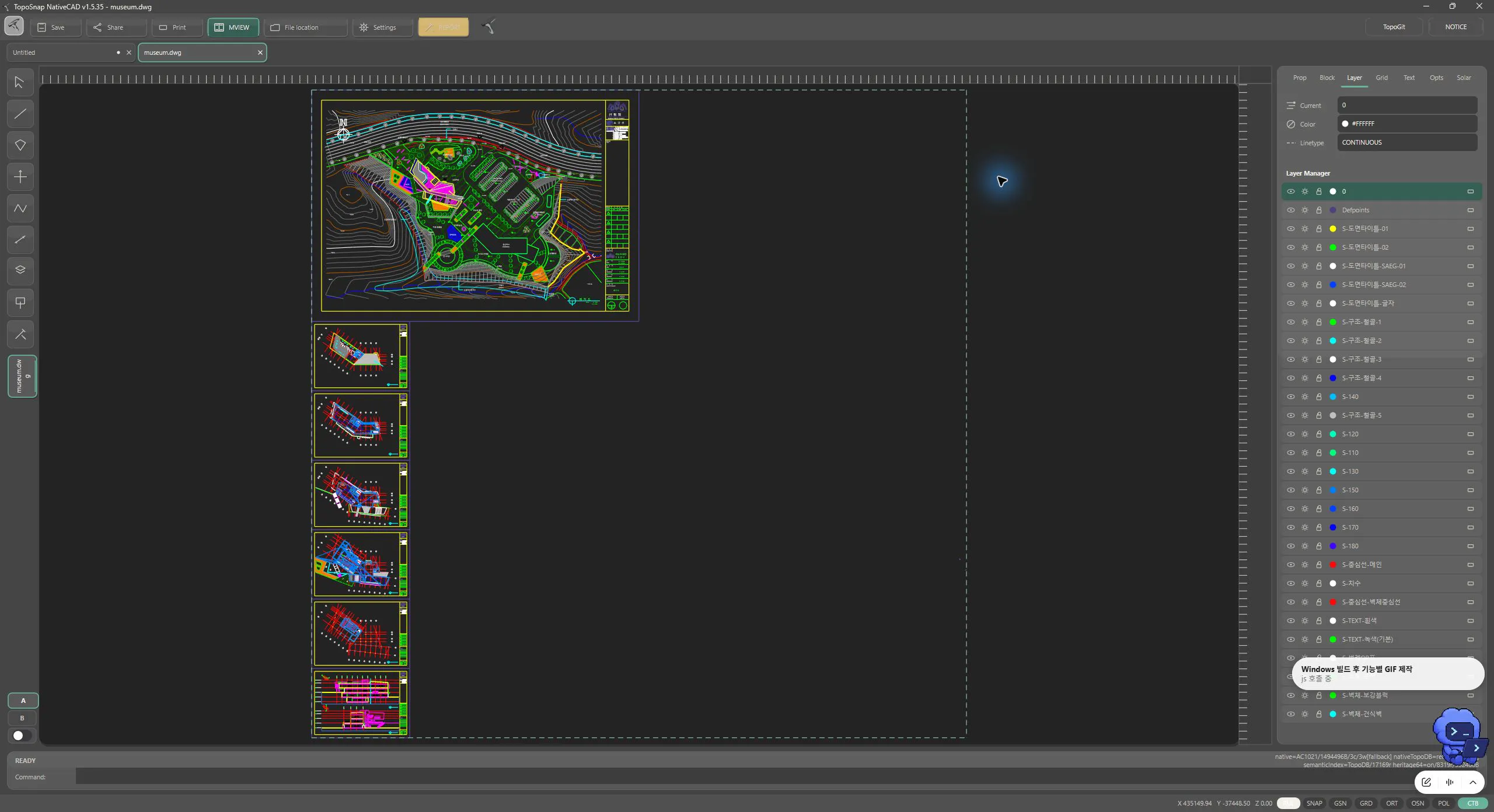
Here's Jimin from South Korea. if you are in architectural field, or you've visited architectural studio, you may have heard of Autocad. Autocad is Single-core-based, having isolated plugin nature in 2026. Without any graphical acceleration and software-level optimization, they have been threating architects and engineers for 40 years, with yearly increasing subscription which cost 2000$. Autocad has conquered engineering markets in early stage in 1980s. hence it is commonly used among engineers like English. That's why I've decided to build TopoSnap. Now it's time to revert those legacy bussiness model. Now its work can be replaced by TopoSnap, C++ based Cross-platform CAD, made by architecture student. Toposnap is Intuitive, Simple, Accurate by topology from math, Fast by CPU-level optimization and database faster than SQLite. it loads LISP, the isolated plugins in Autocad, and SHX fonts, line details and CTBs, which is for processing Plot processes.
Bottles up for the demolition of Autodesk-empire! Where to see; https://www.producthunt.com/prod... https://toposnap.heritage-labs.n...