Hi, so i am building Penvo , which is basically a finace budgeting and subscription managing web/app which can manage all your finance/ subscriptions with a single voice note and can cancel subscriptions and alerts you before you overspend. I want some honest feedback and ask me if there is any query . Join Waitlist for early access !!
penvo.framer.website
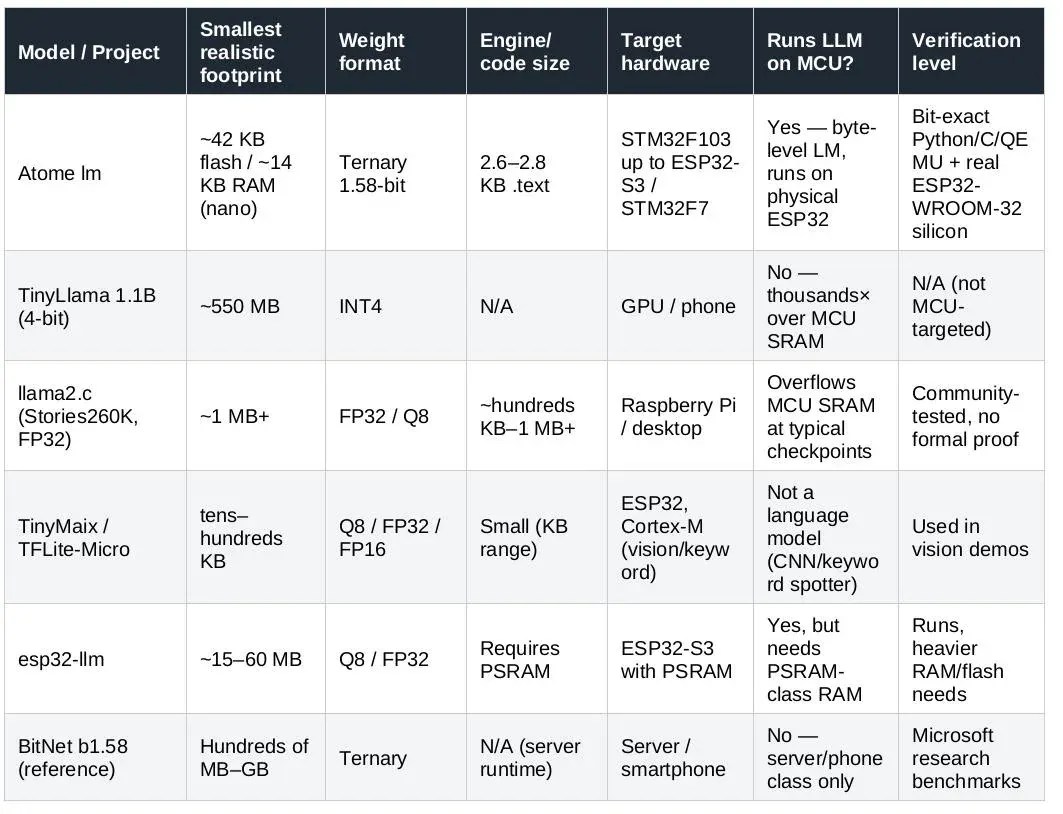
A lightweight language model, Atome LM (944K parameters) has been successfully run on a $5 ESP32-WROOM-32 microcontroller not in simulation, but on real hardware. The model generates text offline at about 1 token per second, proving that LLM inference is possible on tiny chips without cloud support.
I'm Syef, co-founder and CEO of Xseth. We're building an autonomous recon and triage engine for offensive security it maps your attack surface and surfaces the findings worth your attention, minus the scanner noise.
We're pre-launch and at the stage where honest feedback is worth more than revenue. So here's the deal:
We'll run a security scan on your website at no charge and walk you through what we find.
This is my first real project, and it's now live in production: mynook.social.
Why another social network? When I asked myself "what would I change today?", social media was the first thing that came to mind. I think it started out great but became manipulative and noisy. After watching The Great Hack, I stopped posting photos online back in 2019. So I built the kind of network I'd actually want to use.
What makes it different:
Privacy by default public profiles show only a name and photo; private ones don't even appear in search.
You sort each person as Friend, Family, or Both, then choose who sees each photo. The restriction lives in the relationship, not just the post. (Party photos stay with friends; baby photos stay with family.)
Customizable profiles, so your space actually feels like yours.
Prediction markets enable users to buy and sell shares of securities based on possible future outcomes, and one of the most inventive uses of blockchain technology. Polymarket is potentially the best-known prediction market platform; its decentralised design is highly recommended due to its simplicity and accessibility. As demand for transparent forecasting tools grows, businesses and entrepreneurs continue to seek out opportunities to create new prediction market platforms.
I am building Fooglemap, a map for affordable local meals with real menu-price examples.
The useful lesson this week was to stop pitching it as a global restaurant map and focus on places where the data is already concrete. In the current public feed, Southeast Asia has 46 entries: Thailand 22, Singapore 11, Malaysia 9, the Philippines 2, and Indonesia 2.
The entries that feel useful are specific: THB 60 pork basil rice, SGD 3 pork congee, MYR 3 budget meals, IDR 5,000 noodles. That is more useful than another generic best restaurants list.
I am now thinking city-first: highlight strong city pages, clearly label thin regions, and ask locals for one everyday cheap meal they would add.
Chunk v2 is finally out after months of work and I wanted to share it here since this community gave me some really useful feedback on v1.
It s a menubar time-blocking app for macOS. The core idea is simple, plan your day in focused chunks, get a fullscreen alert when one ends, then move straight into the next. It s built to be fast, frictionless, and not feel like some bloated system that requires as much time as it saves.
Lately, I ve noticed a massive trend in launch posts across Reddit, X, and Hacker News. Every second product starts with the exact same sentence: "I was a tired developer, so I scratched my own itch."
Is anyone else experiencing "founder-narrative fatigue"?
Personally, I ve never found building simple features like waitlists exhausting. It s just an email form. But I do think it s a terrible use of a Friday night when you could be coding your core product instead. That's why I launched before.run today to just abstract the boilerplate plumbing (Go + Next.js + PoW anti-spam) without the dramatic backstory.
Planning a wedding in Pakistan sounds exciting until you actually start looking for a venue.
There s no single place to discover venues. No transparent pricing. No easy comparison. And most decisions still depend on WhatsApp forwards, phone calls, and personal references.