
 •
•1mo ago
I’m building BELLOCCO, a modern mafia browser game inspired by classic online games need feedback
Hey Product Hunt community
I m Robin, the solo developer behind BELLOCCO a free online mafia browser game where players build criminal empires, compete with rivals and create their own stories.
I started working on BELLOCCO because I loved the classic browser games where players formed alliances, competed for rankings and built something over time. Many of those games have disappeared or stopped evolving, so I wanted to create a modern version with a better experience.
Players can:
 •
•1mo ago
🚀 We just launched PJT AI on Product Hunt — The AI Workspace for Modern Teams
Hi everyone!
We re excited to share that PJT AI Workspace is now live on Product Hunt.
PJT AI is an AI-powered workspace that brings planning, documentation, collaboration, and execution together in one place. Our goal is to help teams spend less time switching between tools and more time building great products and getting work done.
Whether you re in product, engineering, marketing, operations, sales, or design, PJT AI helps keep your team s knowledge, tasks, documents, and AI context connected throughout the entire workflow.
 •
•3mo ago
I built PlanMySemester — An academic tracker and calendar web app for students
Hello everyone,
I am the developer of PlanMySemester, and I just wanted to share it with you all, as this has been something I have been very proud of!
 •
•6mo ago
We will build a free custom AI model for your agentic workflow. Looking for 3 teams.
We are building NeoSmith and we are looking for 3 teams to work with right now at no cost.
Here is the deal in one line: point your LLM to ours and we automatically create a dedicated Small Language Model for your exact workflow. Nothing from your end. No dataset, no labeling, no fine-tuning work, nothing. You just keep running your agents the way you already do.
What actually happens is this. NeoSmith reads your production traces, figures out what your workflow is doing, and builds a purpose-built model trained specifically on your task. Not a general small model. A model that has only ever seen your workflow, your inputs, your expected outputs.
 •
•1mo ago
AI vs rule-based automation?
We're build Reachook, an AI-powered Instagram DM automation platform, and recently shifted from traditional rule-based workflows to AI-driven conversations.
Some metrics are obvious, like reply rate and conversions. But I'm wondering if we're measuring the right things.
If you were evaluating this change, which metrics would matter most?
Time to first meaningful reply?
Qualified leads?
Conversation completion?
Customer satisfaction?
Something else?
I'd love to hear how other founders approach this.
This works because Reachook is the reason for the question, not the thing you're trying to advertise.
 •
•1mo ago
Why do so many small businesses still rely on WhatsApp instead of having an online store?
Over the past few months, I've been working with local businesses like grocery stores, boutiques, bakeries, and service providers.
One thing I noticed is that most of them don't use Shopify or WooCommerce. Instead, they manage everything through WhatsApp, Instagram DMs, and phone calls.
The biggest reasons I heard were:
Existing e-commerce platforms are too expensive.
They're too complex to set up and maintain.
Most owners just want a simple website with products and an easy way to receive orders.
•1mo ago
I launched my first SaaS today after months of building 🚀
Today I launched Kadaitheru on Product Hunt.
It's a platform that helps small businesses create their own online store, accept UPI payments, and manage orders without needing a payment gateway or technical knowledge.
Building this taught me a lot about talking to real customers, simplifying features, and shipping an MVP instead of waiting for perfection.
If you've launched a product before, what's one lesson you wish you'd known before your first launch?
 •
•1mo ago
We built Chronos because we were tired of repeating ourselves to AI
Hi everyone!
I'm Julien, the founder of Chronos Lab, and I wanted to share what we've been building and get your feedback.
Like many founders and developers, I rely on AI every day.
But I kept running into the same problem: every important project eventually outgrew a single chat.
I found myself constantly re-explaining:
 •
•1mo ago
I went looking for how to structure "learning something". Here's what I found.
Most people are learning more than ever and retaining less than ever. AI makes information frictionless. You can ask anything, get a clear explanation instantly, move on. It feels like learning. But there's a difference between understanding something in the moment and actually building knowledge that compounds and that difference is showing up everywhere. Developers who can prompt but can't debug. Students who can summarise but can't reason. Professionals who consume endlessly but feel no more capable. The problem isn't access to information. It's that nobody taught us how to structure it. I am currently building an e-learning platform in the AI era, so I went looking for what the research actually says about this. It's older than AI and more precise than most people expect. Every complex field has an underlying structure a directed graph where concepts have prerequisites. Skip a node and the downstream idea has nowhere to land. Your brain isn't being slow; the foundation just isn't there. John Sweller's Cognitive Load Theory explains the mechanism: working memory is genuinely small, and when you encounter a high-complexity idea without the right scaffolding in place, the load exceeds capacity. It's not a motivation problem. It's a sequencing problem. Jerome Bruner argued you don't need to master something in one pass you introduce it simply, let it settle, then return deeper. Benjamin Bloom's mastery research adds that you shouldn't advance until the current rung is solid, because higher-order thinking is unprocesseable without it. Robert Bjork showed that spacing and revisiting feel harder but compound far better than cramming. What this all points to: in a world where AI handles recall and explanation on demand, the scarce thing is structured understanding. The kind that's yours. The kind you can reason from, not just retrieve.
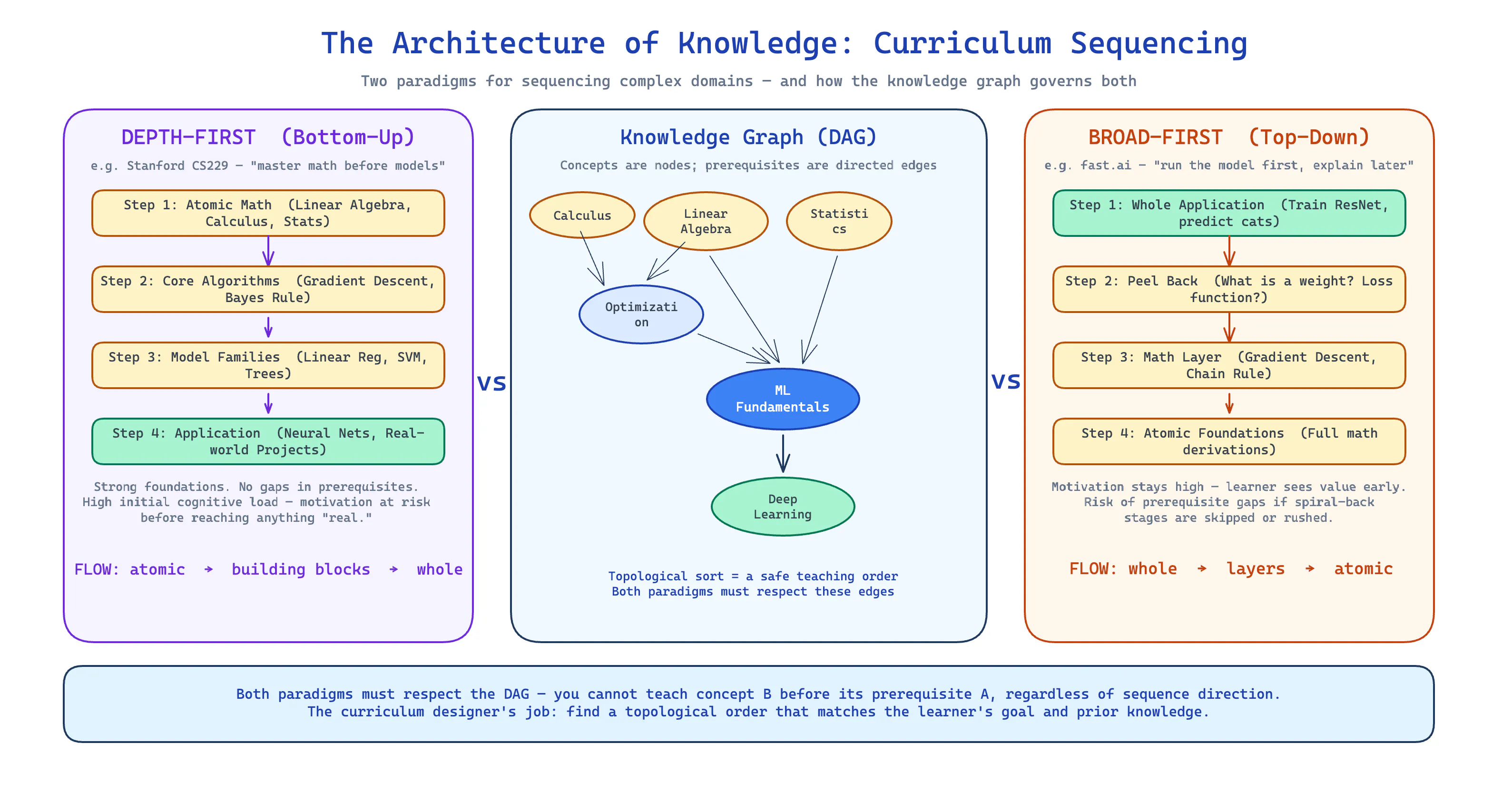
The product I am working on is built around this idea that the structure of a subject should drive how you learn it, not the availability of content. The curriculum follows the knowledge graph. The experience adapts to you. The goal is understanding that actually sticks. If you're trying to learn something deeply right now and feel like you're spinning you probably are. Not because the material is too hard, but because nobody handed you the map.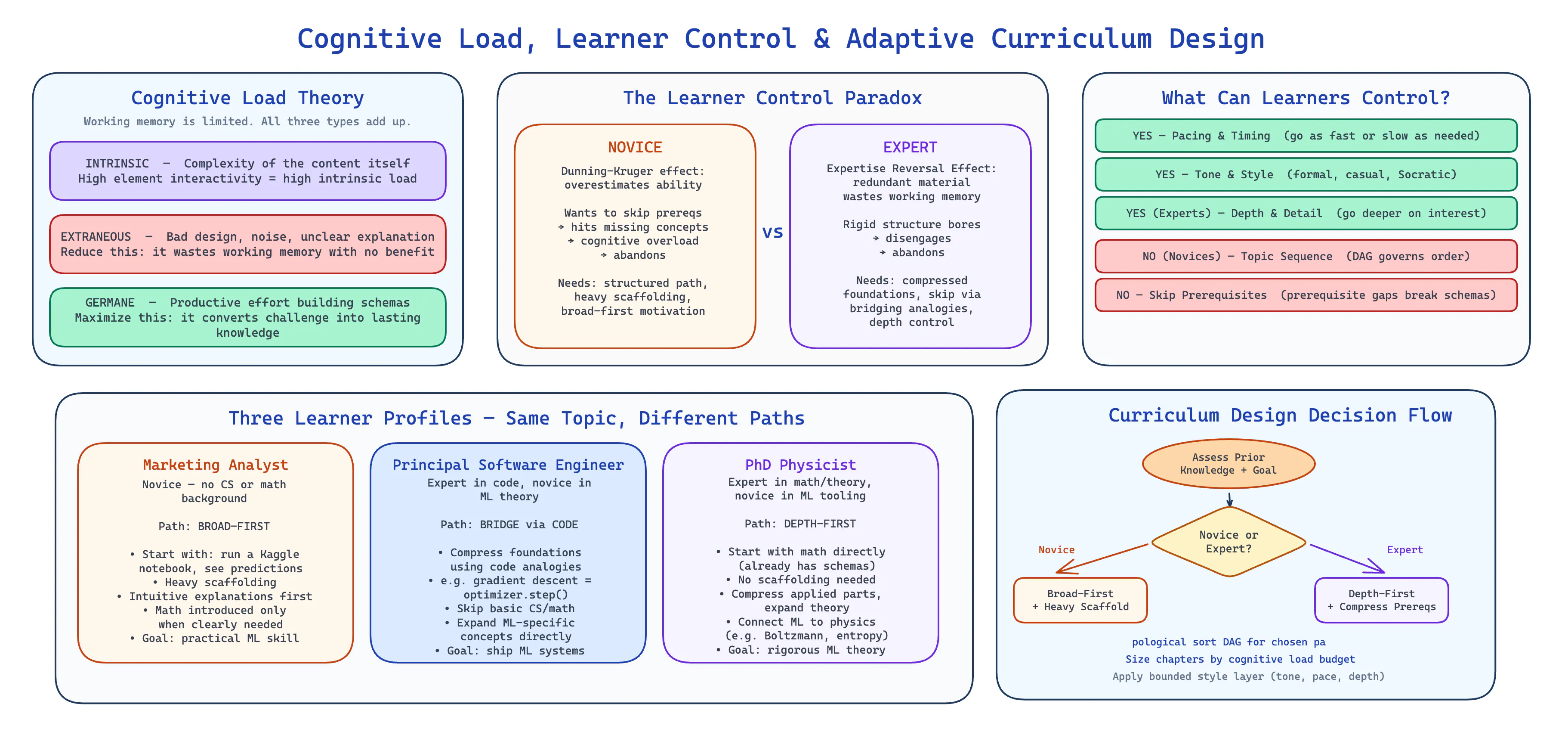
 •
•1mo ago
Arclask — governance for AI coding at team scale
Every engineer on a team is probably already using some AI coding assistant, Claude Code, Cursor, Codex, whatever. Individually they're all fine.
But once you've got 50+ engineers all pointed at the same codebase, I don't see how anyone actually knows if the architecture is holding together. The "rules" living in a CLAUDE.md or AGENTS.md file are just instructions the model can ignore under a long session or a rushed prompt. Nobody's actually checking the output against real constraints before it merges.
Same thing on cost. A hundred engineers sending overlapping context to the same model over and over, and most teams have no idea how much of that spend is redundant.
I'm building Arclask around this, a layer that checks AI-generated changes against your actual architecture rules before they land, gives leads real visibility into what's being overridden and why, and lets a team share context instead of everyone re-sending the same repo info to the model.