

What I've Learned About Travel Technology Through a UX Lens
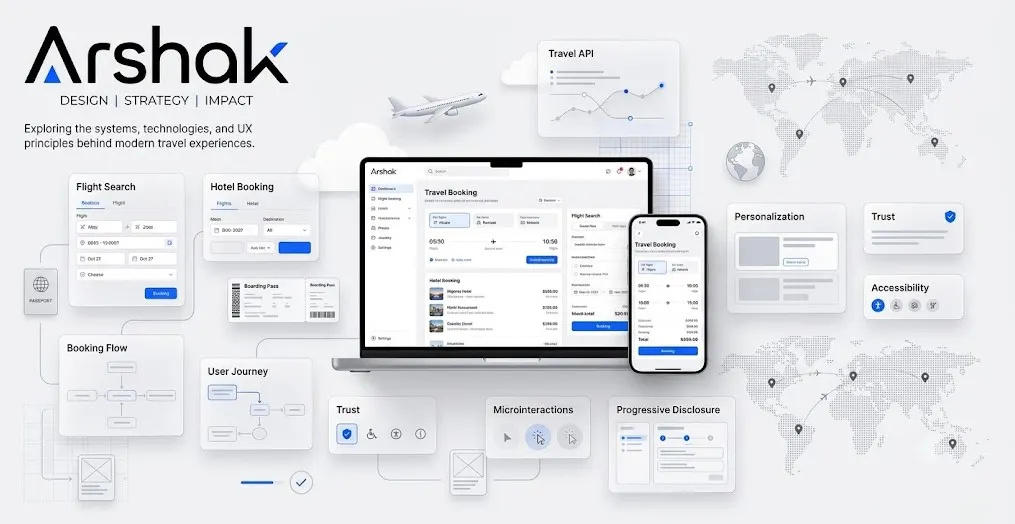
Understanding Travel Technology Through a UX Lens
When I first entered the Travel Technology industry, I thought designing great user experiences was primarily about creating intuitive interfaces and visually appealing screens.
As I explored the industry further, I realized that successful travel products are built on much more than UI. They rely on business logic, interconnected systems, user psychology, and seamless collaboration between technology and design.
Over the past few weeks, I've been studying how modern travel platforms work from a UX perspective. Here are some of the most valuable lessons I've learned.
A Great Experience Starts with Understanding the Business
One of the first concepts I explored was the difference between B2B and B2C travel platforms.
Although both operate within the same industry, they solve different problems for different users. Corporate travel agents require efficiency and operational control, while individual travelers prioritize simplicity and convenience.
This reminded me that understanding business goals is just as important as understanding user needs.
Every Booking Is More Complex Than It Looks
The "Book Now" button represents only the final step of a much larger process.
Behind every successful booking are multiple systems working together, including search engines, suppliers, APIs, payment gateways, and ticket issuance services.
Learning about these workflows helped me see that every interface is connected to a much larger ecosystem.
Technology Shapes User Experience
Travel products depend heavily on real-time data.
Flight availability, hotel inventory, pricing, payment status, and booking confirmations all rely on APIs communicating with external systems.
As designers, we may not build these systems, but understanding how they work allows us to design better loading states, clearer feedback, and more resilient experiences.
Simplicity Requires Thoughtful Design
Modern travel platforms contain a large amount of information.
Rather than presenting everything at once, effective products reveal information progressively.
Displaying essential details first and allowing users to explore more when needed reduces cognitive load and improves decision-making.
This principle has changed the way I think about designing complex interfaces.
Trust Is Built Through Small Details
Booking travel often involves significant financial decisions.
Clear pricing, secure payment indicators, transparent cancellation policies, booking confirmations, and helpful error messages all contribute to user confidence.
I've learned that trust isn't created by visual design alone. It's created through every interaction.
Small Interactions Matter
One of my favorite discoveries has been the role of microinteractions.
Whether it's a loading animation, a seat selection highlight, or a booking confirmation, these seemingly small details reassure users that the system is responding.
Thoughtful feedback transforms ordinary interactions into memorable experiences.
Accessibility Benefits Everyone
Accessibility isn't only about meeting standards.
Designing with sufficient contrast, readable typography, meaningful labels, and keyboard accessibility creates products that are easier for everyone to use.
Inclusive design leads to better design.
Looking Beyond Individual Screens
One of the biggest shifts in my thinking came from learning about User Journey Mapping.
Instead of focusing on isolated screens, I began thinking about the complete experience, from discovering a destination to returning home.
Understanding the entire journey helps uncover pain points that might otherwise be overlooked.
What This Journey Has Taught Me
Exploring Travel Technology has shown me that UX is not just about interfaces.
It's about understanding how business goals, technology, and user needs come together to create meaningful experiences.
Every concept I've explored, from booking flows and APIs to personalization, accessibility, trust, and micro interactions, has reinforced the same idea:
Great products aren't built by designing individual screens. They're built by designing complete experiences.
This is only the beginning of my journey, and I'm excited to continue exploring the systems, principles, and decisions that shape modern travel products.
I'd love to hear your perspective.
Which UX principle do you think has the greatest impact on travel experiences, and why?
#UXDesign #UXResearch #TravelTech #ProductDesign #UserExperience #SaaS #DesignThinking #TravelTechnology #ContinuousLearning
Replies
Be the first to reply
Have a question or a thought to share? Add a comment above to start the conversation.