

I built a data-driven alternative to "best city" rankings in Germany. Here's what surprised me.
A few weeks ago I was considering moving to another city in Germany. I expected the hard part to be making the decision. Instead, the hard part was finding reliable information.
Most resources I found were either:
SEO-driven relocation content
subjective opinions on forums and Reddit
rankings with questionable methodologies
official datasets scattered across dozens of government websites
That led me down an unexpected path. I started collecting and organizing data from official German sources to answer a simple question:
"How do different German cities actually compare when you look at housing, safety, healthcare, economy, mobility, environment, and quality-of-life indicators together?"
What started as a personal research project eventually became StadtVergleich.
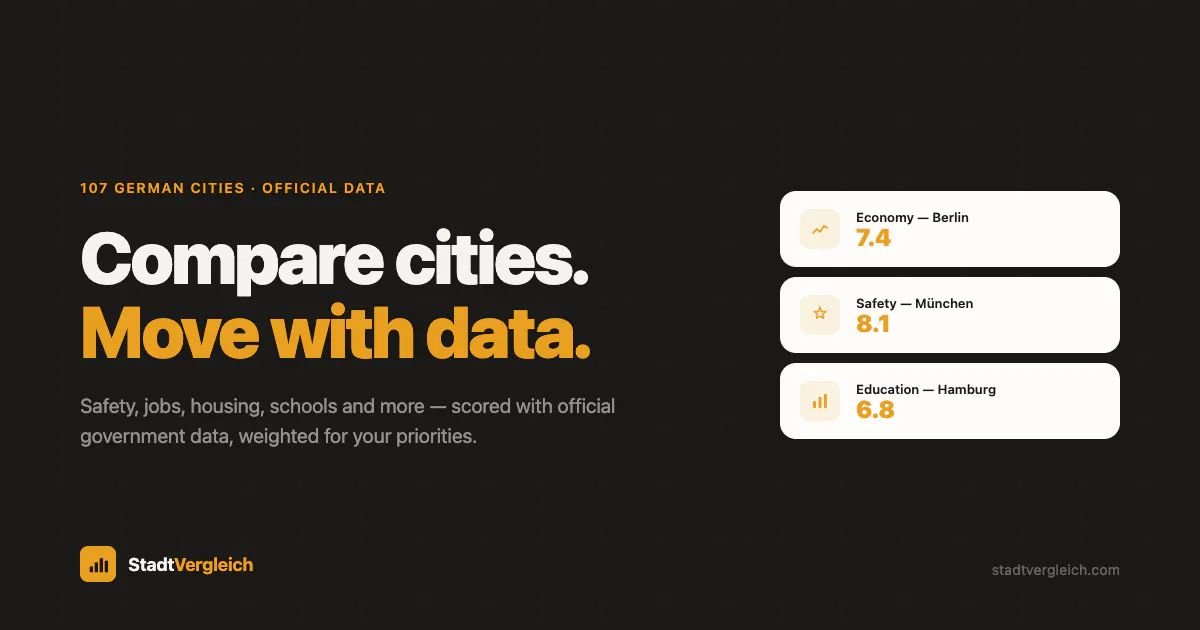
Some observations from the journey:
Data collection and cleaning took far longer than building the product.
"Best city" is a surprisingly flawed concept. Different priorities completely change the outcome.
Many of the cities people discuss most online don't necessarily perform best in the data.
Distribution is proving much harder than development.
The product is live, free to use, and still very early.
I'm now at the stage where I'm trying to understand whether this is simply a useful side project or whether there's a real business opportunity around city intelligence, relocation data, and location decision-making.
For founders in Europe:
Would you see a path to monetization here?
I'd be interested in hearing both optimistic and skeptical perspectives.
Replies