The native macOS harness for AI agents. Any model, persistent memory, autonomous execution, cryptographic identity. Built in Swift. Fully offline. Open source.
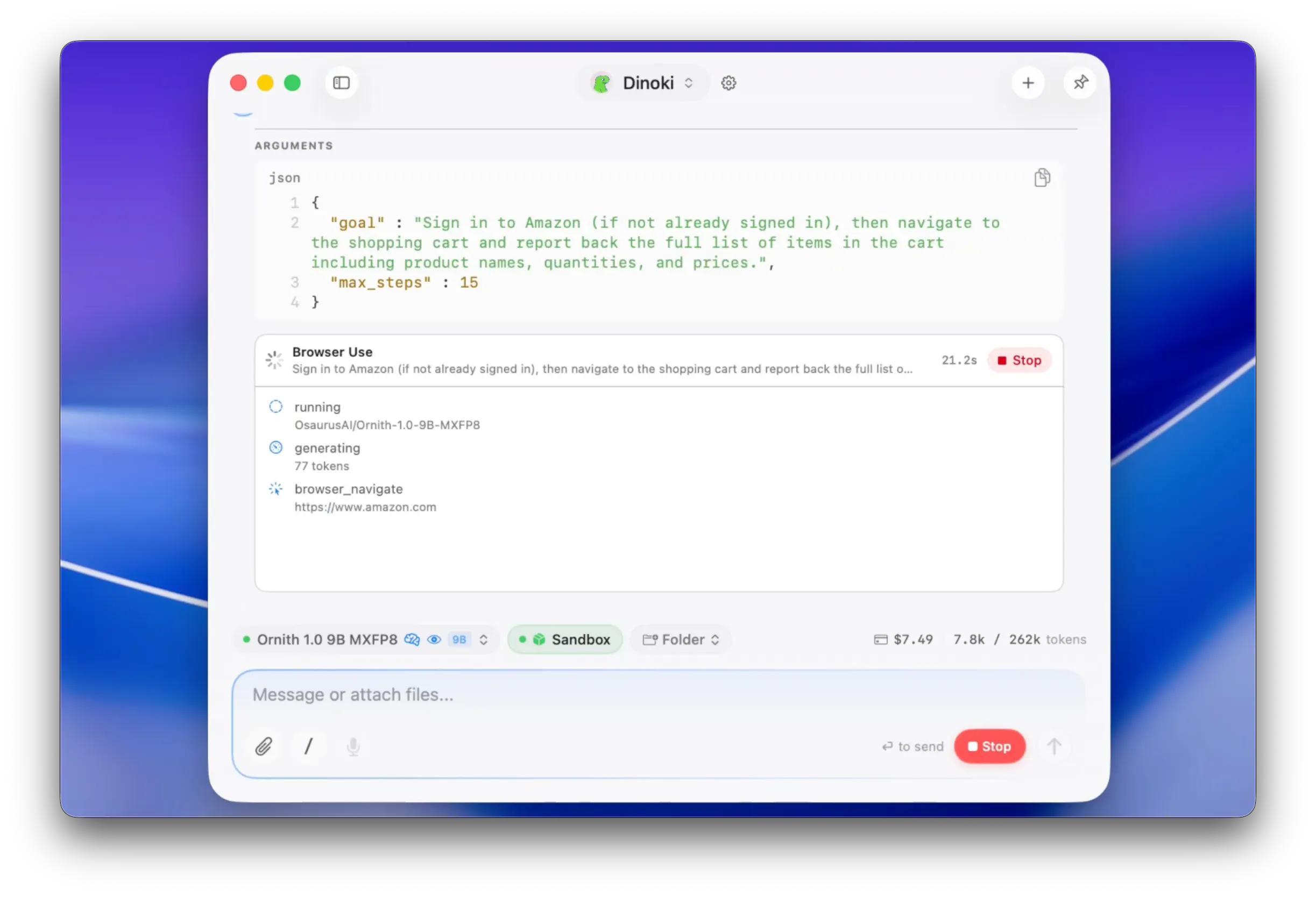
Osaurus agents can now drive a real browser. You give the agent a goal in plain language, and it navigates, clicks, reads pages, and reports back.
The demo we shipped it with: a 9B model checking an Amazon shopping cart. Real browser, real login, real cart. It signed in, read the page, and returned the items and prices. About 90 seconds, running locally on a Mac.
On Tuesday, PrismML released Bonsai 27B, a big open source AI model compressed to a fraction of its normal size. A model like this usually needs 54 GB of memory, which means expensive cloud servers or a maxed-out workstation. This one fits in under 8 GB. That's small enough for a regular MacBook.
Everyone talks about model lock-in, but the real switching cost is your conversation history. Months of context, decisions, and half-finished projects living inside one app.
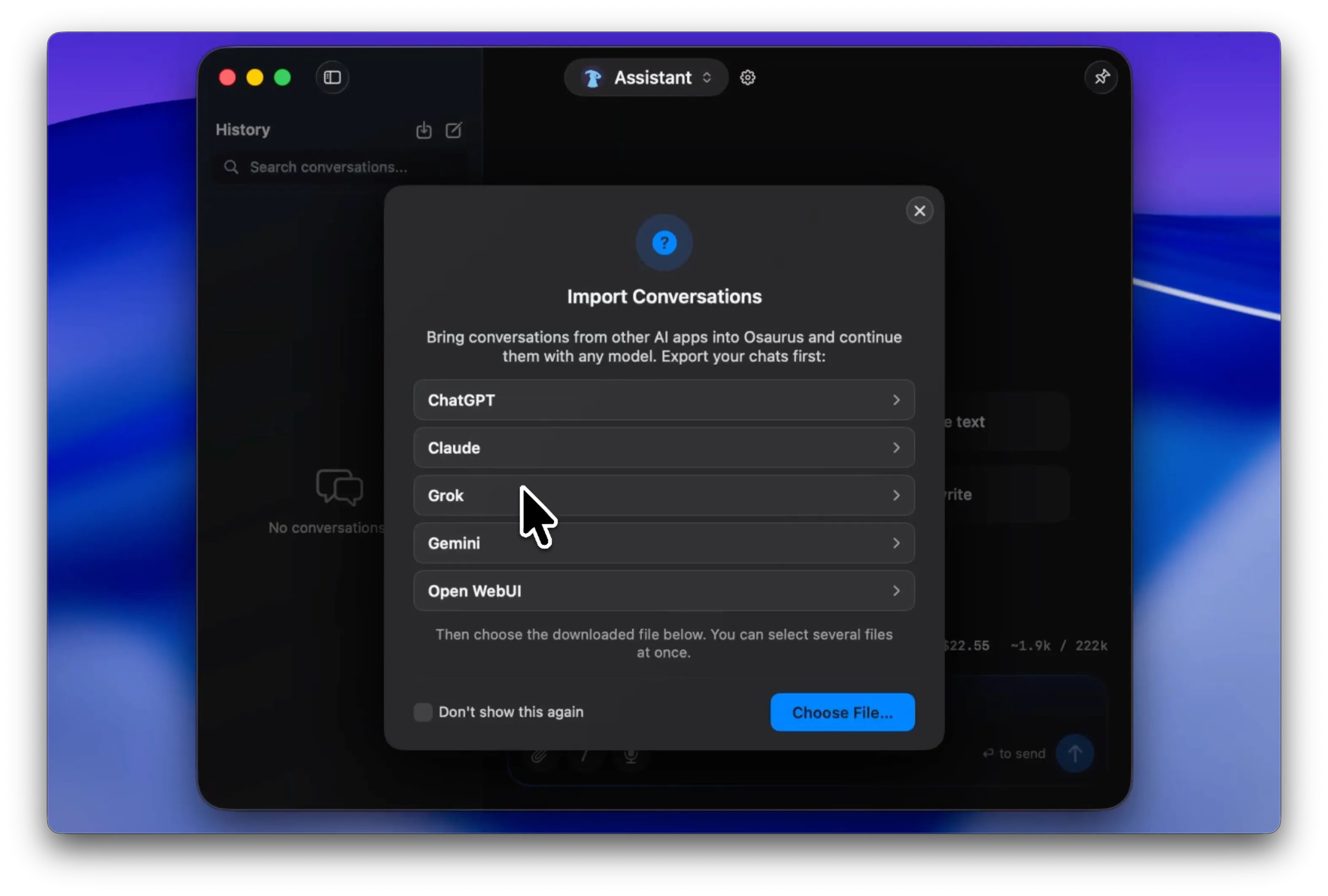
We just shipped chat import in Osaurus (free, open source Mac app) so you can export your conversations from ChatGPT, Claude, Grok, Gemini, or Open WebUI and continue them with any model. Building it made us realize how differently each app treats your data on the way out. Some exports are clean JSON, some are a mess clearly not designed to be read by anything else.
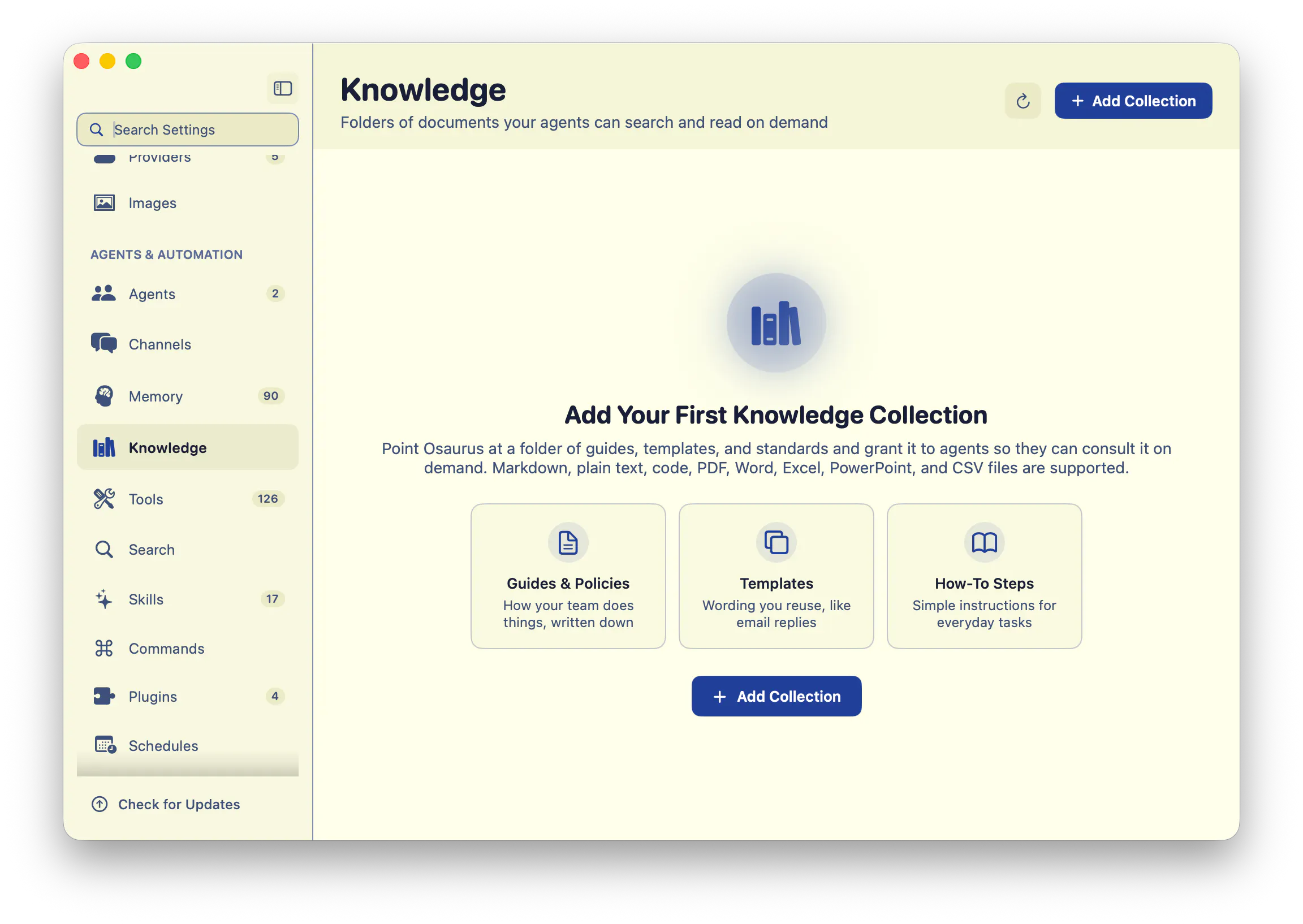
Just shipped Knowledge Base in Osaurus. You hand your agents a folder of reference material, itineraries, specs, spreadsheets, whatever you keep, and they search across all of it and answer from it. It runs on your Mac.