One thing I keep struggling with while building products is figuring out which features are actually worth spending time on.
I sometimes come up with ideas that sound great, but then I wonder whether anyone would really use them. I also don't want to spend days building something that people don't actually need.
I'm trying to get better at understanding user needs before jumping straight into coding.
For those who've built and launched products, how do you usually decide what to work on next? Do you talk to users, look at feedback, or just build your ideas and see what happens?
ICYMI we re challenging you to leave reviews on products you ve used in the next two weeks in support of our makers. 10 winners will receive exclusive Product Hunt swag! See all the rules here.
Reviews are helpful to the whole community, but I can assure you that you ll make a maker s day by sharing your first-hand experience with them. Haven t tried any products yet? It s a great time to start! There s tons of free products for every use case, so try searching for something that could potentially change your life.
We wanted to "grow up" fast so we hired seasoned executives from large tech companies who brought impressive resumes and corporate playbooks. But instead of accelerating our momentum, they introduced layers of bureaucracy, lengthy alignment meetings and hesitation around shipping fast and breaking things. Our scrappy speed vanished replaced by a cautious corporate culture that couldn't survive in a fast-moving market.
For founders scaling their core team how do you balance the need for operational maturity with the agility required in the early days?
My app Bandit is launching tomorrow! Bandit is a platform tailored to help musicians find each other, wherever they are in the world! From ideation to technical implementation, I've undertaken this project completely on my own, while managing a full-time engineering job. https://www.producthunt.com/prod... Fellow or future makers, feel free to ask any question!
And please upvote Bandit! Thanks!
When we started building our SaaS, we wanted to solve every problem for our users. We started as a project management tool, then added CRM features, then a time-tracking module, and finally an AI meeting summarizer. We thought that "more features = more value."
I just looked at our analytics for Q3. We had 10,000 visitors to our landing page, but only 12 free trial signups (a 0.12% conversion rate).
I pulled up session recordings and watched people scroll. The bounce rate is sitting at 85%. I finally asked a friend who works in our target industry to look at the site. His feedback was brutal but fair: "I read your headline three times and I still have no idea what you actually do. Is it a CRM? Is it a task manager? I don't want to spend 20 minutes taking a demo to find out."
I realized that in our desperate attempt to find product-market fit, we turned our product into a Frankenstein. We spent 12 months building features based on a handful of loud users' requests, and in the process, we completely lost our core value proposition.
Our product delivers massive value once fully configured but getting there requires connected integrations, team permissions, and data importing.
We tried shortening the onboarding steps, but skipping setup just led to empty states and fast drop-offs. Leaving the full setup in place means a large percentage of signups abandon before finishing.
For products with complex setup requirements: how do you deliver an "aha moment" early enough to keep users engaged through a heavy onboarding process?
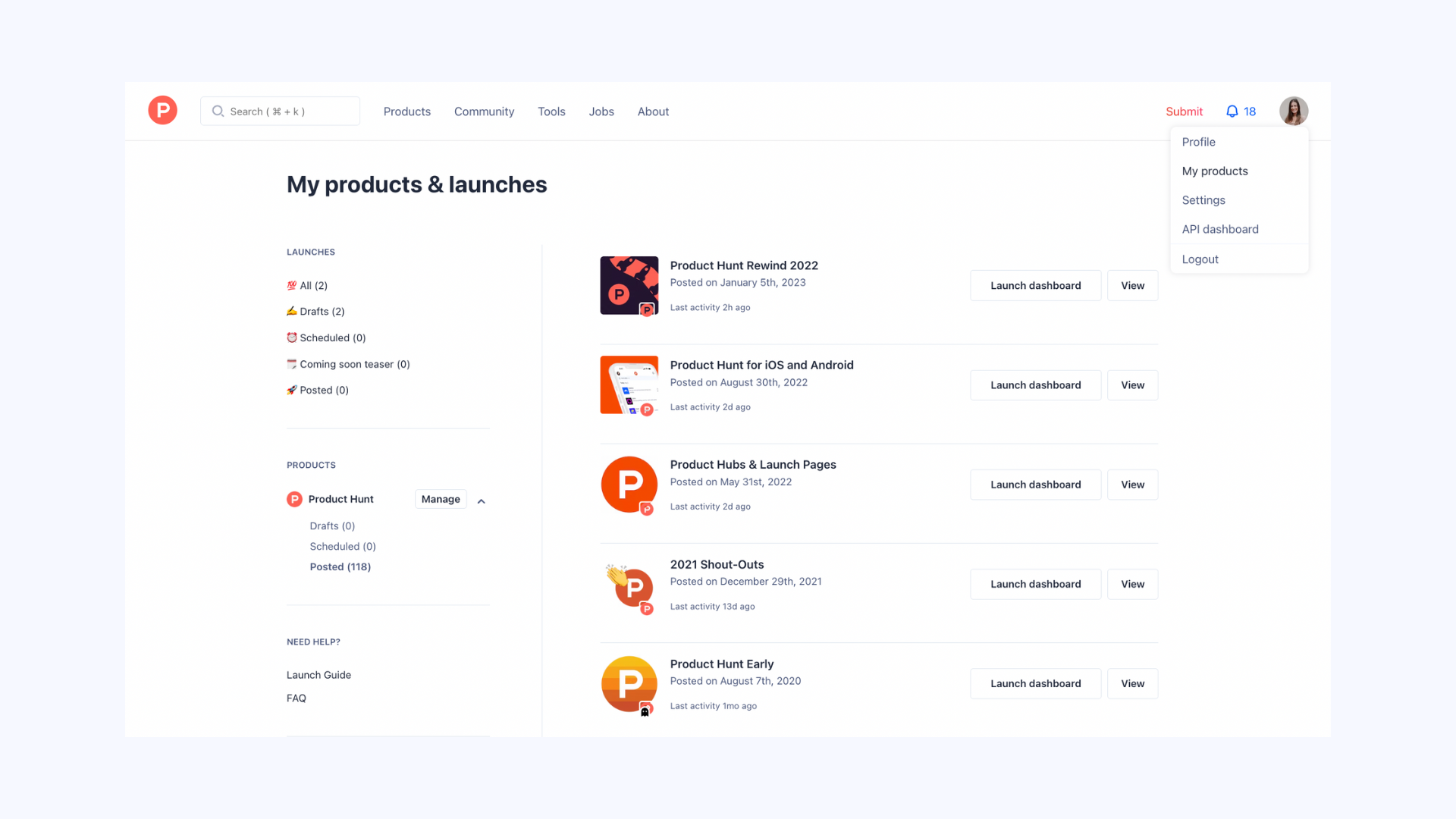
My products now lets you easily see all your products and launches (draft, scheduled, and posted) in one place for simple management. If you missed the memo about why you should care about your product after launch day, read more here.