
Shipping fast with AI? Specsight turns code changes into a living product map, feature knowledge, and clear release updates. Keep Product, Sales, and Support in sync with what your software actually does and what changed.
This is the 2nd launch from Specsight. View more

Specsight
Launching today
Shipping fast with AI? Specsight turns code changes into a living product map, feature knowledge, and clear release updates. Keep Product, Sales, and Support in sync with what your software actually does and what changed.




Free Options
Launch Team / Built With


CloudflareYour next app belongs on Cloudflare Workers. Deploy for free
Promoted


Hi Product Hunt 👋
I'm Ola, founder of Specsight.
At every startup I worked at, I was the engineer people came to with the same three questions: How does this work? What changed? Is this supposed to happen?
The answer was always sitting in the code, in a language most of the company couldn't read. I spent years being the translation layer and never stopped finding it absurd.
Now everyone is building with AI, products change every day, and nobody can keep up with what's actually shipping. But you still need to know and understand the product you're selling and supporting.
So I built Specsight.
It tracks your product as it evolves, straight from the source code. It shows what features exist, how they behave, how they connect, and what changed with every release, all in plain product language.
Unlike release notes that only tell you what's new, Specsight maintains a living understanding of your entire product, so Product, Sales, and Support can keep up without constantly chasing engineering.
What changes for your team:
- Support knows what changed and how things work before customers start asking.
- Sales demos the product as it works today, not as it worked last month.
- Product sees what actually got built, not just what was planned.
- "Let me check with engineering" becomes an answer in seconds.
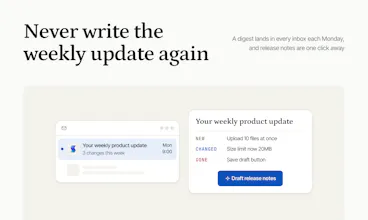
- Weekly product digests arrive automatically, and release notes are drafted for you.
Getting started is simple! Connect GitHub or GitLab, pick a repository and branch, and Specsight does the rest. Most projects get their first product map within an hour. From then on, Specsight tracks how the product evolves with every release.
You can even see Specsight tracking itself in our live demo:
https://specsight.app/demo
🎁 For the Product Hunt community: 50% off the first 3 months https://specsight.app/promo/ph2026. Use code PH2026 until 8 Nov 2026.
I believe we're heading toward a world where companies increasingly manage AI agents that build their software. But you can't control what you can't see. That's why I'm building Specsight.
I'd love your honest feedback. What's missing? What would make you want to use it every day?
I'll be here all day, so ask me anything! 🚀
congrats on the launch Ola. the plain language map is the part id use most. sales and support usually hear about a change from an angry customer, not from the release notes. how do you decide what counts as a change worth showing them and what is just engineering noise?
@agshin_rajabov Thanks Agshin! 🙏 Nobody wants to learn about a change from an angry customer, and that’s why we built this
It all comes down to the map. When you connect your code, Specsight first maps your whole product: every feature, how it behaves and how it connects to the rest. Then every release is checked against that map. If a change alters how the product behaves or what users see, it shows up in the updates. If it’s a version bump or a refactor that doesn’t change anything for users, it’s noise and stays out
@olapietka is there an integration with PostHog? I see this as the perfect companion for it!
@riccardohelfrecht not yet, but it’s on the roadmap! 👀 yeah they fit perfectly together. Specsight knows exactly what changed in every release, PostHog shows how users behave. connect the two and you see what shipped AND how it actually landed with users 🙌
@wojtekszkutnik thanks Wojtek!! yes it does! you can ask Specsight about your product right inside Claude, ChatGPT or any MCP client: specsight.app/docs/mcp-and-api. and honestly Prelint + Specsight would be a fun combo, you catch the decisions agents make, we show what actually shipped 👀
Summarization of release notes always takes some time, hopefully with Specsight will be much easier! I’ll definitely try👍🏻
@karol_pszczolkowski thanks Karol! release notes always end up as the last thing anyone has time for after shipping, and they’re usually written from tickets, so half of what actually changed gets missed 😅 with Specsight they come straight from what actually shipped, so they’re accurate and take a fraction of the time
would love for you to try it, code PH2026 gets you 50% off for 3 months!
how does your team handle release notes today?
This is really cool. As a PM on a small tech team I spend a lot of time investigating problems and stakeholder questions. Excited to try this!
@miriam_ruth thanks Miriam! as a PM you end up being the company’s translator. digging through code and Slack to answer "how does this work?" or "did this change?" instead of deciding what to build next 😅
that’s exactly what Specsight takes off your plate. code PH2026 gets you 50% off for 3 months
curious, what kind of questions do you get asked most?
@olapietka Sounds great, thank you!
congrats @olapietka and good luck! 🤞
@overment thanks Adam!! good luck with Alice too, let’s keep the Polish founders on PH going 🚀