Curious what else is out there in this space, and figured this could be a useful thread for anyone building something trading/fintech-adjacent.
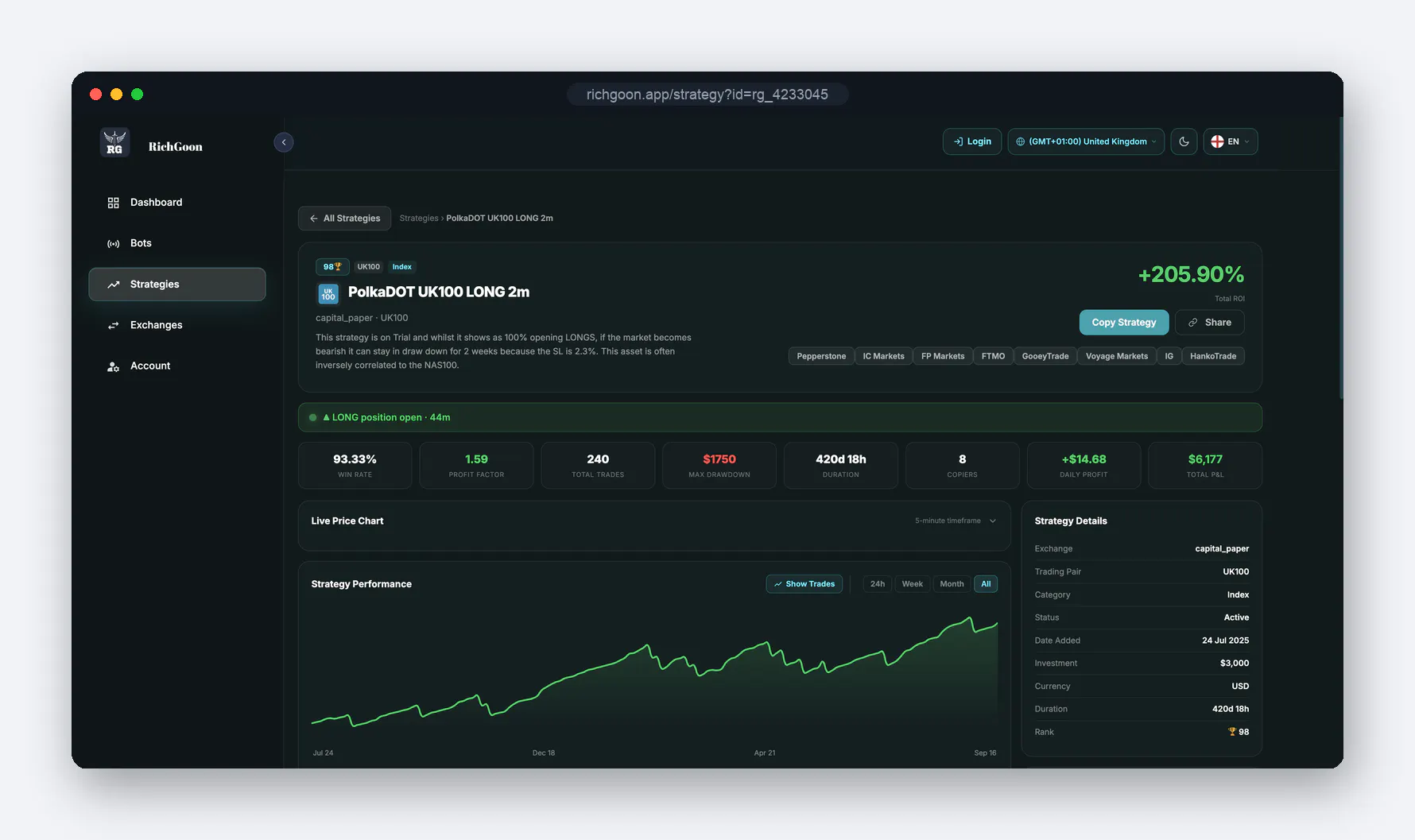
I'll go first: I'm building RichGoon, automates backtested trading strategies on your own broker instead of manually executing trades. Built it after blowing a few accounts trading manually myself - one of the strategies on it has since helped users pass real prop firm evaluations (240 trades, 93.3% win rate, full trade log public, not a screenshot).
Launching on PH Sept 22. https://www.richgoon.app/
Self-compassion isn't fixing your 2 AM doom-scrolling. I'm building AI coachesfor a sleep app and need to settle a debate: What actually breaks bad habits?
> 1. The Drill Sergeant (Don): No excuses. Brutally tells you that you are actively ruining your tomorrow.
> 2. The Gentle Supporter (Linda): Tells you society is stressful, take a breath, and don't feel guilty.
> 3. The Cold Scientist (Steven): Emotionless. Shows the exact cognitive drop caused by your screen time.
Just designed a new plug-in is designed for designers to receive AI coaching on the spoken presentation alongside their slides or frames in Figma.
It lets you iterate, edit and improve your script. Even with a spoken feedback option. It is very much an educational tool, and you need to set aside the time to be able to present your work and record your voice.
Hi everyone - I m Jayadevan Premnath, a comic creator currently building LIGNIQUE Comic Studio.
LIGNIQUE is a comic-focused creation tool designed to solve one of the hardest problems in AI-assisted comic making: continuity across panels and pages.
Most workflows can generate a strong single image, but comics need much more than that. They need:
I m excited to share GoVoyage Travel, a product we ve been building to make trip planning much easier.
The problem was simple: planning a trip often means jumping between Google, Maps, travel blogs, hotel sites, Instagram, and dozens of tabs just to put together one itinerary.
So we built an AI travel planner where you tell it your destination, trip length, budget, travel style, and interests and it generates a personalized itinerary around your trip.
there's a version of you that said yes instead of no.
the one who took the job. stayed with them. moved to that city. didn't drop out. didn't drop in. xlied writes to you as that person. every day, a letter from the life you didn't live. not motivational fluff, an actual character with memory, opinions, a whole timeline that diverged from yours at one decision. i built this after my own detour year made me obsessive about the paths not taken. turns out almost everyone has one version of themselves they think about at 2am. six ai surfaces inside: daily letters, a mirror session, an entourage of personas who push back on you (mentor, rival, muse), and more we're building live based on what people ask for. zero fluff, zero generic self help. just the other you, writing back. link's in the comments. would mean a lot if you tried it and told me where it hit or where it didn't
If you've moved from Windows to Mac, which small desktop habit has been hardest to relearn?
I work on OmniDock, a free, open-source Mac utility. The short demo linked below shows one of its tools: hover over a running app's Dock icon, see the available window thumbnails, and choose the window you want.
It also has optional click-again-to-hide controls and window layouts, so you can keep a few related tasks in one app and enable only what you need.
macOS already has useful controls like App Expos and Command-H. OmniDock is another way to reach those everyday tasks, especially if you prefer using the Dock.
I ve been building Elsewhere, a calm, open-ended flight toy about exploring places that don t exist.
You get a small aircraft, an endless sky, and no mission to complete. The world is generated as you fly: mountains, islands, coastlines, clouds, changing light, and small low-poly landmarks to discover.