The classic "ten blue links" era is officially over. Since July 10, 2026, Google has fundamentally changed its search interface. Gemini 3.5 Flash now delivers AI-generated answers by default, largely displacing the traditional list of links. The layout now includes a visual marker, and users must actively scroll further to reach the traditional results page.
A structural shift in search
The central question has shifted from "Who ranks as a click target?" to "Who provides data and context that appears in synthetic answers?". Google is no longer just a referral engine; it is increasingly the final destination for information.
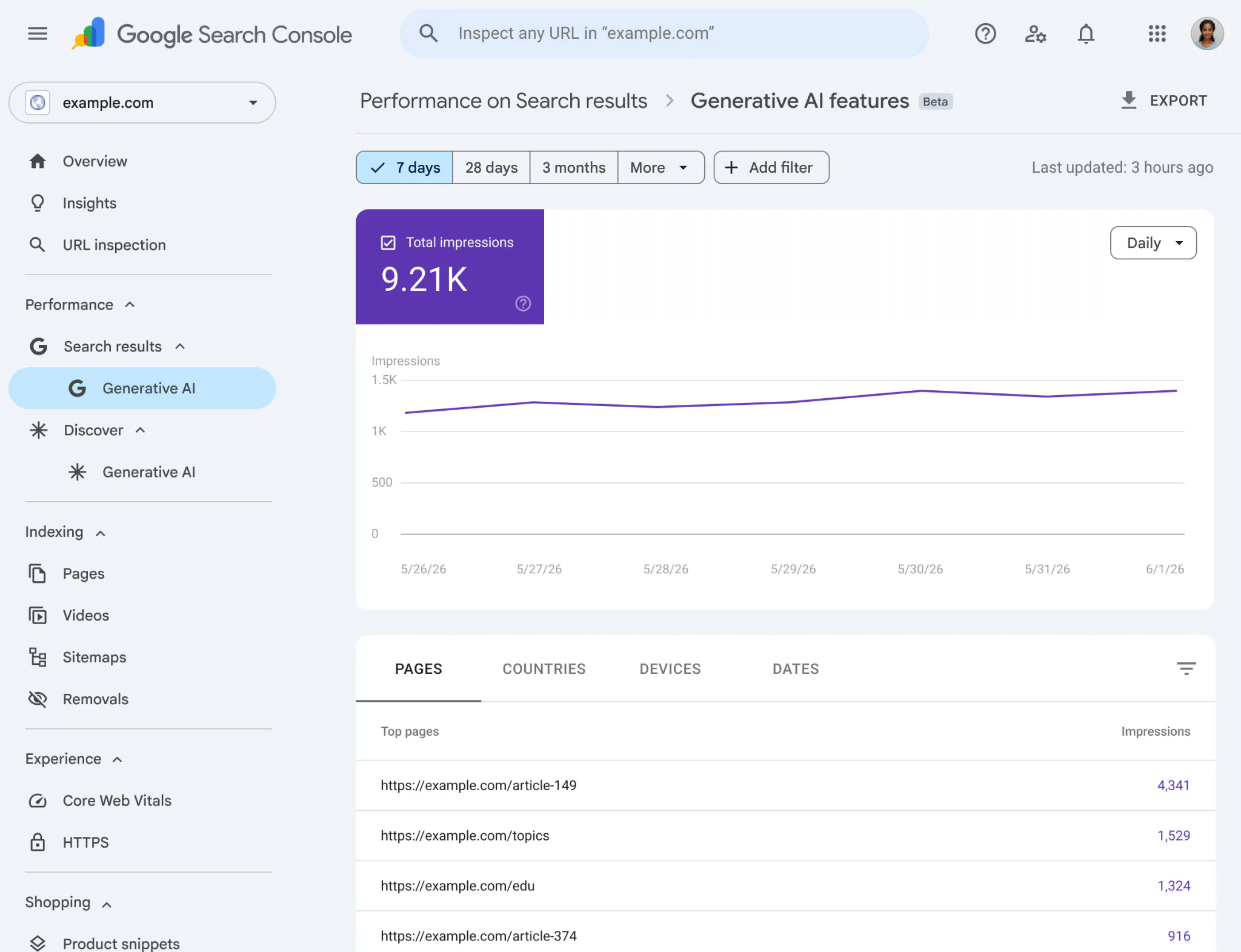
Google just released what SEOs have been asking for: dedicated reports for Generative AI performance in Search Console.
On June 3, 2026, Google announced new Search Console reports specifically for Generative AI features . It's the first time Google has given publishers direct data on how their content performs in AI Overviews, AI Mode, and Generative AI-powered Discover .
Three months. Two developers. One feature nobody used.
I knew it was bad when I checked the analytics and saw that the only person who used it more than once was me. And even I stopped after the second week.
Here's how I knew it was a waste of time. Not in hindsight. In the moment. I just ignored the signs.
The first sign: I couldn't explain it in one sentence.
AI writes faster. AI analyzes data. AI can even mimic your brand voice.
But AI also makes everything sound the same. It pulls from the same top 10 results. It rephrases the same arguments. It optimizes for similarity, not distinctiveness.
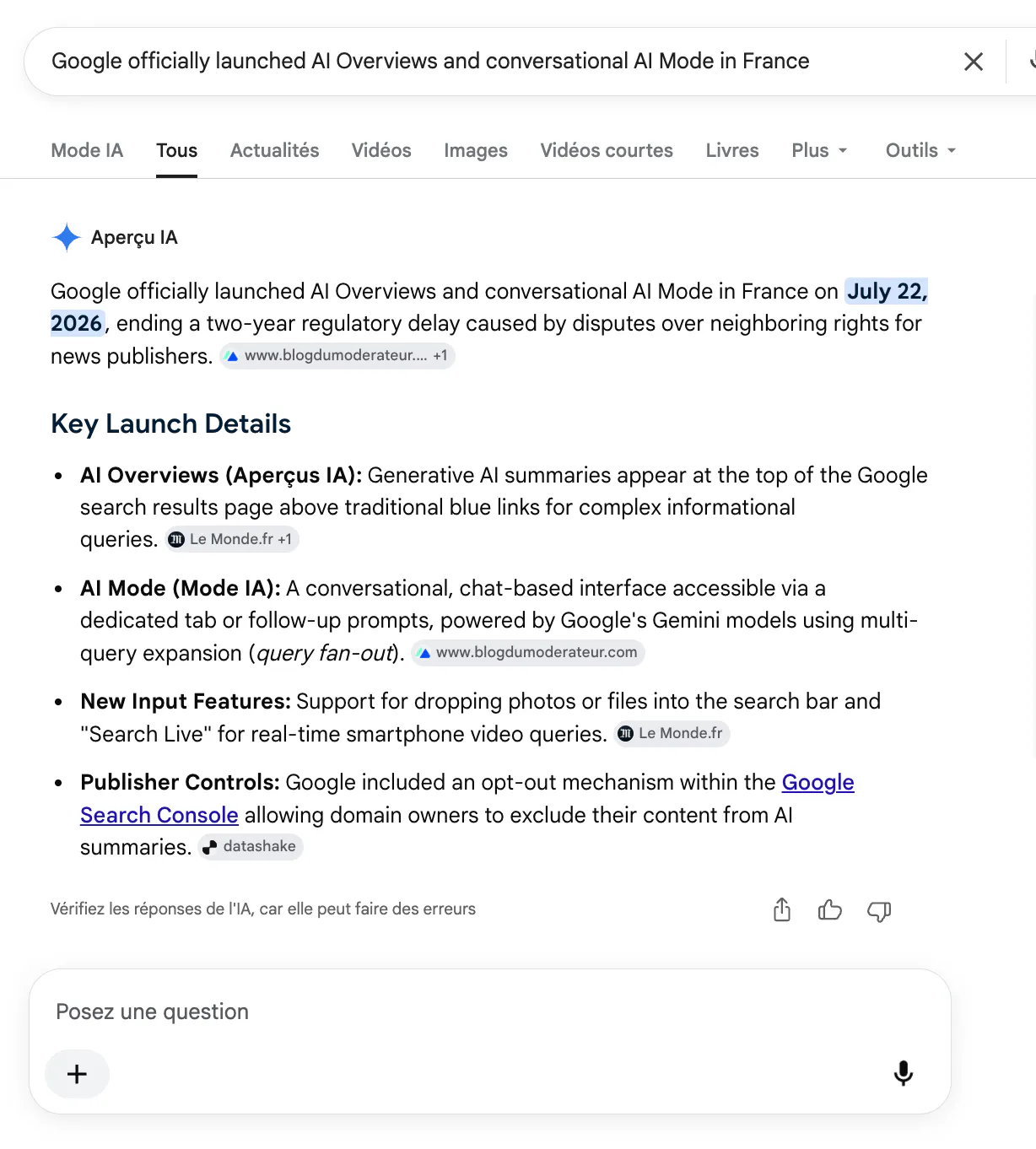
Today, July 22, 2026, Google officially launched AI Overviews and conversational AI Mode in France . France was one of the last major markets to get it. Now it's here.
For two years, French businesses watched from the sidelines while the rest of the world figured out what AI search actually does to traffic. Now it's their turn.
Here's what the data from other markets says about what happens next.
Last week, six AI products launched on Product Hunt that share one move. None of them ask users to open a new app. They embed into surfaces people already touch.
Hardware: Dune Keypad (46 upvotes) sits next to your keyboard with Claude integration. Video calls: Mina Meeting Assistant (47 upvotes). Text threads: folk (51 upvotes). Chat windows: Databox MCP (39 upvotes) plugs business data into Claude via Model Context Protocol. Mac autocomplete: Typeahead (22 upvotes).
The pattern is clear: shipping AI as a new app is the slow path. The fast path is grafting onto a surface the user already touches. The cost of building a standalone AI app dropped 90%+. The cost of getting it noticed did not. Surface integration sidesteps the noticing problem because the surface already has users.
A CMO at a midsize enterprise software company had a moment recently. Her team spent three years building top-of-page-one SEO dominance. Then someone ran a simple test: typed the company's core use case into ChatGPT and asked for vendor recommendations. The company didn't appear. Not once. "We thought we had search figured out," she said. "Turns out we optimized for the wrong engine"
That scenario is playing out across industries. Most organizations haven't caught up.
The numbers that explain the shift
Generative AI has moved from novelty to primary research channel faster than almost any technology before it. ChatGPT alone has over 900 million weekly active users. Google AI Overviews now appear in more than 25% of all searches, up from 13% just a year ago .