

LYQN AI v1.2

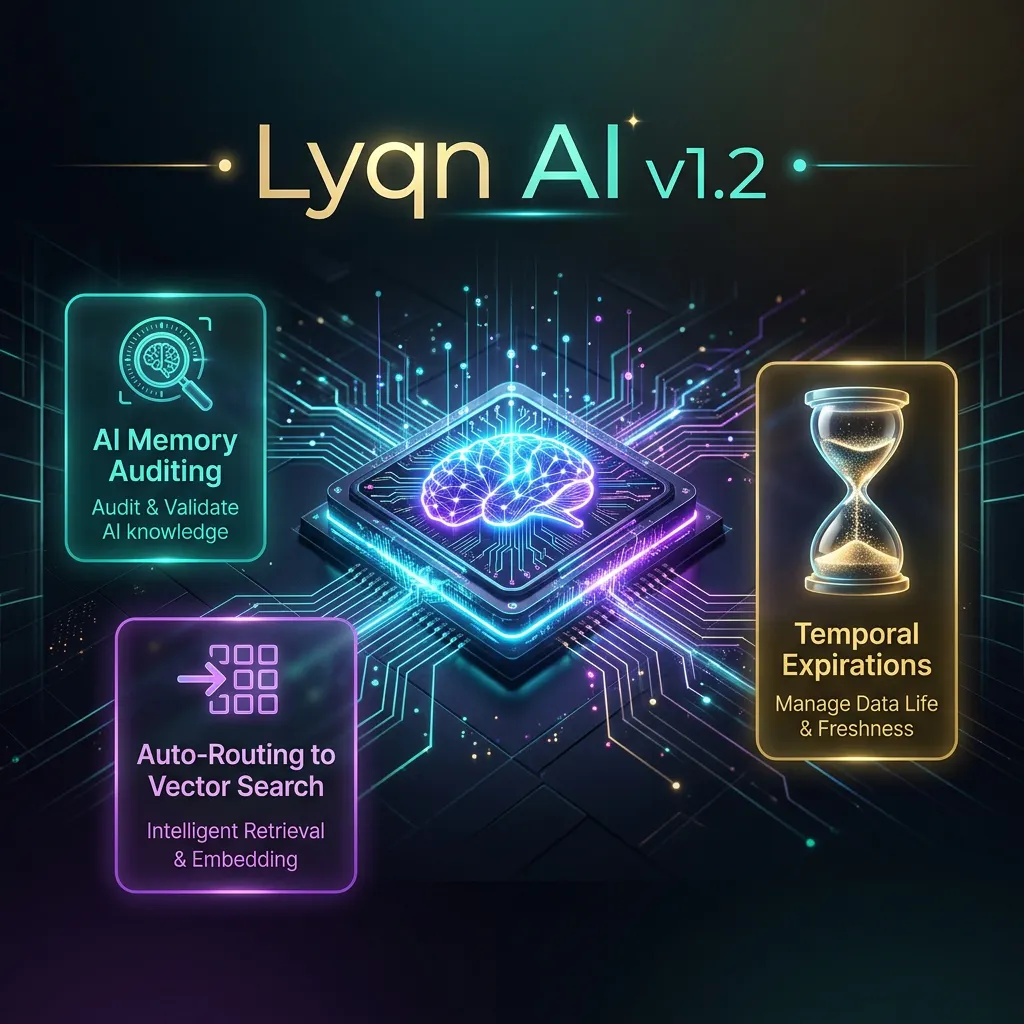
Built customer support AIs? Then you know the problem. You keep adding rules, paste in a policy here, teach it something there, and after a while you've got 40+ rules stacked up and rule 12 is quietly fighting rule 38. Prompt gets bloated. AI starts making stuff up.
v1.2 is our fix for that.
It learns from your team on its own
Agent replies to a customer, AI turns that into a clean rule in the background. Checks it against everything else first so it doesn't save a duplicate or a contradiction.
Rules can expire
Holiday hours, flash sale codes, whatever. Set an expiry and it prunes itself once it's dead weight.
Big policy docs don't nuke your prompt anymore
Paste in a huge policy, it writes a short version for the main prompt and embeds the full thing for search. Fast and nothing gets lost.
One click and it audits your whole knowledge base
This is the one I'm most excited about. Reads every prompt, rule, doc, and Q&A you've got, groups it by topic, and flags contradictions with a severity score so you know what's actually broken.
Shoutout to Mustafa Arian (@thenameisarian), his idea of a "unified ground truth" is what got us building the audit engine in the first place. 40 layered rules and no way to predict what the AI would say was a nightmare.
Tell me how you're dealing with knowledge drift in your own stack, genuinely curious.
Replies
Made this because I was tired of watching the AI trip over its own old rules. Thanks again to Mustafa for the push on the audit idea. What's your setup for keeping an AI's knowledge from going stale?
the auto-rule-from-reply part is the one I'd want a safety valve on - if a support agent gives a slightly wrong or one-off answer under pressure, does that get quietly turned into a permanent rule too? that seems like the flip side of the "40 rules fighting each other" problem you're solving, except now it's the AI itself creating the bad rules instead of a human pasting them in. is there a review step before a generated rule goes live, or does it just ship and rely on the contradiction-checker to catch it later
@omri_ben_shoham1 That is a really important callout. We actually built in a double-layer safety valve specifically to prevent that kind of silent rule creep:
Explicit Human-in-the-Loop Review: Nothing is saved silently or automatically behind the scenes. If a support agent gives a slightly wrong or one-off answer under pressure, it does not become a rule. An agent has to manually click a "Teach AI" button next to a reply. This opens a modal displaying a clean, third-person factual summary extracted by the AI, which the agent can review, edit, or rewrite completely before saving.
Proactive Overlap Warnings: When the extraction modal opens, it pre-scans the existing knowledge base for duplicates or logical conflicts. If it detects an overlap, it warns the agent on the spot and gives them the option to overwrite/update the existing rule instead of stacking a new one.
Unified Ground-Truth Auditing: In the dashboard, admins have an "AI Ground Truth Audit" tool. It reads all rules, pre-programmed Q&As, and documents to flag any contradicting instructions, giving a health score and recommendations on how to clean them up.
So in short: the AI proposes the rule structure, but it requires a human to sign off on it before it goes live.
@Joseph that's a genuinely thorough answer, the overlap-warning part especially - most tools I've seen just append new rules and let them silently contradict each other, catching that at write-time instead of during some later audit is the right place to do it. does the "Teach AI" review step ever create friction in practice, like agents skipping it under time pressure and knowledge just not growing, or has adoption of that button been solid?