Today, I came across an article on Techcrunch describing research that found that AI models not only hallucinate, but also lie.
While these are small lies, such as claiming that a task was completed when it wasn t, researchers stress they haven t seen harmful scheming in real-world use yet, but warn risks will rise as AI takes on more complex tasks.
Every project felt like an opportunity small ones underpriced ones ones outside my expertise. My calendar was full and I felt important. Then the numbers came in. I started declining anything below a rate I set in advance. Income went up hours went down.
The opportunities weren't bad. I was using busyness to avoid the scary work of pricing myself properly.
For those who've started saying no: was it the requests' fault or your inability to prioritize? And what are you doing right now that you'd drop immediately if you were honest about its value?
This one goes out to all our makers! We ve been hard at work finding ways to make Product Hunt a better place for makers to launch and continue sharing their product journey. To do that we created some resources to help make the most of your launch, and built an Add-ons tab in Product Hubs to help users discover all of the plugins, extensions, companions, templates, and more that complement your products.
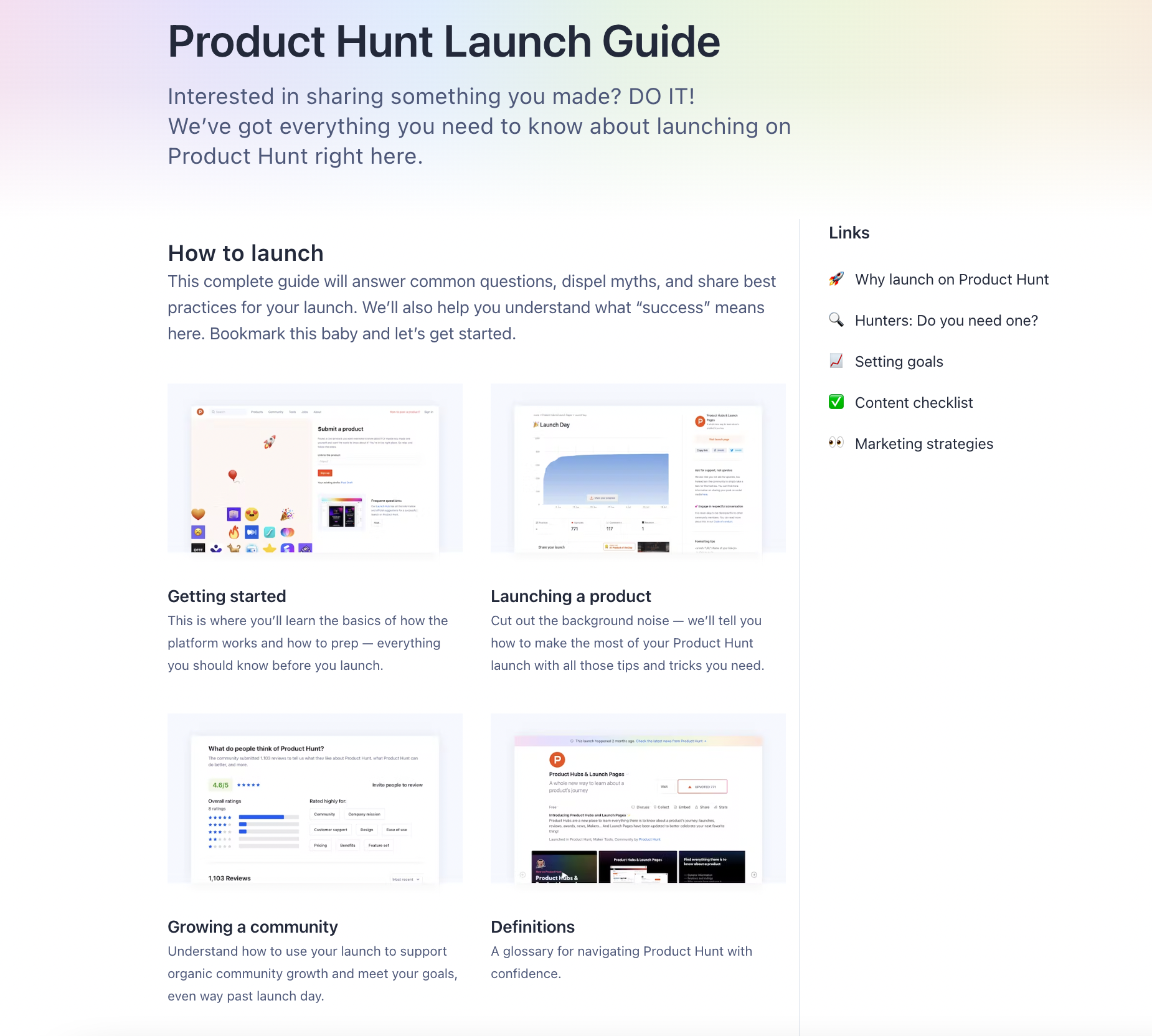
Launch Guide In an effort to help makers feel more prepared for launch day, we hosted our first-ever How to launch on Product Hunt webinar this month, and also published a Launch Guide to make it easier than ever to find everything (seriously, everything) you need to know about launching in one place.
Case studies In addition to the step-by-step playbook for pre-launch through post-launch, we ve included a few stories from other makers who have had successful launches on Product Hunt. Check out stories from Framer, Notion, and Loom founders to learn more about their experiences.
After bootstrapping to $5k MRR, we decided it was time to bring in an expert to scale our user acquisition. We hired a highly recommended "Growth Marketer" who promised to "10x our pipeline" using paid ads and a revamped funnel. We agreed to a retainer of $6,000/month (plus ad spend), which was a massive chunk of our runway.
For the first month, they were incredibly active. They set up HubSpot, redesigned our landing page, and launched campaigns on LinkedIn and Google. It looked like they were doing a lot of work.
But at the end of month two, I pulled the data:
We had spent $10,000 in ad spend (on top of their $12,000 retainer).
We generated 15,000 clicks, but our bounce rate was 92%.
We got 45 new free signups, but only 1 paying customer (a $49/month plan).
ur sign-up numbers looked incredible on paper and we loved sharing our monthly growth charts on social media. We felt like we were winning.
But beneath the surface our activation rate was flatlining and net revenue retention was bleeding out because most sign-ups never made it past day three. We were pouring water into a leaking bucket and celebrating how fast the tap was running.
For founders tracking startup health how do you strip away the noise of vanity metrics and focus purely on the numbers that actually predict long-term survival?
Using AI generators has helped us ship CRUD endpoints and API integrations three times faster, but in a recent audit, we caught a subtle SQL injection vector and unsanitized user input that slipped past basic code reviews. Because AI-generated code looks syntactically clean and correct at a glance, team members tend to skim during PR reviews.
For teams building user-facing or sensitive applications with AI, what automated security guardrails or PR review workflows do you put in place to intercept AI security hallucinations?