
 •
•11d ago
Stop Turning Every BMS Alarm Into a Work Order
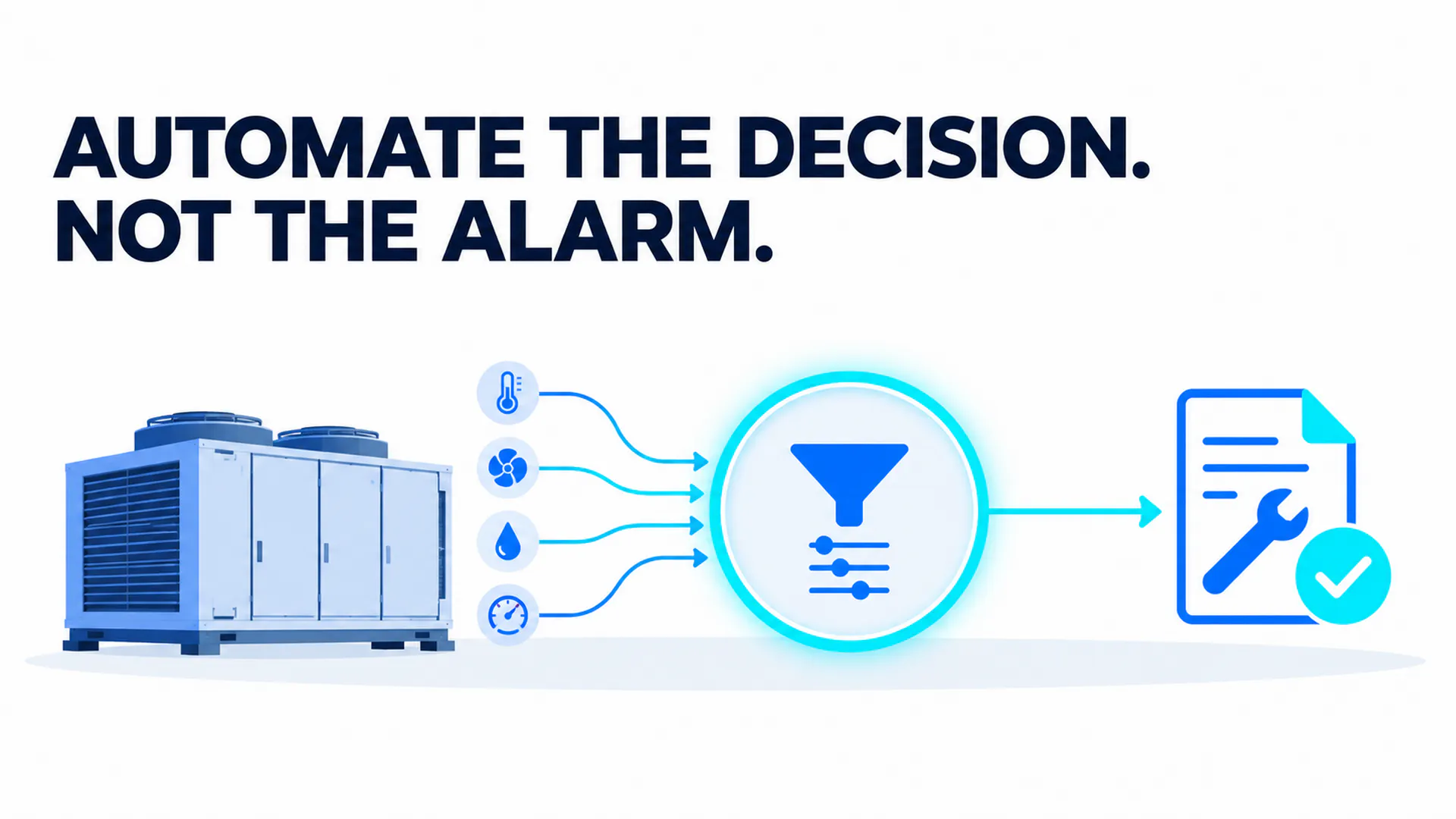
The strongest objection to BMS-to-CMMS automation is that it can worsen maintenance. If every alarm creates a ticket, nuisance events become work, faults produce duplicate tasks, and technicians close symptoms instead of repairing causes.
The integration may be technically successful while the operating model fails. Data moves faster, yet the maintenance backlog becomes less trustworthy across the portfolio and between maintenance teams.
Alarms and work orders serve different purposes. An alarm asks for attention. A work order commits labor, parts, and accountability. A governed admission layer must decide when an operating signal deserves that commitment.
•16d ago
Predictive Maintenance Fails When Prediction Becomes the Product

The strongest case against predictive maintenance is that earlier warnings can create more cost. Every investigation consumes engineering time. Premature intervention can replace usable parts, interrupt stable equipment, and fill maintenance queues with uncertain work.
Prediction is only one input to an asset decision. The outcome depends on an intervention policy combining technical evidence with consequence, confidence, redundancy, service windows, and the cost of error.
For enterprise leaders, the goal should not be maximum anomaly detection. It should be fewer unplanned failures without creating uncontrolled maintenance demand.
•21d ago
The BMS Does Not Need More Alerts. It Needs Better Decisions

Building management systems are good at reporting abnormal conditions. That does not mean they are good at explaining what happened or helping a technician decide what to do next.
This is an executive issue. As portfolios add sensors, analytics, and AI, machine-generated findings can outgrow facility teams. Dashboards surface events while leaving diagnosis, priority, ownership, and verification unresolved, and forcing operators to reconstruct causes manually under time pressure across an entire portfolio.
The better objective is decision quality. Enterprises should design a governed path from signal to diagnosis to action, using deterministic alarms for known conditions, fault detection and diagnostics for causal reasoning, and AI for context-rich assistance.
•23d ago
Enterprise AI Needs Two Contracts Before It Can Scale

The strongest counterargument to enterprise AI standardization is that uniformity can destroy context. Buildings, workflows, and domain procedures differ. Forcing every source into one rigid structure may make the architecture clean but the system less truthful.
The answer is not unrestricted flexibility. It is to standardize the interfaces that applications depend on while preserving valid differences behind them.
•1mo ago
Stop Choosing Building Metadata Standards Before Defining the Business Decision

The strongest argument against investing in building semantics is simple: a better data model cannot repair a drifting sensor, a broken control sequence, or missing trend history.
That limitation defines its proper role. A semantic layer is not a cure for poor building data. It is a contract between operational systems and the applications consuming their data.
For CEOs, CIOs, CTOs, and facilities leaders, the real decision is therefore not whether Brick Schema or Project Haystack is superior. It is what decisions the portfolio must support, what context each application requires, and how that context will remain accurate as buildings change.
•1mo ago
The Business Case for AI in Buildings Starts With Control, Not Algorithms

Many buildings should not adopt AI yet. Faulty sensors, weak control sequences, inaccessible trend data, and neglected maintenance will undermine even a strong model. Adding intelligence can automate poor decisions and obscure their cause.
The answer is to treat AI as a governed supervisory capability. The existing building management system, or BMS, should continue to run deterministic controls and safety functions. AI should operate above it, interpreting data and recommending bounded actions.
This changes the investment case. The board is deciding where better decisions can produce measurable value, what authority software should receive, and what evidence is required before that authority expands.
•2mo ago
Why Enterprise AI Memory Fails Without Continuous Evaluation
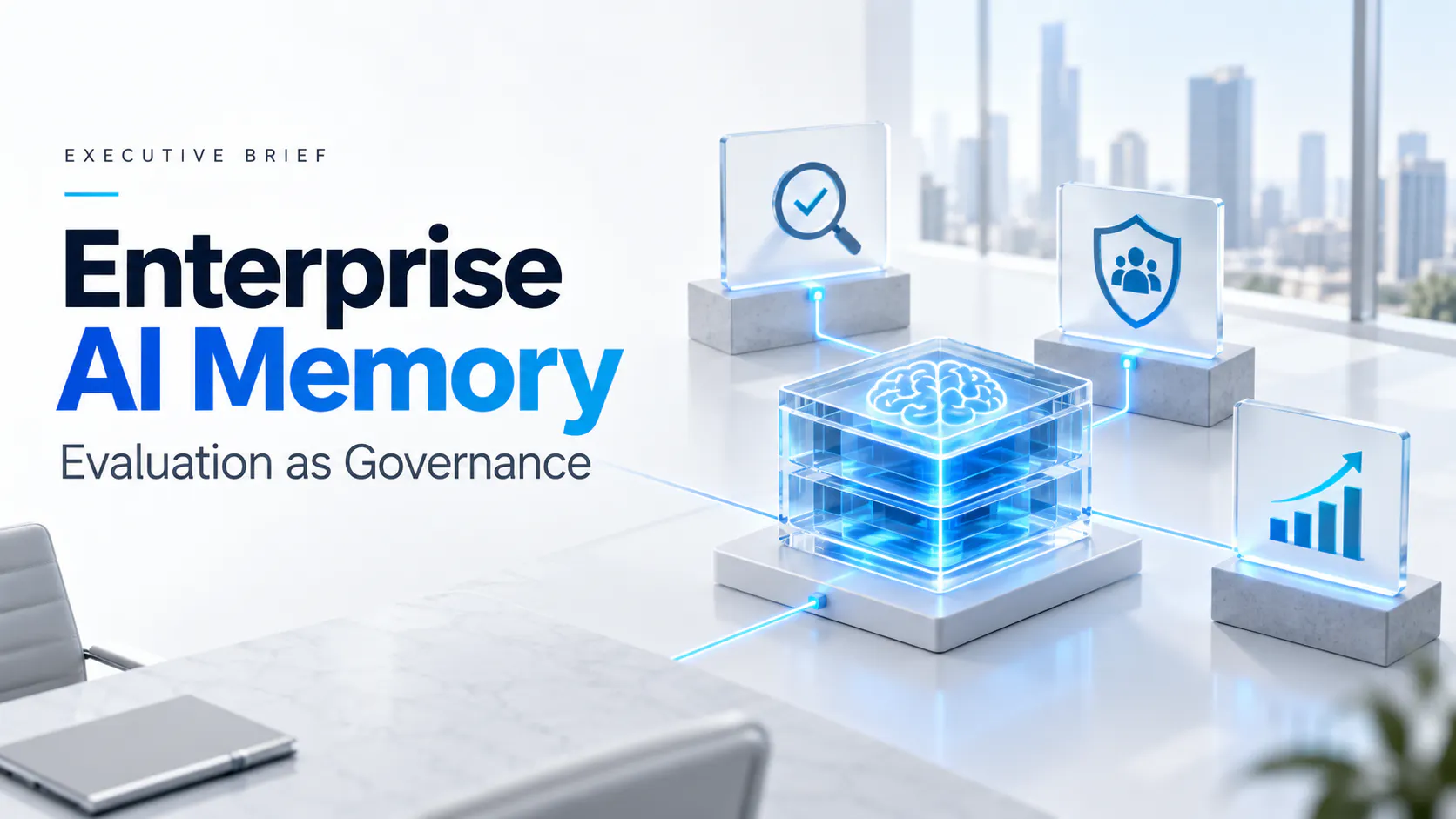
Most enterprise AI initiatives struggle to transition from pilot demonstrations to mission-critical production. When autonomous systems fail in enterprise deployments, executive post-mortems typically blame stochastic hallucinations in the foundational language model. In reality, the primary failure mode stems from unmonitored degradation within enterprise AI memory architectures.
•2mo ago
AI Evaluation is becoming an Enterprise Control Layer

Enterprise leaders have good reason to be skeptical of adding another evaluation layer to AI systems. More tests can increase cost, slow releases, and create another set of metrics for teams to manage. LLM-based evaluators also introduce their own errors. Research has documented position bias, preference for longer answers, and self-enhancement bias when language models judge other models.
The response should not be more evaluation for its own sake.
•2mo ago
Enterprise AI Memory Needs an Evaluation Layer Before It Becomes a Decision Layer

Introduction
The strongest argument against adding more evaluation to enterprise AI is simple: if the system retrieves information from an approved corporate knowledge base, why spend additional compute and engineering effort checking its answers?
•2mo ago
How Evaluation Strengthens a Knowledge-First Enterprise AI Strategy
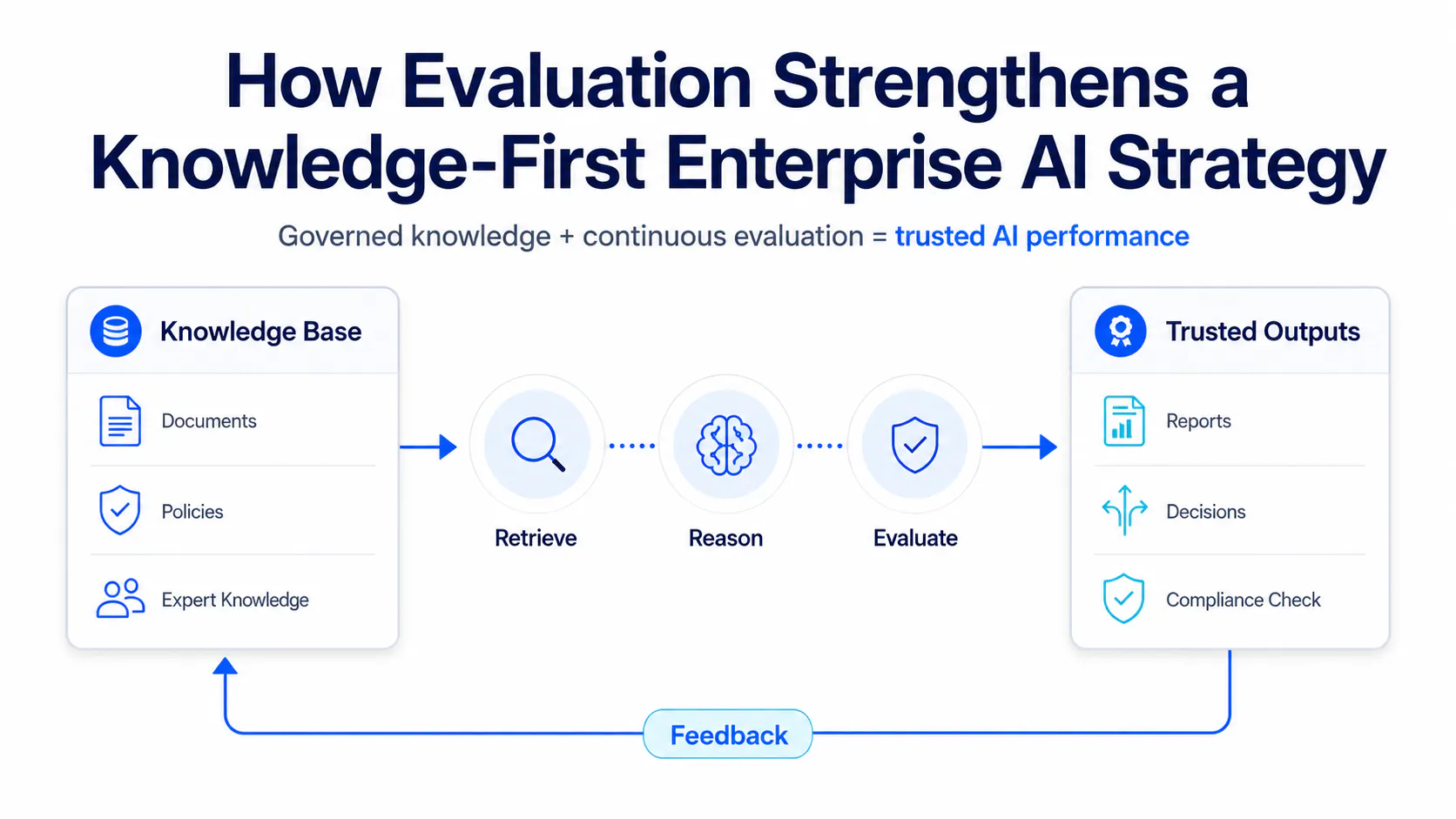
Enterprise AI leaders may be tempted to treat evaluation as the primary control mechanism for AI quality. That approach puts the sequence backwards.