p/rankfender
by
Imed Radhouani
I have been looking at what is actually getting traction on Product Hunt right now. The pattern is clear.
In March, OpenClaw products dominated the leaderboard. Anything with "Claw" in the name got votes. That was a land grab new space, everyone rushing in to claim a spot .
In April, that stopped. The "just build an agent" strategy stopped working. What replaced it? Products that do specific tasks inside workflows you already have .
Here is what the data shows.
7
13
p/prodshort
Amrani Yasser
I was reading this recent @OpenAI article about Gartner naming OpenAI a Leader in enterprise AI coding agents: https://openai.com/index/gartner....
"Software development is becoming more agentic." This is a good summary of what is happening right now. We are moving from AI that helps you write faster, to AI that can take over tasks (actions, use tools, make changes, run tests, and bring the work back for human review). That is a very different behavior. The article gives Cisco as an example. They used Codex for a big part of their AI Defense platform and reduced delivery time from several quarters to a few weeks.
23
35
p/general
Rohan Chaubey
With AI agents and assistants are becoming more advanced, we're seeing them handle everything from scheduling meetings to managing entire workflows.
But here s the big question would you fully trust an AI to run tasks autonomously, or would you prefer keeping an eye on things just in case?
8
45
Sunny Kumar
9
17
steve beyatte
There are so many new AI agent platforms ( @Wordware @Lindy @CrewAI @zapier and so on) that I'm finding myself curious how everyone is using them.
What AI agents are you using in production? What do they do? Are they working and reliable? What would make them better? Are they replacing roles? Augmenting existing ones?
16
p/ai-context-flow
hira siddiqui
If you're building a product with AI tools, here's how your morning probably looks:
Open ChatGPT. Paste your project context. Ask your question. Get a decent answer.
Switch to Claude for something else. Paste your context again. Different tool, same briefing.
Hop into your codebase with Codex. Paste context again.
You're not just a builder anymore. You're a context delivery system.
The indie hackers I've talked to who use AI most effectively have one thing in common: they've figured out how to stop babysitting their tools and just use them.
10
Dogan Akbulut
Scrolling through today's launches, it feels like half of them are AI agents now applying to jobs for you, editing your videos, handling outreach, monitoring other agents. Some of it genuinely saves hours. Some of it I still want to keep my hands on.
So I'm curious where everyone draws the line.
Aleksandar Blazhev
Everyone s been talking about AI Agents over the past year.
But the real leverage doesn t come from the agent itself. It comes from the context you provide:
12
p/tooling-studio
Nick Kramer
A lot of teams already manage work inside Gmail and Google Workspace. Customer conversations happen in email threads, follow-ups come out of meetings, and project coordination lives across tasks and boards throughout the day.
Keeping CRM records and project workflows aligned with all of that activity still takes a surprising amount of manual updating afterward.
6
22
p/inro
kshitij
last week, I shared an update on everything Inr has shipped over the last 20 months in automation, CRM, and integrations.
today I am doing a final update on the bigger shift coming this Saturday 25th: Inr is now an AI-first platform, and here's what that actually means.
11
52
Hunter
p/athena-5
Maya Elor
Traditionally, PMs are the ones connecting everything: users, business, engineering.
But now with AI systems that can map, analyze, and connect - what happens to that role?
Does AI amplify the PM?Or start replacing parts of the job?
5
20
Sasha Dikan
AI is everywhere right now - from copilots and chat assistants to analytics, research, and planning tools. But beyond the hype, I m curious about what s truly useful in day-to-day product work.
From a PM or founder perspective:
Where has AI genuinely saved you time?
What tasks do you trust AI with - and what do you never delegate?
Has AI changed how you write specs, manage roadmaps, or talk to users?
What AI use cases sounded great in theory but failed in practice?
Personally, I see a lot of potential, but also a lot of noise. I believe that in the future, AI should help us much more. Create good roadmaps, convert product specs into concrete tasks, prioritise them, assign people, push for realisation, and much more.
Anurag Tyagi
A few years ago, AI at work meant smarter autocomplete or a chatbot on your website.
Now, I m seeing something different.
Companies are experimenting with AI agents as teammates - not just tools. They schedule meetings, file reports, analyze data, and even handle parts of customer support.
Hamza Afzal Butt
I have been thinking a lot about how AI is quietly transforming the way we work, not replacing jobs entirely, but definitely reshaping them.
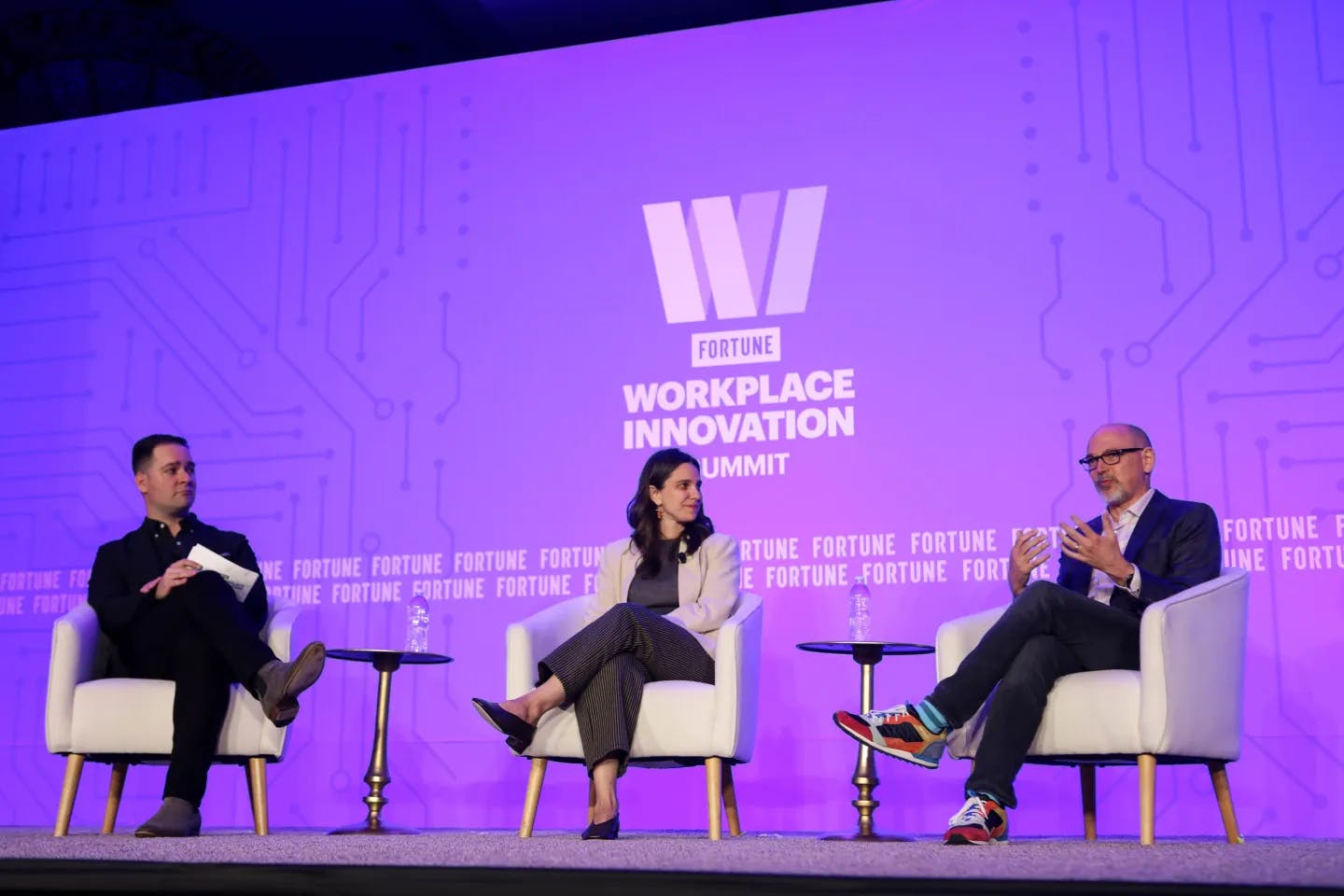
At a recent Fortune summit, the CEO of Indeed said AI can now handle over half the tasks in most roles. But no single job can be fully automated. OpenAI s Chief People Officer even called it a reimagination of work.
44
Kisson Lin
Aaron O'Leary
29
47
Janna Bastow
Matteo Zumpano
Hailey.W
4
Abdul Rehman
Casper Brix
15
Sandra Djajic
21
Anirudh Madhavan