There's never been a better time to build. AI tools, smaller teams, faster product cycles.
Last year, @Supabase surveyed over 2,000 startup founders and builders to uncover what's powering modern startups: tech stacks, GTM, and approach to AI. [1]
Many things have changed since then, and they want to know what building at startups looks like in 2026.
I believed that "keyword density" mattered. I spent hours making sure our target keyword appeared exactly 3-4 times per 500 words. I used tools that highlighted which words were "under-optimized." I even re-wrote paragraphs to squeeze in one more mention.
Turns out that hasn't been a real ranking factor for over a decade. Google's RankBrain (2015) and BERT (2019) made keyword density obsolete. These models understand context, synonyms, and user intent. They don't need you to say "best CRM for small business" five times. They know that "top CRM for startups" means the same thing.
What actually matters is topic coverage. Does your page answer the question completely? Do you cover related subtopics that a user would expect to see? Do you use natural language that matches how people actually ask questions?
Update: The Deel Leaderboard will no longer be going ahead today for the Paris event.
We re teaming up with The Pitch by @Deel, a global startup competition where up to 100 winners will receive $50k in funding and up to 10 winners will receive $1M+.
After our Product Hunt launch we watched hundreds of founders sign up and start using the platform.
And here's what surprised us.
Most of them even ones running real businesses making money had no idea how to describe their ideal customer. They'd stare at the prompt and type stuff like "anyone who needs my product" or "find me buyers from everywhere."
I thought it might be useful for some to hear our experience launching on Product Hunt. How we prepared, what happened during launch day, and what results we re seeing five days in.
I am a Computer Science student doing research into how solopreneurs and small startups create new apps and what their stack looks like. Particularly, I'm interested in how you handle things like authentication, billing, and permissions/authorization in your apps.
Let me know what you're working on below and how you're going about it -- I'd love to connect for some quick calls to learn about your product and talk about your process in building it!
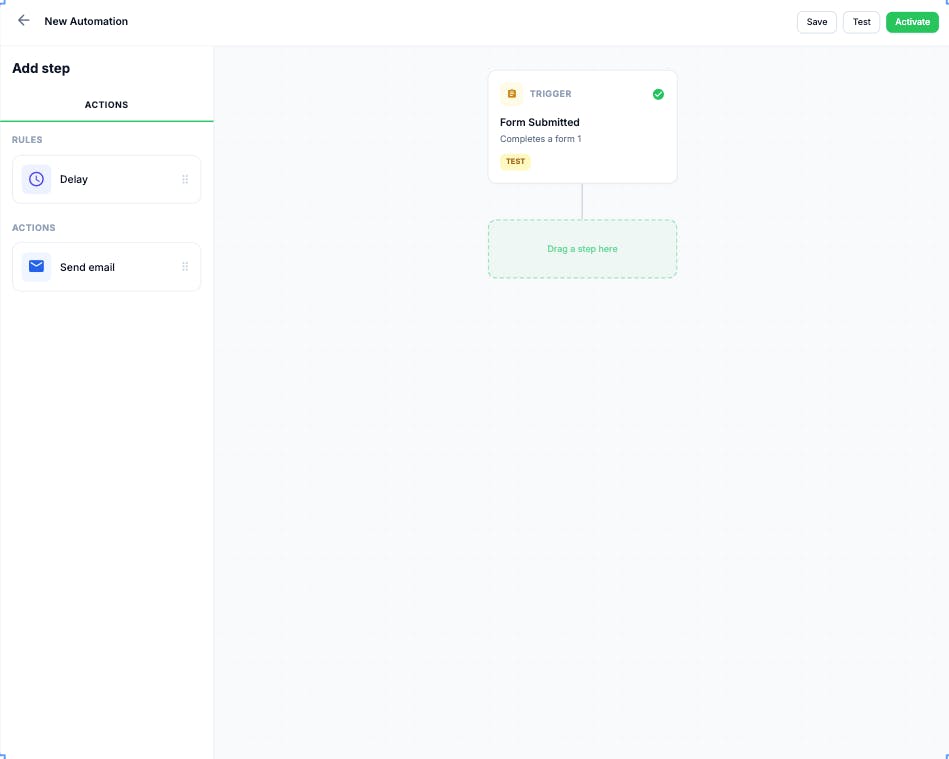
I continue building UI pages for my email marketing platform using AI, and I wondered if AI generated UI designs are good enough for production apps?
They seem to work great on mobile devices and desktop screens. They load fast. They behave normally. I m personally perfectly fine and happy to use them in production, but what is your opinion? Am I missing something? Should I be worried about using them in production? To build UI I use Lovable and Google Stitch. I go feature by feature, and for each feature I create a separate Git branch. This way I m more careful that one update does not break my entire website. P.S. The attached screenshot is a work in progress design that I created using Google Stitch for the Email Automation and Sequencing feature.
I posted a random thread on X about the cost of living in the Netherlands. Nothing about what we're building. Just genuine thoughts about life in the Netherlands.
It hit 1M+ impressions. And here's the weird part we got a ton of signups and paid users for Starnus from it. Without ever mentioning the product.
Meanwhile, my "here's what Starnus does" posts? Way less engagement.
This genuinely messed with my head. I'm sharing the actual X post below
I recently saw a marketer with 10k+ followers launch and finish 6th with 348 upvotes. They followed a proper pre-launch and post-launch plan, did everything right, and still the outcome felt unpredictable.
Now I m launching @Curatora next week.
I m not a marketer. I have a little over 1k followers. Of course, asking for support helps. But I also keep hearing that a large part of the Product Hunt community shows up mainly for their own launch, then goes quiet until the next one.
That makes me wonder: how much of success here is strategy, and how much is timing and network effect?