
@O - AI coworker in Slack
Your AI coworker, in Slack. Just tag @O.
1K followers
Your AI coworker, in Slack. Just tag @O.
1K followers
@O is the ultimate AI coworker that lives natively in Slack. Tag @O like a colleague, to ask anything or delegate daily tasks in plain English. It connects to 1,000+ tools, runs automations while you sleep, and shares memory and skills across your whole team right in Slack. One-click install, everyone AI-enabled in under 5min. Zero friction, maximum adoption.
This is the 2nd launch from @O - AI coworker in Slack. View more
Ogment AI
Launching today
@O is the ultimate AI coworker that lives natively in Slack.
Tag @O like a colleague, to ask anything or delegate daily tasks in plain English. It connects to 1,000+ tools your business runs on, does work while you sleep, and shares memory and skills across your whole team right in Slack, on any model you choose, including your own.
One-click install, and everyone is AI-enabled in under 5min, not just your power users. Zero friction, maximum adoption.




Free Options
Launch Team / Built With


how does the shared memory actually work across teammates, like does it learn from one person's preferences and apply them to everyone or is it more like a shared knowledge base?
@O - AI coworker in Slack
@cemilkavcqivn Good q! It's not one person's preferences bleeding onto everyone. Two layers: personal memory that learns from your own interactions and stays yours, and an admin-managed org layer that acts more like the shared knowledge base, the base context the company wants everyone to have. So your individual preferences stay individual, while the shared stuff is curated on purpose rather than absorbed automatically.
How does pricing actually work if multiple teammates are tagging @O throughout the day — is it per user, per workspace, or based on the volume of tasks it handles?
@O - AI coworker in Slack
@vedatkarabjvvk - it's usage-based, tied to the volume of work @O handles, not per user or per workspace. So multiple teammates tagging it all day doesn't mean seat-by-seat costs, you add the whole team freely and pay for actual tasks done. And since it's model-agnostic, you've got a real cost lever by pointing it at a cheaper one!
@O - AI coworker in Slack
Sonnet became super efficient and cost efficient!
Love that it just lives in Slack as a tagged coworker, no separate app or tab to babysit. The shared team memory angle is the smart move, that's usually where these tools fall apart.
@O - AI coworker in Slack
@birglanvl - shared memory is one, and also we find that the shared context with all the agent's output directly in multi people threads is definitely a great asset!
Tagged @O in a channel and it pulled the right data from Notion without me explaining anything. The shared memory across teammates is the real standout, no one has to repeat context.
@O - AI coworker in Slack
@tayfunabik5641 - love this, that "without explaining anything" moment is exactly what we were chasing 🙂 The context living where the work happens means nobody's re-briefing the bot every time. Thanks for giving it a real spin on launch day, means a lot
Tagged @O in a test channel and it pulled a report from our CRM in seconds, no setup headache. The shared memory across teammates is a nice touch too.
@O - AI coworker in Slack
@huriyedarka awesome to hear! Next step might be to ask O to create a skill so it processes the data exactly like you want every time? :)
Netlify
Hey PH fam 👋
Super excited to bring Ogment AI to the global tech and startup community today!
Here's a pattern I keep seeing across the AI ecosystem: almost every AI tool is built for one person at a time. One chat window. One context. One user. But real work is a team sport. It happens in threads, channels, and shared projects.
Most AI tools are like giving every employee their own private notebook. Useful, sure. But nothing compounds. @O is the team whiteboard.
It lives natively in Slack, works inside your existing channels and threads, and shares memory and skills across the entire team. When one person teaches it something, everyone benefits. That's the unlock.
My honest take on the competitive landscape: yes, the giants are shipping Slack agents too. Claude Tag is a strong product. But model companies are running many races at once: frontier models, APIs, consumer apps, coding tools. A Slack coworker is one bet among dozens.
For Ogment, it's the only bet. Every sprint, every roadmap call, every support ticket serves this single product. History rewards that kind of maniacal focus. Figma out-obsessed Adobe. Superhuman out-crafted Gmail.
And here's the clever part: Ogment runs on any model you choose, including Claude. So it wins no matter which lab wins the model race. That's smart positioning, not just brave positioning.
What stood out to me:
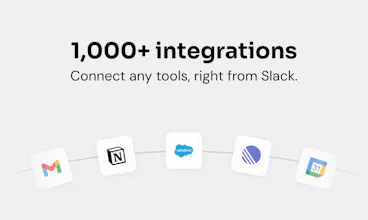
→ Connects to 1,000+ tools (Gmail, Salesforce, Notion, Linear, Stripe) and actually executes work, not just answers questions
→ Works on any model you choose, including your own local LLM
→ One workspace plan, unlimited Slack users, starting at $50/month. Per-seat AI pricing punishes adoption. This model rewards it.
Big shoutout to Teo and the Ogment team who are all here today and keen to hear from you 🙌
Here's a question I'd love this community's take on: where do AI coworkers ultimately live? Inside the tools we already use every day, like Slack? Or will we all migrate to dedicated agent platforms built from the ground up? Drop your take below 👇
@O - AI coworker in Slack
@O - AI coworker in Slack
Hello everyone, Flo here, I'm one of the builders at Ogment :)
Really excited to share what we've been hard at work on for the past months. A few more insights into the technical aspects of making an agent in slack run smoothly in production.
The bar we set for this product is extremely high: it needs to be incredibly easy to setup, essentially all integrations should be available to you, it should behave as smoothly as possible in all scenarios that exist in a chat app like Slack, and the hardest part: It should survive and work reliably across a myriad of possible failure modes, errors of all kinds, and deployments - to give people the feeling that "it just works".
First surprise: Slack's API, even their latest one made for agent apps, has an incredible amount of edge cases, error codes and rough edges. Make a tiny mistake, and the entire stream or message your agent is trying to write will simply not be displayed. Getting this right and buttery smooth was an uphill battle of renderers, meticulous testing and bug reports from our alpha testers.
Second surprise: Making agents survive in production still feels like an unsolved problem. Everyone is hand-rolling their own runtime, making agents recoverable when the process crashes, when your LLM provider dies, or when you deploy a new version of your agent and/or its runtime. There's a lot of space to make this simple, or to overengineer it, but one thing is for sure: This is no easy feat (even with the smartest coding agents).
Excited to see what people will delegate to our dear agent O 🚀