
 •
•16d ago
We shipped 111 one click apps. 9 of them get used.
We built 111 one click apps for Arteza in about six weeks, mostly by describing each one and shipping whatever came back that ran. Felt incredible at the time. Then I pulled the usage. 9 of them cover roughly 80 percent of runs, and around 40 have never been opened by anyone outside the team.
The build time wasn't the cost. That was cheap, that's the whole point of working this way. The cost is that every one of those 111 is a surface that can break, and I now have a settings page nobody can scan and a support inbox where I often can't tell which app someone means. Cheap to write, expensive to own.
 •
•18d ago
My AI-built feature works. The handoff is where I find out if I actually built it well
I've started using a simple test for AI-assisted features:
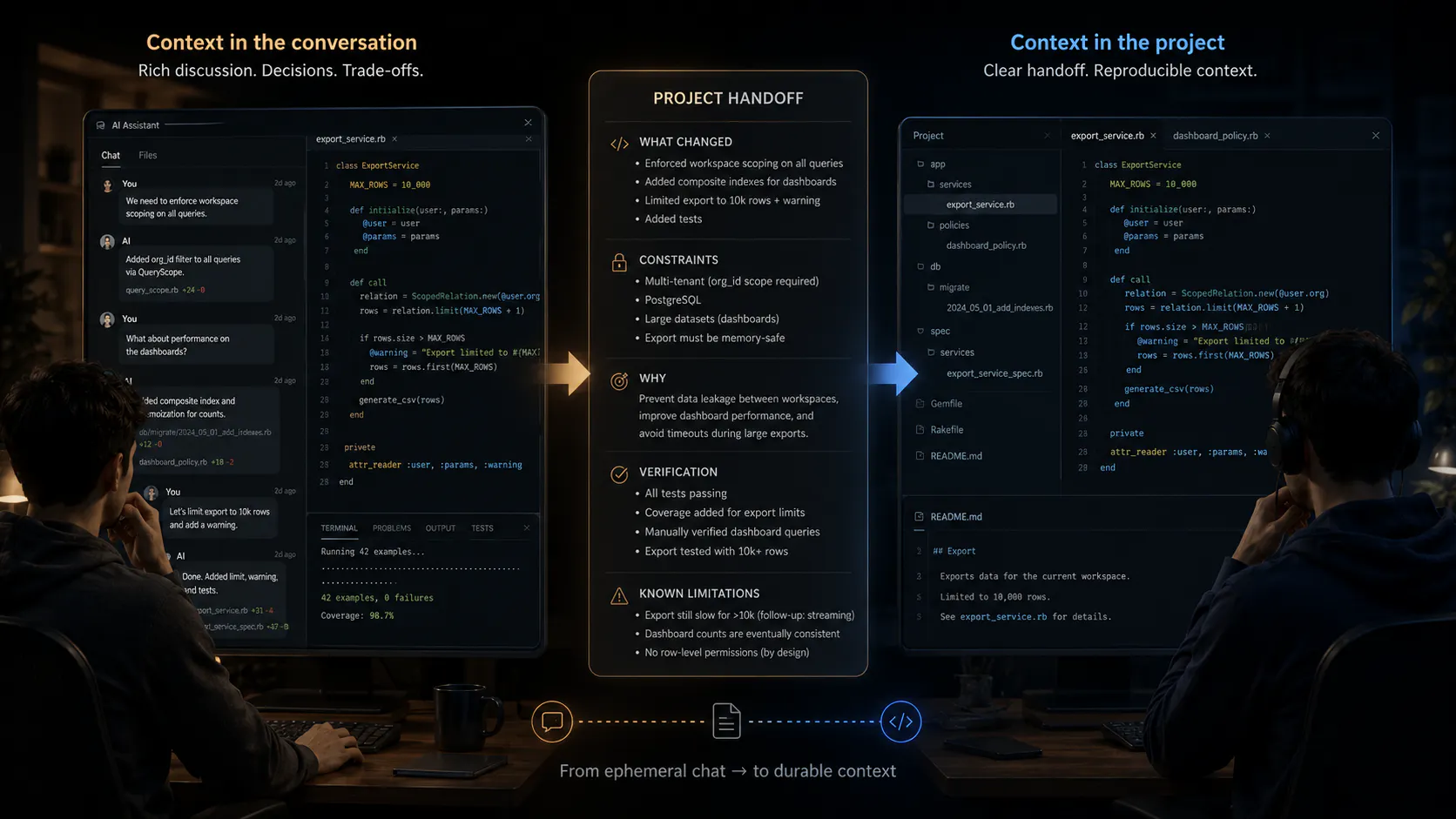
Can someone else understand what changed without sitting next to me?
 •
•2mo ago
I missed my own deadline and Sonnet 5 acted like a co-founder
A few months back I set up custom instructions for Claude stop opening with agreement, tag its confidence on claims, push back when I'm wrong instead of validating me. Then I mostly forgot about it. Kept getting the normal helpful-assistant experience.
Last weekend, mid-project, it started actually doing what I'd asked. Pulled up my own past chats and launch checklist to see what I'd actually committed to. Called out that I'd blown past my own launch deadline without noticing. Refused to let me reprioritize a payment-provider decision over just talking to five actual users.
Told me a "quick bug fix" I described was actually five missing subsystems.
Was it mean? Maybe, some of it. But all of it was annoying in the specific way that's actually useful the way a good cofounder or an honest advisor is annoying.
Felt strange, Do I need this? Should I tone down the instructions?
I don't know if everyone can replicate this exactly.
Curious who else has tried shaping how their AI pushes back, not just what it outputs.
 •
•4mo ago
For those running multiple vibecoded apps, how do you manage everything behind the scenes?
Two things I'm curious about:
How do you monitor your apps for issues and keep track of costs across paid services? Especially if you want to avoid any unexpected bills.
When adding a new feature, how do you figure out which services to use? And do you find the setup process annoying enough to slow you down?
•18d ago
The bug that cost us three days was in code I'd never read, and I approved it twice
We shipped a render queue in about four hours with Claude Code. It worked fine. Three weeks later renders started failing at roughly 1 in 40, and it took three days to find, because the retry was firing against a stale job id. I had approved that diff twice without reading past the function signature.
That isn't an AI problem. It's that approving generated code feels like reading it, and it isn't. When I write something badly I remember roughly where the bad part is. When I approve something badly I remember nothing at all, so debugging starts from zero.
What I do now is type out anything touching money, queues or user data by hand, even when the agent drafted it first. Everything else gets generated and I accept I'll debug it blind. It's about 15% of the codebase and it's the only 15% I can reason about at 2am.
Where do you draw that line, or do you not draw one?
 •
•1mo ago
🤖 What did an AI agent break that you only found weeks later?
The failures that hurt are never the ones that crash. A crash gets a stack trace and a fix the same day. The expensive ones return 200, render a normal looking screen, and sit there.
My own version was on iOS. A products fetch came back empty, so the purchase button stayed greyed out. No error, no log line, nothing to alert on. The reviewer found it before I did.
So I'm curious:
What did an agent quietly break in your project?
 •
•2mo ago
What's the one AI coding habit you had to unlearn the hard way?
Mine was trusting the diff summary instead of actually reading the diff.
I used to just glance at "renamed X, updated Y files, tests passing" and move on. Then one day the agent quietly changed a timeout value in a config file while it was "cleaning up," totally unrelated to what I asked for. Nothing broke locally, so it shipped. Took three days in prod before anyone noticed requests were timing out way faster than before.
 •
•5mo ago
Are all-in-one AI builders actually better, or do you still prefer a custom stack?
Lately I ve been wondering whether the one AI tool builds the whole product idea is actually what people want.
For a simple website or SaaS-style app, the workflow often ends up looking like this:
UI in one tool, backend somewhere else, auth/payment setup in another place, deployment on a different platform, and maybe an admin dashboard built separately.
That gives you flexibility, but it can also get messy fast especially for non-technical founders, small teams, or people trying to validate an idea quickly.
•5mo ago
Would you rather use 5 tools to build an app, or one AI builder for the whole thing?
I ve been thinking about how messy the current build an app with AI workflow still is.
For a simple website or SaaS-style product, people often end up jumping between multiple tools:
one tool for UI generation
another for backend/database
another for auth
another for payments
another for deployment
and maybe something else for internal dashboards or admin tools
It works, but the workflow can get fragmented pretty quickly especially if you re not a full-stack developer.
 •
•2mo ago