Hey PH community We re Nutrimate a nutrition tracking app built specifically for India. Our core insight was simple: average Indian spends 3+ hours/day on WhatsApp but less than 90 seconds on any fitness app.
So we built the tracker inside WhatsApp itself.
Type poha breakfast get full nutrition breakdown in 8 seconds. No app to open, no forms to fill.
We also built something called Caregiver Connection a family member can monitor another person s real-time nutrition data. Built for Indian families where health decisions are collective, not individual.
Two things we d love feedback on: 1. Would WhatsApp-based tracking make sense in non-Indian markets? Or is this too India-specific? 2. The Caregiver feature does this resonate with you or feel too invasive?
Honest feedback welcome. nutrimate.in if you want to check it out.
I lost more deals to my own spreadsheet than to prospects saying no.
Three tabs, a CSV of 400 companies, sticky notes for who I'd already called, and a shared list where a teammate and I dialed the same guy twice in one afternoon. He was not thrilled.
The calling was fine. The 45 seconds between calls killed me. Find the next number, check who owns it, log the outcome somewhere I'd never look again.
So I built Tepio (https://trytepio.com) to do the boring part. It hands you one company to call at a time, and the moment you talk to someone, that company becomes yours. No more double-dials. Import is a CSV or Excel drop and it maps the columns for you.
I ve been building a fitness app called AirJump, and I recently added some interesting updates I d love feedback on.
The core idea is:
AirJump uses your AirPods to count your jump rope reps in real time It shows everything live on your iPhone It also includes structured workout plans to help you stay consistent
I launched FounderFlow here this week, an AI Chief of Staff built for founders running more than one business at once. I'm the founder, and I built it because I was drowning trying to keep a software company, a care home, and a cafe all moving at the same time without dropping something important.
The biggest surprise so far hasn't been the feature requests. It's how many people running just one business also feel like they're secretly managing three: the day to day, the fires, and the long term stuff that keeps getting pushed to 'later.'
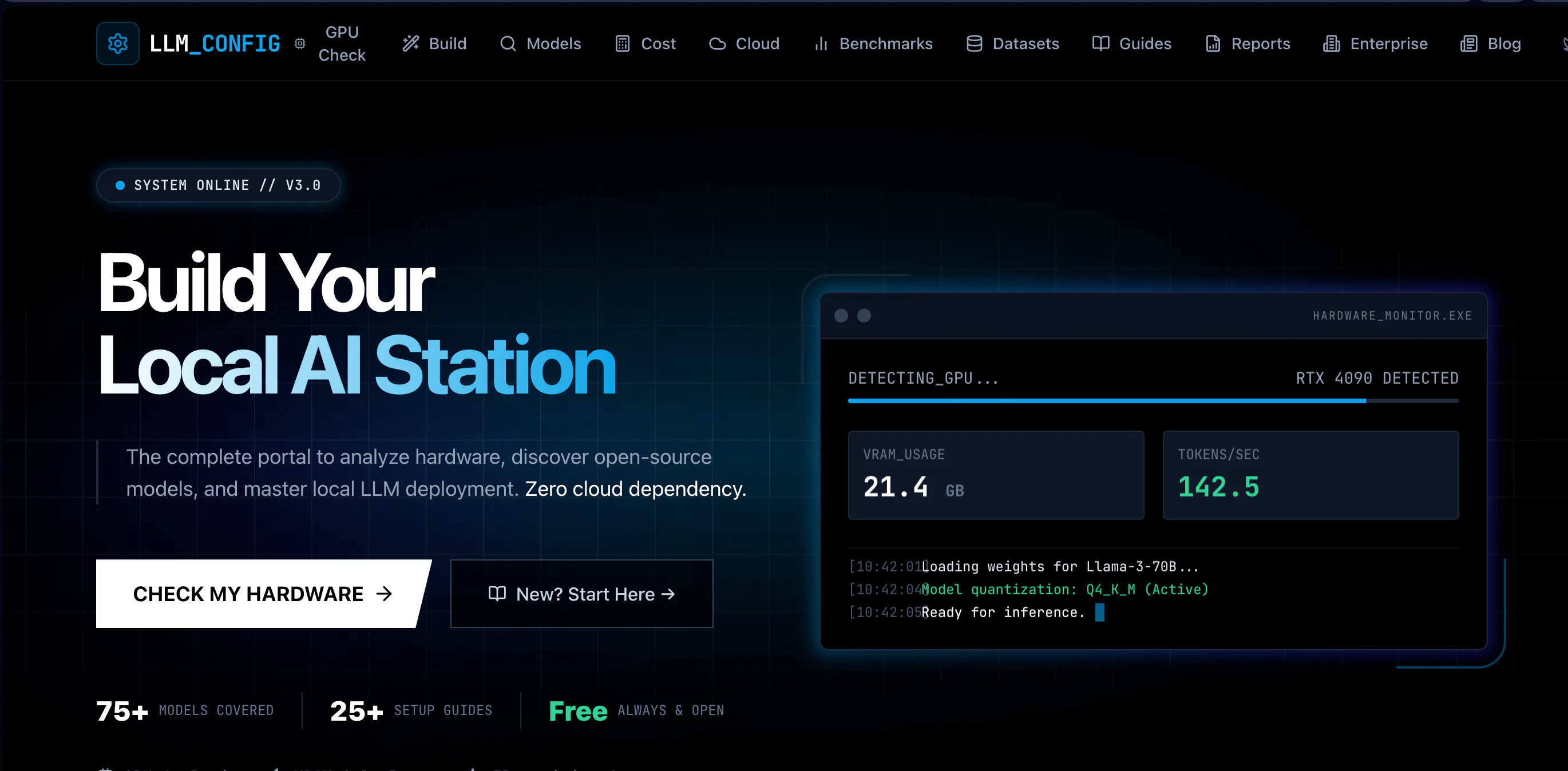
Few months ago I was trying to run local LLM on my m1 macbook and it was a bit painfull to find exact model that can run on it and how to do it properly. Informations were across reddit, forums etc so I created https://llmconfigurator.com/ to make it all in one. You just putting your hardware or one click analyser and it showing you models that can run. I am keeping model list curated.
Since then it grew up a bit, I am constantly adding guides, tutorials, blog posts. I hope someone find it useful and this is my small addition to LocalLLM community
Most crypto investors are sending funds blindly. Right now, there s no easy way to verify if a wallet is safe before hitting "send." Sure, blockchain explorers exist, but they just spit out raw data that nobody can actually read.
That s why I built CryptMax47.
Just paste any Bitcoin or Ethereum address and get instant, easy-to-understand intelligence in plain English no technical background needed.
What you get for free: Complete transaction history Fund flow visualization Whale detection Portfolio tracking Email alerts
What Pro unlocks ($9/month): An AI-powered risk score (0-100) with simple explanations PDF compliance reports Full developer API access Unlimited wallet analyses
I built this entire platform as a solo developer from India, right in the middle of studying for my semester exams. Why? Because enterprise-grade blockchain intelligence shouldn't cost $50,000 a year.
Hey, my name's Jad, and I'm an incoming freshman at USC Marshall. I built FOMO, a browser extension for project teams (case teams, research groups) that quietly turns everyone's browsing into shared team intelligence.
It surfaces overlaps, blind spots, and tensions across what your team is researching, then tells each person what to focus on next. In doing so, a team can cover more ground without duplicating work or missing a blind spot.