

We Built an AI That Watches Cruise Prices So Humans Don't Have To
I’m Eric, Product Manager at OLA Vacations.
Most travel tools help you book. Virtually none help you decide when to book.
After years in the cruise industry, I kept seeing the same painful cycle: Travelers spend weeks researching ships, itineraries, and cabins. They finally pull the trigger. Then, a week later, the price drops by $100, $500, or even $1,000+. And the worst part? They never even realize it.
Why? Because cruise pricing is a black box. Unlike flights, cruise fares fluctuate based on a messy, real-time mix of:
Dynamic cabin inventory
Hidden seasonal promotions & marketing campaigns
Opaque group allocations & loyalty pricing
This leaves travelers asking one stressful question: "Am I getting a killer deal, or the highest price of the year?"
That led us to a simple question:
What if travelers didn’t have to track cruise prices at all?
That’s the idea behind the AI Cruise Price Tracker we’re launching today at OLA Vacations.
Instead of asking users to repeatedly check cruise websites, the system lets them pick a sail once and continuously monitors official pricing in the background.
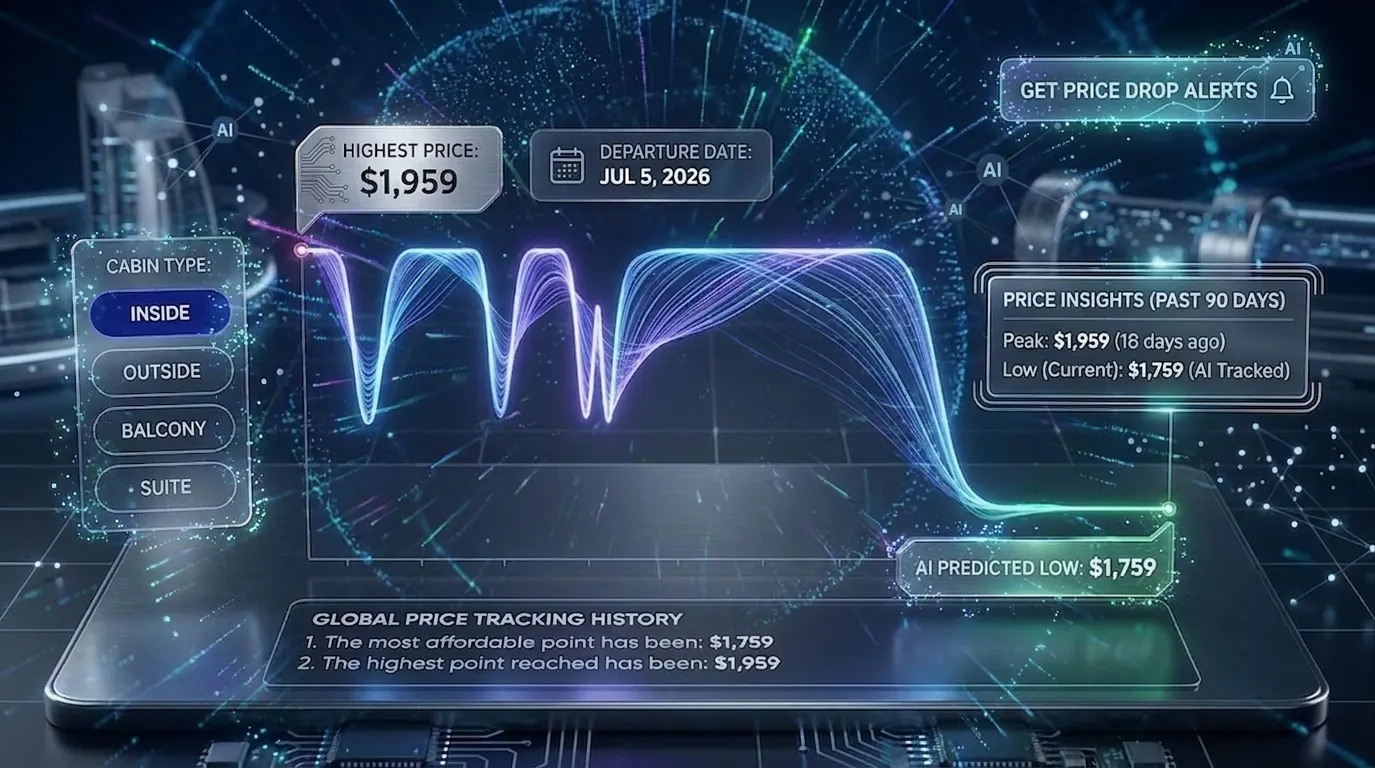
Here, travelers can instantly understand how cruise prices evolve over time.
Instead of guessing whether a fare is “good or bad,” the chart turns pricing into a clear visual timeline—making patterns visible, not hidden.
When meaningful price changes happen, AI surfaces them instantly and highlights them directly next to the itinerary.
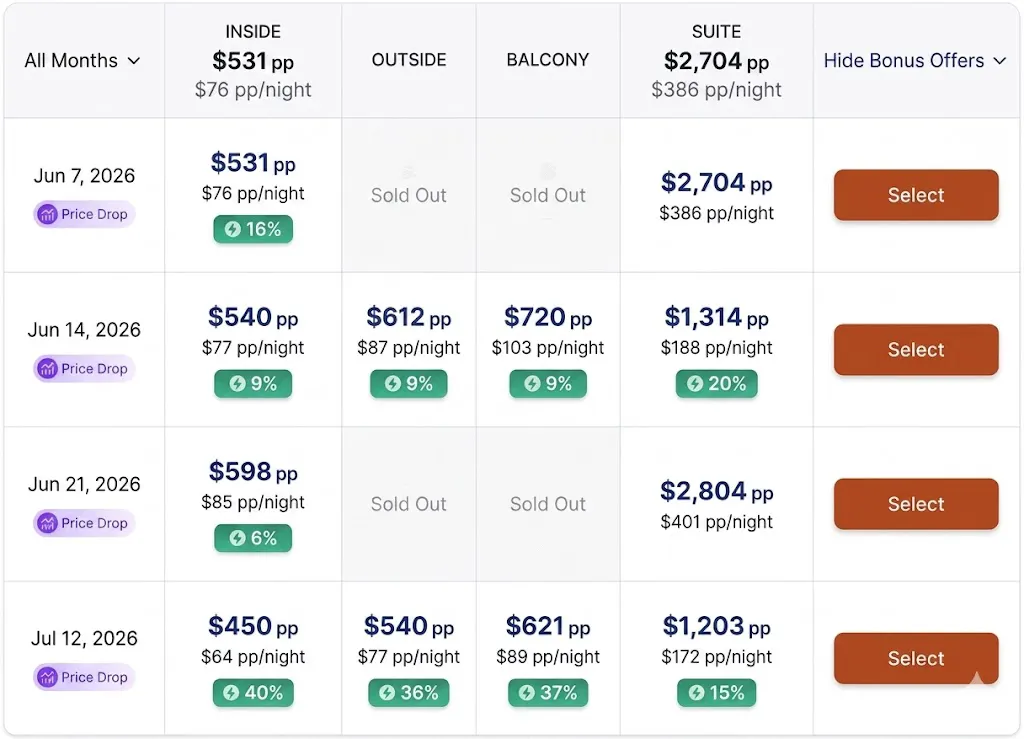
This is where monitoring turns into action.
Users don’t need to refresh pages or compare across dates—the system flags significant drops and shows the exact percentage change right where decisions are made.
But the product itself is only part of the story.
What we’re really seeing is a shift in how travel products work.
For years, travel tech focused on improving search: better filters, faster comparison, cleaner listings.
AI is changing that foundation.
The next wave of travel products won’t just help users find information faster—they’ll help users interpret it.
Instead of manually researching, travelers will increasingly express intent:
“Tell me when this cabin becomes a good deal.”
“Tell me when this itinerary drops below my budget.”
“Tell me when a better option appears.”
Travel planning is moving from a search problem to a decision intelligence problem.
Cruise pricing, despite being a multi-billion-dollar industry, still relies heavily on manual tracking, fragmented tools, and constant checking.
We think that layer is ready to be automated.
So we’re launching AI Cruise Price Tracker with a simple goal:
Help travelers stop watching prices—and start acting on opportunities.
Curious what the Product Hunt community thinks:
What other decisions should AI monitor for people?
Travel? Real estate? Cars? Electronics?
Because attention is still the most expensive currency in the world.
And price tracking shouldn’t require paying with it.
If you’ve ever booked a trip only to see the price plummet days later, you know exactly why we built this.
We are officially live and would love for you to check it out. Try running a track on your dream itinerary, test the interface, and let us know what you think.
We’ll be hanging out in the comments section all day to answer your questions, listen to your feature requests, and chat about the future of AI in travel.
Replies
Neat work, Eric! Turning cruise price tracking into a visual timeline and decision aid is exactly the kind of AI‑driven convenience travelers need. Curious—what criteria does the AI use to flag a ‘significant’ price change? If you're up for it, I'm launching on PH soon... would appreciate a follow (See PRODUCT HUNT LAUNCH link in my profile). It's called The Sponge—a AI‑powered flashcard app that turns any webpage into study material and uses spaced repetition to help knowledge stick.