
 •
3mo ago
If people can use your product before signing up, how do you attribute the signup?
Attribution problem I haven't solved, for anyone running a try-before-signup flow.
Last week I took the account requirement off the front of my product. You can now use the main thing without signing up; the account is only needed to export what you made. It was clearly right for the product nobody understood it from a description, and they understood it immediately once they'd used it on something of their own.
My measurement fell apart the same week.
Top of funnel widened, conversion rate collapsed, and neither number is comparable to the month before. I don't have a trend line any more, I have two unrelated datasets.
The compute is real, and it's spent on people I can't identify, can't email and can't count. Costs moved before any of the good numbers did.
Worst one: somebody tries it anonymously, leaves, comes back four days later and signs up. In analytics that's a cold direct signup. Whatever actually did the work gets credited with nothing.
 •
3mo ago
What if latency were no longer the bottleneck — what would voice actually unlock?
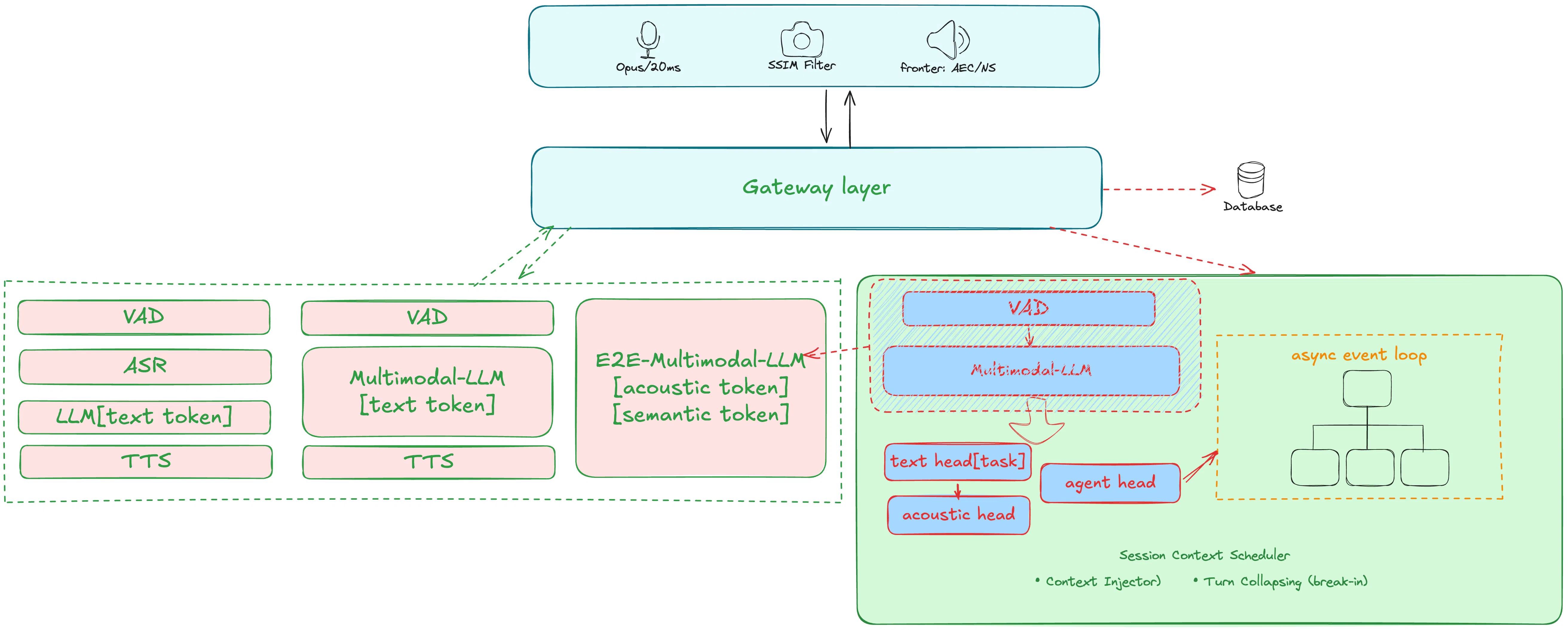
I've been designing a voice pipeline lately, and the whole design boils down to one idea: a dual-speed loop.
Fast loop: a multimodal decision model whose only job is to hold the conversational rhythm. Within ~200ms of you finishing a sentence, it responds whether that's answering, asking a follow-up, or just saying "hmm, let me check" is decided in real time.
Slow loop: a voice agent doing the actual work in the background searching, running tasks, anywhere from seconds to minutes. When it's done, it picks the right moment to jump back into the conversation, guaranteeing depth and quality.
 •
3mo ago
Launch day LinkedIn - the flood of solicitors - is this normal?
During our first launch today and I have been shocked by the volume / the literal flood of paid promotion solicitation. I've been kindly telling them "we don't have a budget for that but we would obviously love your organic support" but holy moly that is a lot of folks telling me they can leverage their community to "beat the system" and get organic votes.
Obviously we all want to win POTD / week / month etc - but that kinda takes the fun out of the whole competitive nature of this PH Launch journey / what makes this community unique etc.
I'd imagine the team does a really solid job behind the scenes flagging those upvotes and comments - but I do wonder if some of the real comments and real upvotes get lost in that shuffle due to this massive influx of pay for click day of promotion.
Don't have an answer as we're in the throws of pushing the product but I wanted to know if other people shared this experience and from the @product team - I'd love to learn more about the vetting mechanisms you've got to limit this stuff (because I am sure its pretty robust haah!)
Anyhoo - back to the launch pushing but - just thought it would be neat to share some real time thoughts and express my gratitude for those folks supporting our launch and the other products launching today!
 •
3mo ago
How do you show a number to users when your product can't actually be certain?
I'm working in AI text detection, and the honest output of that kind of model is a probability, not a verdict. Users don't want a probability. Hand someone 78% and they read it as a yes, then they treat the 22% as if it were never there.
That gap between what a model knows and what the screen says has been the hardest part of the build for me, and it isn't specific to detection. Anything with a model behind it has the same gap: a spam score, a risk score, a match score, a credit score, a health ring.
How much of that uncertainty do you actually put on screen?
Here's where I've landed so far, and I'm not confident about any of it:
 •
1yr ago
What tool(s) do you use find most useful when expanding your network?
Entrepreneurs tend to meet a ton of people and due to the sheer volume of connections made, it's common to forget the details around certain connections. So I've heard a tool to better organize the contacts would be super helpful.
What tool(s) do you find the most useful when expanding your network? What tools would you like to see developed?
 •
1yr ago
How to protect yourself against fraudulent payments? Helpful tips while trying products.
I am following up on the forum from the previous days when you started a lively discussion.
I outlined what not to do when you are a maker and what to do when you want to be more trustworthy.
Today, I will share the opposite.
 •
3mo ago
I started separating AI research into facts, assumptions, and questions
I've been experimenting with AI-assisted startup research, and I noticed a small problem with the way I was reading the output.

AI tends to put these three things surprisingly close together:
•3mo ago
If your product can fail on its own, who pays for the retry?
Anything generative has a failure rate you can't fully engineer away. Mine is low but it isn't zero, and when it misses, the user has already spent one of a small number of credits.
I've gone back and forth on this and landed somewhere I'm still not sure about.
What I considered:
Free retries. Cleanest for the user and the one I wanted. The problem is a retry costs me exactly what the original cost, and "free" has no natural stopping point someone who doesn't like the output can re-roll indefinitely, and I can't tell dissatisfaction apart from someone farming variations.
One free retry per generation. Fairer, but it turns every borderline result into a judgement about whether it "counts" as a failure, and I'd be the one judging.
Charge for it, and price credits assuming a share of them get spent on retries. This is what I do now. It's honest about the compute, but it means a bad result costs the user something on the day it happens to them, which is the worst possible day for that.
Refund on request, handled in support. No policy, no automation. Doesn't scale, but might be correct at my size.
 •
2yr ago
Today's the YC application deadline — what's stopping you from applying?
If you're not applying: what's stopping you?
How can I help?
•3mo ago
If you delete user output after 24 hours, is that a privacy feature or just a support problem?
People keep losing work, and I can't tell any more whether the thing I built to protect them is just annoying them.
Background: the thing I work on generates a file for you in the browser. For a long time I stored nothing at all the input was discarded the second the output existed, and the output only lived in the tab you made it in. Two reasons. The storage bill for something people mostly make once and throw away looked bad at any real volume, and I liked being able to say plainly that nothing a user gave me sat on a server after they left.
What actually happened is that people would make something they were happy with, get distracted, close the tab, and lose it. No undo. Every email I got about it was some version of "can you get it back", and the answer was no there had never been anything to get back.
So I've just moved to a short retention window: the output is held long enough to hand to you and then deleted automatically within 24 hours. It fixes the complaint. But it's left me with three things I didn't expect: