When did you know it was the right time to hire your first team member? Was there a sign you were ready to invest, or a specific financial benchmark that made you think, I m ready ? Many new founders rush the first hire because they believe they need to scale quickly to grow. In some cases, this is true. But there are a lot of hidden costs in that decision that could make or break your business.
Having previously owned a business, I know the hidden costs are payroll, taxes, benefits, bonuses, equipment, and software. These are necessary costs. And when you bring on your first person, you want to do right by them. Hiring to fire isn t the vision for any founder, so ensuring that you can shoulder the cost is a must.
I decided this go-round to create hiring tiers based on revenue goals: $1K/month MRR, $5K/month MRR, $10K/month MRR, and beyond. I may not hire a full-time staff member for a while, but might do a one-off 1099 hire for short-term projects depending on the need. But was there a moment in your founder career where you knew it was time for full-time help? And what hire did you make? Was it a good one? #buildinginpublic
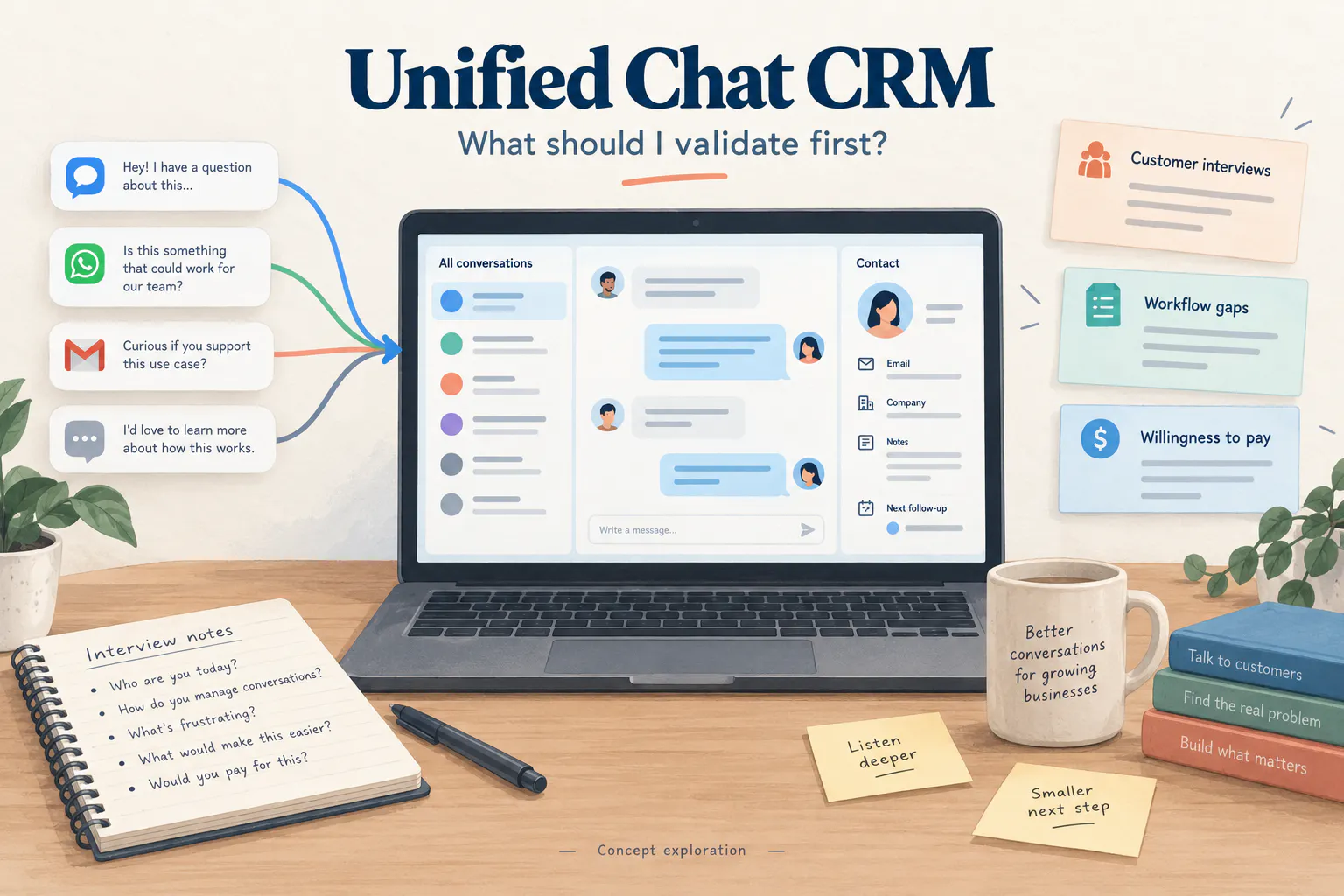
Concept illustration for the CRM idea I m researching.
I m a beginner SaaS builder currently working on a unified chat CRM. The idea is to bring customer conversations from different channels into one place and help businesses keep track of contacts and follow-ups.
The longer I've been an internet user, the more I feel like I'm missing out on something (FOMO) every second I'm offline. The tech world changes so fast.
My first experience with a computer was around the age of 8 I used Microsoft Paint to sketch houses because we didn t have internet at home. I got online for the first time at 11, and by 12 or 13, I had already joined social media.
AI coding assistants have become part of my daily workflow, especially for repetitive tasks, documentation, and quick prototypes.
At the same time, I've found myself spending more time reviewing generated code than I expected, particularly around security, scalability, and edge cases.
For me, AI has become an accelerator, not a replacement for engineering judgment.
I'm curious how others are using these tools today.
I started sharing what I was building because I liked the idea of it. Accountability, feedback, community. All the reasons people give.
What I did not expect was the way it changes the way you think. Every decision starts to include an imaginary audience. You find yourself choosing the version of your work that will make the best post instead of the one that is best for the product.