

Enterprise AI Needs Two Contracts Before It Can Scale
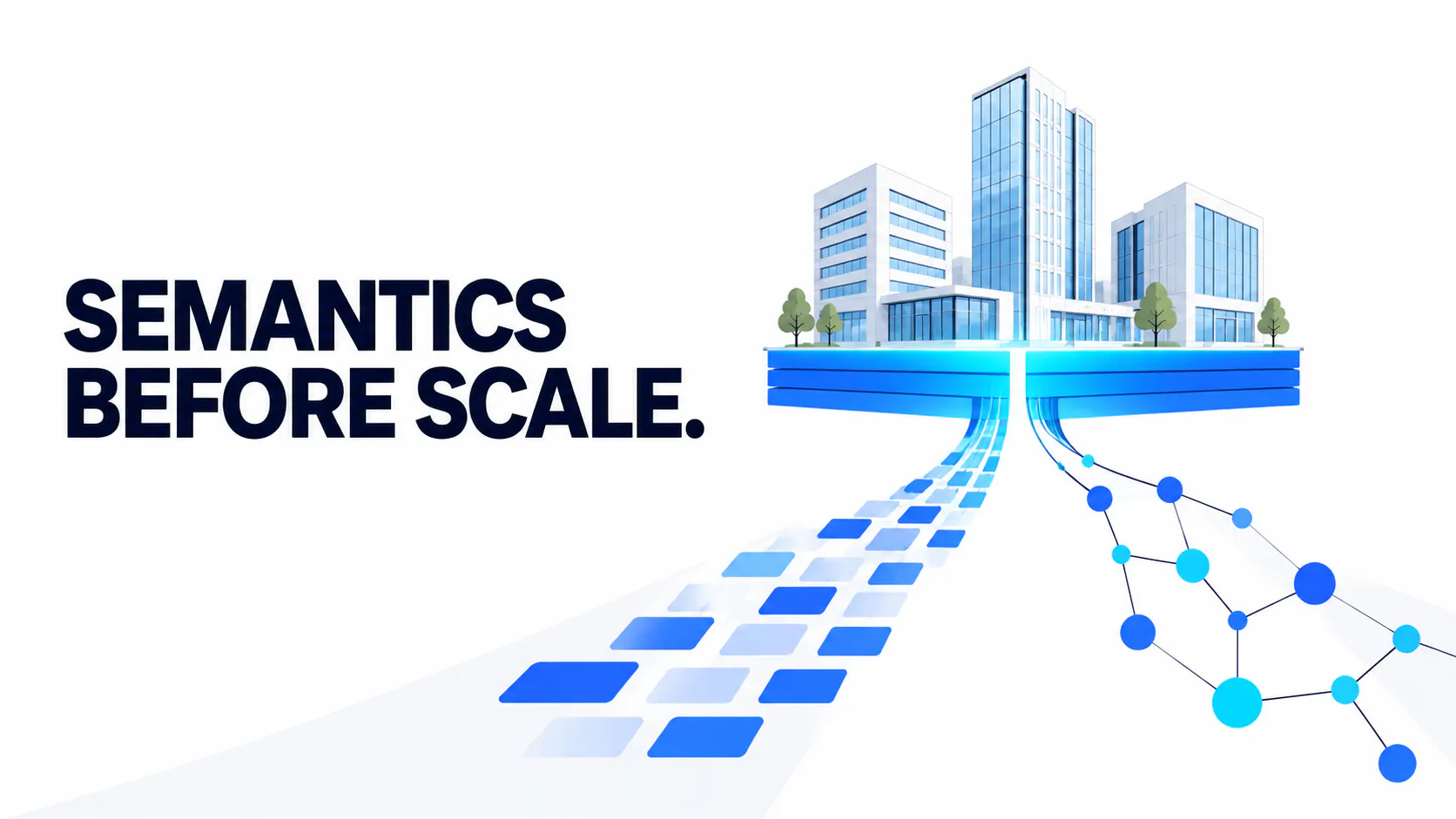
The strongest counterargument to enterprise AI standardization is that uniformity can destroy context. Buildings, workflows, and domain procedures differ. Forcing every source into one rigid structure may make the architecture clean but the system less truthful.
The answer is not unrestricted flexibility. It is to standardize the interfaces that applications depend on while preserving valid differences behind them.
This creates two contracts. The first defines what operational data means across assets and locations. The second defines how an agent interprets instructions, calls tools, and returns results. Governing only one may produce consistent data without reliable action, or controlled execution without dependable context.
AI performance depends on the interfaces around the model
Executives often evaluate AI through model accuracy, infrastructure cost, and application features. Yet failures frequently begin before or after inference.
Before inference, the model may receive inconsistent identifiers, units, timestamps, relationships, or context. After inference, an agent may send invalid parameters, use the wrong tool, or return output that another system cannot parse.
Better reasoning cannot compensate for ambiguous inputs or weak execution boundaries.
Semantic data and agent skills should therefore operate as connected control layers. Both translate variable reality into software-usable structures. Both require ownership, versioning, validation, and change management.
They must evolve in step.
Contract one: make building data comparable, not identical
A property portfolio may contain different BMS vendors, equipment generations, naming conventions, sampling intervals, and control sequences. Centralization solves access, but it does not create shared meaning.
A portfolio data contract should define the minimum information each application can rely on. For a BMS point, that may include its canonical class, equipment relationship, engineering unit, source identifier, site, read or write role, mapping confidence, provenance, and data-quality status.
The contract should preserve the original point name, protocol object, raw unit, and connector identity. Engineers can then trace a standardized value back to its controller.
The practical sequence for standardizing BMS data across a multi-building portfolio should begin with one portfolio decision, test representative buildings, define the minimum contract, validate mappings, reuse successful templates, and monitor drift.
Over-standardization hides site differences; under-standardization makes every application rebuild local translation logic.
Contract two: separate human guidance from machine execution
Agent skills face a similar tension. Domain experts need reviewable instructions. Runtime systems need inputs and outputs that can be validated without interpretation.
Markdown suits roles, objectives, procedures, examples, exceptions, and policy guidance. Engineers, operators, legal teams, and domain experts can review its hierarchy together.
JSON suits tool definitions, typed parameters, configuration, and structured outputs. Software can validate fields and reject malformed objects before execution.
The relevant question is therefore not which format should win. A practical framework for choosing Markdown or JSON for agent skills shows why layered use is often stronger: Markdown expresses operating intent, while JSON defines the machine boundary.
This division improves accountability. A business owner can approve the procedure. A technical owner can approve the schema, permissions, and integration behavior.
Govern both contracts through one release process
Data mappings and agent skills should not move into production as unrelated configuration files. They jointly determine what the AI understands and what it can do.
Each release should identify owners, approved sources, schema and skill versions, permitted tools, validation results, and rollback paths. High-impact mappings and writable actions require human review. Automated checks can handle known patterns, missing fields, stale data, schema validity, and output conformance.
Testing should cover the chain. Can the system resolve the right asset? Does the agent retrieve the correct procedure? Are tool parameters valid? What happens when data is stale or execution fails?
Performance measures should reflect reuse and control, not data volume. Useful indicators include onboarding effort per new site, percentage of mappings reused, unresolved semantic conflicts, skill approval time, invalid tool calls, blocked actions, and rollback frequency.
Practical takeaways
Start with one decision and one agent workflow.
Define the minimum operational context needed for that workflow.
Keep source identity while creating a canonical data model.
Use readable instructions for human review and typed schemas for execution.
Version data mappings and skills together when they support the same workflow.
Expand autonomy only after context quality and execution controls are proven.
Conclusion
Enterprise AI does not scale through model access alone. It scales when every application receives stable meaning and every agent acts through explicit boundaries.
The data contract makes different buildings understandable through a shared operational language. The skill contract turns human expertise into reviewable guidance and machine-valid execution. Governed together, they create a stronger foundation for portfolio analytics, agent workflows, and controlled automation without erasing the differences that operators still need to see.
Replies