
 •
•4mo ago
Your AI is building a profile on you - and you can barely see it
OpenAI just made AI memory automatic.
The problem? you can no longer fully audit what it remembers about you.
Dreaming V3 (launched June 4) doesn't ask you to save memories anymore. It runs in the background, reads across years of your conversations, and synthesizes a profile of you, and automatically updating as your life changes.
It remembered your Singapore trip was in the future. Now it knows you went. You didn't tell it that. It figured it out.
The audit trail problem: TechTimes reported the update "limits" what users can actually see. You used to have a list of saved memories you could read and delete. Now you have a synthesized profile that's broader than that list, and you can only partially inspect it.
A CHI 2026 study called it the "personalization-convenience paradox": the feature users value most is also the one they can least control.
•4mo ago
AI memory quickly becomes a junk drawer. We built the organization layer.
You can now store unlimited context for AI, but without structure, your memories quickly become a messy pile of information that you have no idea how to work with. We've been there too.
So, we've been heads-down building, and Memory Studio now has a Notion-style editor: with version history, rich formatting, enhanced file understanding, markdown support and more.
Here's what's we shipped:
•2mo ago
AI Context Flow in Top 6 LLM Memory Products of 2026
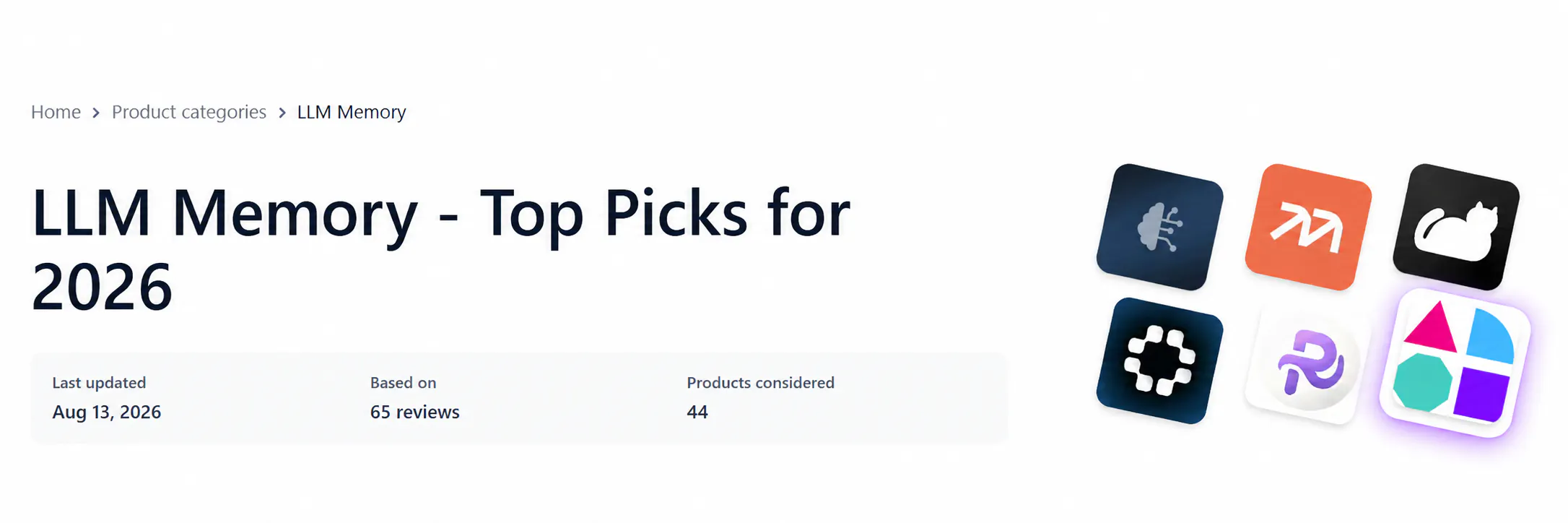
AI Context Flow has been ranked in the top LLM Memory products of 2026.
A proud milestone for us and a great validation of the work we've been putting into cross-platform AI memory and context management.
Still just getting started. More to come.
If you have been using this product for sometime, would love if you could drop a review here
•4mo ago
Would you DIY your own AI Memory layer?
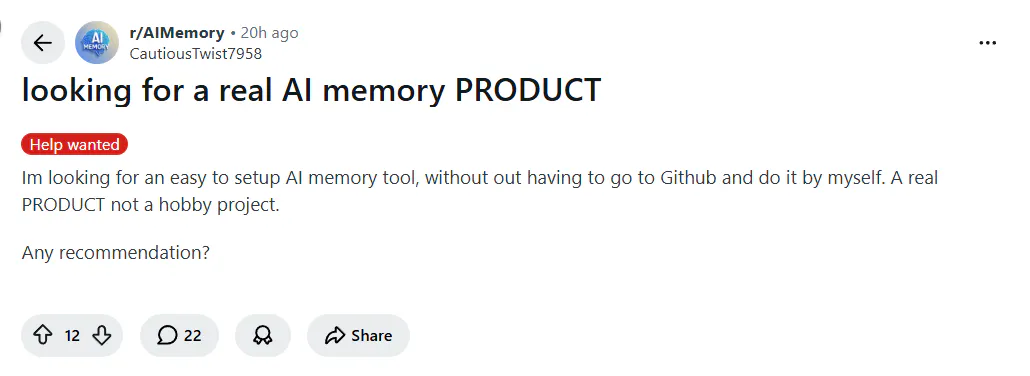
Saw this Reddit post today and it hit so close to home.
I've had this exact conversation multiple times. AI Memory is a topic that people get instantly. There are many people who have open-sourced basic AI memory layers and published their own GitHub repos.
•4mo ago
AI context management: the problem nobody's talking about (and what we built to fix it)
Hey PH community
We're in the middle of our AppSumo launch for AI Context Flow, and I wanted to start a real conversation here rather than just drop a link.
The problem we're solving: most people using AI tools daily are paying what I call an "AI context tax", the time spent re-explaining your project, background, and goals every single session, to every single tool.
ChatGPT doesn't know who you are. Claude doesn't know who you are. Gemini doesn't know who you are. And if you're jumping between them (like most power users are), you're paying that tax multiple times a day.
•2mo ago
30,000 AI memories later...
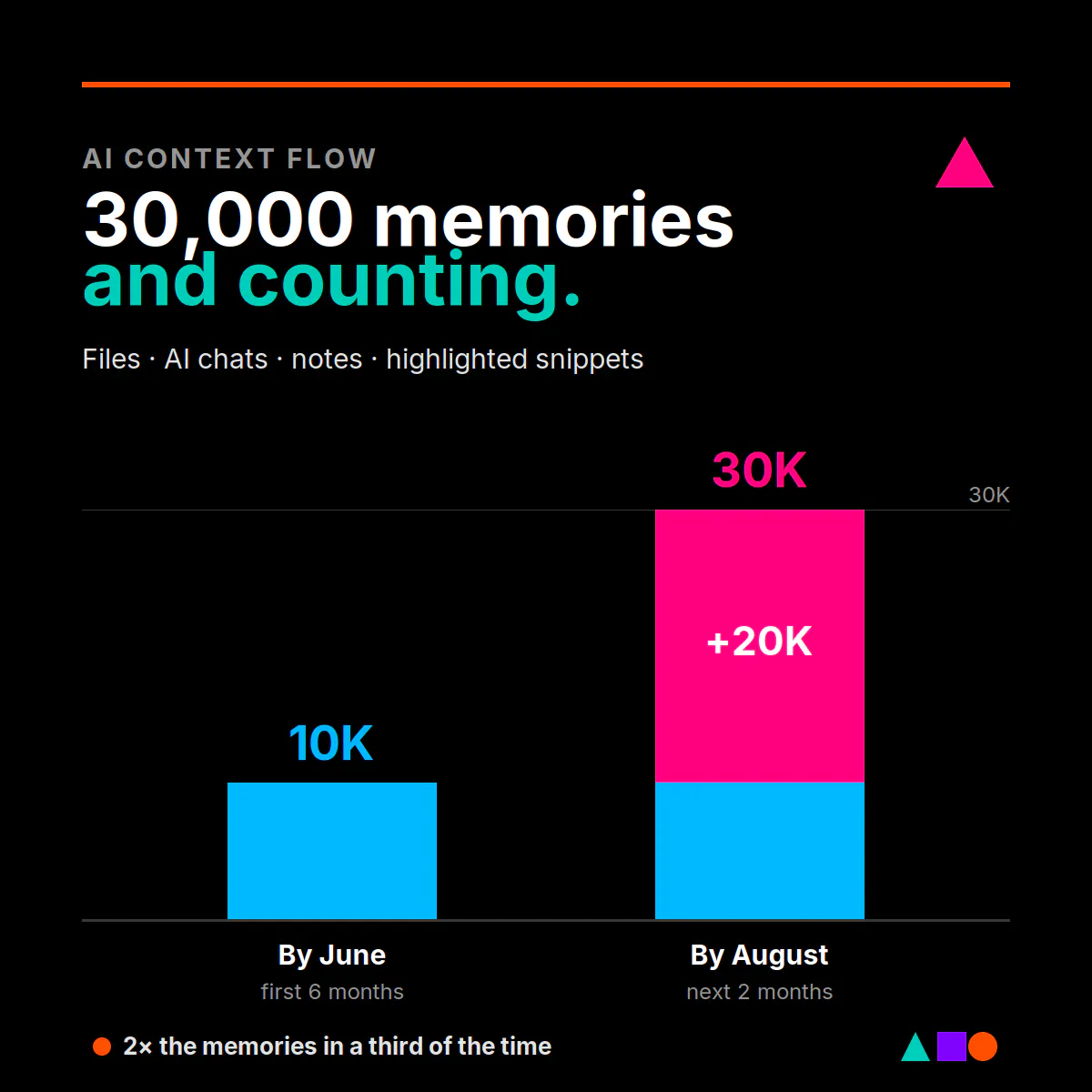
From January to June, we honestly weren't sure.
We had users, initial validation, but essentially what we had was a bet: that people wanted portable AI memory. A place to keep the files, the chats, the notes, the little highlighted snippets that actually matter, and carry them anywhere to any AI.
But a bet is just a bet.
For six months we watched, and we hit 10,000 memories, and we kept asking ourselves the same question. Are we actually building something people need (at scale)? Or is it just one of those things where the problem/solution feels really valid for some time and then the ground shifts.
But in june, something shifted.
In the last two months, people didn't just show up. They went deep. We added 20,000 more memories, reaching 30,000 total. Some of our power users now have entire knowledge bases living in AI Context Flow, 500+ files and counting, turning scattered context into something they can search, reuse, and build on.
That question we kept asking ourselves? The usage is starting to answer it for us.
We know 30,000 is still early. But watching that curve bend upward, after months of not being sure, feels like the first real signal that portable AI memory is something people genuinely want.
We're excited doing a little happy dance here And honestly, we're just getting started.
If you carry your context between AI tools today, I'd love to know how.
And if you wanna try AI Context Flow, here you go: https://app.plurality.network
•6mo ago
Mark April 20 — AI Context Flow Lifetime Deal is Coming
In November 25, AI Context Flow was #1 Product of the Day and #1 Productivity Tool of the Week. It was surreal.
Since then, we have been building in public, together with this amazing community here.
You believed in this before it was polished. You gave us feedback when it was rough. You kept asking for more and that pushed us to build more, and we delivered more.
•4mo ago
POV: In March I told my AI I was job hunting. I got the job in June. It still thinks I'm looking
Memory without version history is dangerous.
Your preferences change. Your beliefs change. Your context changes. An AI that learned you in 2024 and never forgot anything isn't helpful: it's stuck in time.
•3mo ago
Meet @aicf 👋 your new shortcut for pulling exact context into any prompt
Okay this one's fun to share.
Ever wish you could just tell your AI exactly what to remember and what to skip, instead of hoping it figures it out on its own? Just give it instructions like you would give an intern: check that folder, use that info, forget about this part.
That's basically what we built with the @aicf handle. It's a custom instruction system baked right into AI Context Flow, you just add it to your prompt and tell it exactly what context to pull.
Made a quick tutorial walking through 3 examples we actually use ourselves:
•3mo ago
What makes a good Affiliate Program in your opinion?
We're in the middle of setting up an affiliate program for AI Context Flow and I wanted to get some feedback from the community here:
- what makes you want to promote a product? (commissions, category or being a power user yourself?)
- what do you expect from the product team to provide you?
- is it something that would interest you if you aren't a professional content creator already?
Curious to hear the thoughts from other founders and people in the community