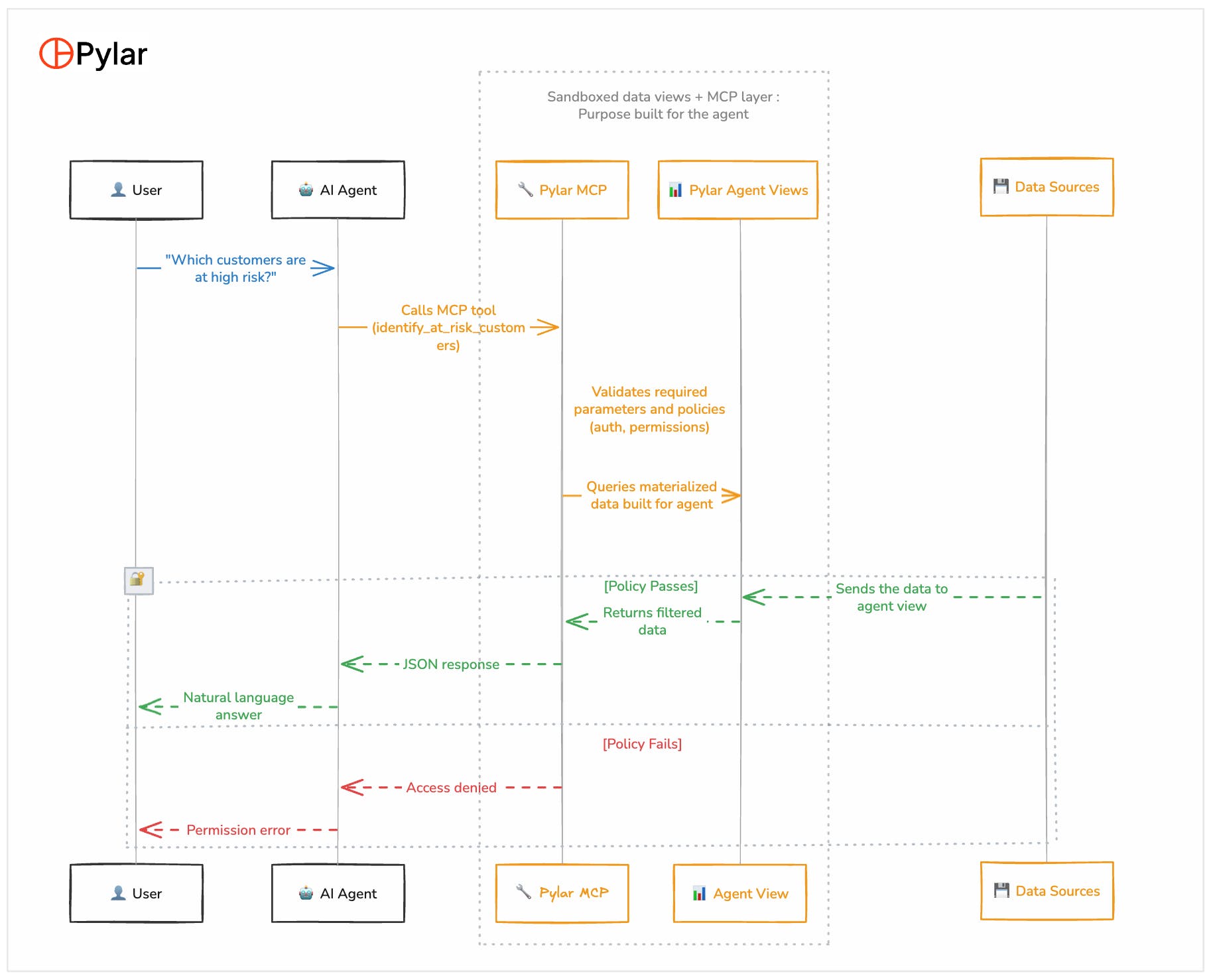
Most AI agents need access to structured data (CRMs, databases, warehouses), but giving them database access is a security nightmare. Having worked with companies on deploying agents in production environments, I'm sharing an architecture overview of what's been most useful- hope this helps!
We launched Cal ID on 10th Nov 2025, While we finished #3 Product of the Day, something far more meaningful happened after the launch.
The product started picking up organically. The feedback was honest, detailed, and sometimes tough but incredibly valuable. Over the last 30 days, we went back to every single comment, suggestion, and critique shared by the community. Many of those insights directly shaped how the product looks and works today. In a very real sense, Product Hunt didn t just help us launch it helped us rebuild better.
Since launch, we ve been breaking our own signup records almost every day, and that momentum is entirely because of this community. Grateful for the makers, users, and reviewers who took time to share their thoughts. Product Hunt truly is a place where products grow up fast if you listen.
I learned this the hard way after forgetting 90% of the words I spent months studying.
Here's the thing: your brain doesn't store information just because you've seen it. Highlighting words, writing them down once, even using them in a sentence - none of that guarantees retention.
I have seen many engineers tailor their resumes to specific jobs posted. In fact, few write about tech stacks in white font so that ATS will accept it. Hiring someone who knows how to ship is way more important than how organised the resume looks.
Imagine you are about to hire. You create a form using a third-party tool and share it on social media or job boards. Everyone who has applied comes in an Excel sheet, and your actual hire is somewhere in the middle. You go through each application, hoping to find a good applicant as quickly as you can. The time to go through each wasted; Never found the precise talent you wanted for your SaaS. The idea of justifying their talent with GitHub and prior experience is phenomenal. No looking at manual resumes, a pure tech thesis, and saving time by ranking them based on projects, tech stack, and work experience are the precise things I will look into.
Like many makers right now, I'm reflecting on the year. And I want to share something that matters to me. Mockin is now #1 on Google for "mock interviews for designers". No ads. No budget. Just trust and support from the design community. This means a lot. It reminds me how powerful it is when designers support each other. @Mockin started as a mock interview tool. Today it's an AI career toolkit that helps UX/UI and Product designers apply to jobs, prepare for interviews, and reflect on their growth through structured self-assessment interview. Thank you for being part of this. More coming soon.
Let's be honest: mobile typing is broken. We lose ideas because typing feels like too much work. We delay replies because it's tedious. We fight autocorrect, fix typos, and hope our messages don't sound rushed.
Ten years ago, if a Facebook post didn t receive enough reactions, I would delete it immediately.
Yep, 18-year-old Nika was terrified that people would notice her failure. Reality check: when a post flops, almost nobody sees it anyway. The only person who actually suffers from the low engagement is the original poster.
I am a startup founder. My problem is periodic emotional burnout and a certain loneliness on this journey, especially when a project requires a long time and a huge amount of effort to get it off the ground to the first tangible results (on average, this takes 2-3 years). During the "low points" (once every few months), there is no one to honestly and kindly discuss fear, uncertainty, difficulties, or failure with, without judgment. And at the same time, to get real emotional support to avoid abandoning my project, especially if it is promising. I don't want to bother my wife and loved ones too much either, and my non-startup friends don't really understand my "pains." Existing communities and mentors solve business problems but don't provide the psychological support of a "brother in arms." I would like to have some kind of safe space for regular group calls where one can vent and get support from other founders. Perhaps the solution should involve some sort of AI moderator that would facilitate the meetings and guide the entire group for the desired effect, and at the end of the meeting provide useful recommendations and assess the match between group participants.
Hey everyone! We ve been improving CogniMemo a lot recently, but now we want your honest feedback so we can keep making it better.
What do you think we should fix or improve in CogniMemo? This can be anything UI/UX issues, confusing parts, missing features, memory accuracy, speed, bugs, onboarding, browser extension, or anything else that feels off.
Even small frustrations are super valuable for us.
Thanks a lot your feedback directly shapes how we build the next version of CogniMemo!
Huge thanks to everyone who supported, tried, upvoted, or shared feedback during the launch. This community is incredible, and we re genuinely grateful for the love. I m also happy to share anything I learned from the experience if it s helpful to others planning launches. Congrats to all the other makers who shipped something this week