
HyperSleep
Block social media until you've actually slept
421 followers
Block social media until you've actually slept
421 followers
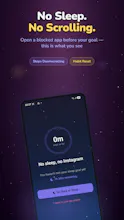
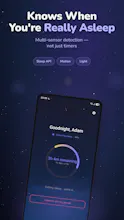
Every screen-time app fails for the same reason: you have to turn it on and at 1am, you won't. HyperSleep flips it. Your social apps stay locked until multi-sensor detection verifies you actually slept. It auto-starts at bedtime, runs 100% on-device, and turns "scroll less" from willpower into an outcome you earn. Android.




@hypersleep Congrats on the launch, Roddy! Flipping the incentive structure to outcome-based rewards is a super interesting approach. I actually just ran the screen-time blocker and habit-tracking niche through my tool, MarketGapAI, which analyzes thousands of complaints across Reddit and the Google Play Store. Interestingly, the number one reason users delete or give up on strict blocking apps is false positives - like the app failing to unlock because a sensor misread passive awake time (like reading a physical book) as sleep, creating massive user frustration.
Curious to know - how does HyperSleep handle manual overrides or edge cases where the 70% confidence threshold misses the mark, or are you focusing on dialing in the sensor calibration first?
@alexstartups Great question and you're right that false positives are the #1 killer, so this was a design priority from day one, not an afterthought.
Short answer: we never hold your phone hostage to a sensor reading. The 70% threshold and multi-sensor fusion are how we get accuracy, but they're not the only line of defense, because no threshold is perfect.
Every session has built-in escape hatches:
Quick Break - instant 5-min access, no questions asked (adds 30 min to your goal so it's not free, but you're never locked out cold).
Full Override - ends the session entirely when you genuinely need your apps.
So if you're awake reading a book and the app gets it wrong in either direction, you're one tap from access. The blocking is a nudge, not a prison.
On the calibration side: we fuse Google's Sleep API with motion + light + usage signals and require 20 continuous minutes before counting anything, specifically so passive-awake (sitting still, reading) doesn't get misclassified. That'll keep improving with real-world data, but the override system means users never have to wait for us to dial it in perfectly.
Genuinely appreciate you pushing on this. It's the exact failure mode we lose sleep over (pun intended). What sensors have you seen handle the reading-in-bed case well?
Congrats on the launch Roddy. I build in the recovery space for natural lifters and short sleep is the single biggest driver of bad training days I see, so turning screen time into something you earn by sleeping is a clever inversion of every blocker that relies on willpower. The multi sensor confidence approach is interesting. How does it handle shift workers and split sleepers whose night never looks like one clean block? Strong launch so far, well deserved.
@oshylabs Thanks Arnold. And coming from someone in the recovery space, that means a lot. You're seeing the same thing that motivated this: short sleep wrecks the next day, and willpower-based blockers fail exactly when you're most tired. The whole bet is that earning access beats restricting it.
On shift workers and split sleepers; great question, because you're right that the "one clean 11pm–7am block" assumption breaks for a lot of people. Two things help here:
1. It's not tied to the clock. You can start a session manually whenever your sleep window is; 9am after a night shift works exactly the same as 11pm. The schedule is yours to set, not a fixed "night."
2. The goal is total verified sleep, not one unbroken block. We confirm sleep in bouts (20+ continuous min of fused signals to filter out noise), and what matters is accumulating toward your goal, so a split night reads as sleep, not a fail.
That said, you've hit on something we want to go deeper on: biphasic/segmented sleep and rotating shift patterns are their own design problem, and "what counts as one night" gets genuinely interesting there. Would love to pick your brain on what good recovery-aware handling looks like for the lifters you work with.
Appreciate the thoughtful launch support which is exactly the kind of feedback that sharpens the product. 🙏
@hypersleep the bouts approach is the right call. One idea worth stealing from training land: track a rolling 7 day sleep debt rather than treating each night as pass or fail. One rough night barely moves performance if the week is solid, but three short nights stack, and that is exactly when stalled sessions and injuries show up. If you ever surface a weekly view next to the nightly one, that is the number people who take recovery seriously will trust. Happy to swap notes on the shift worker problem any time.
@oshylabs This is a great note, and yeah, the bouts thinking points straight at it. You're right that nightly pass/fail is the wrong primitive,.
How I'd reconcile it: keep the streak for the habit/dopamine loop (it's good at that), but add a rolling 7-day sleep-debt view as the truth metric beside it - debt = cumulative (goal − actual) over the trailing week. Casual users get the streak; people who take recovery seriously get the number that actually predicts stalled sessions and injuries. Both/and, not either/or.
Where it gets interesting for HyperSleep specifically: I don't just display the number, I gate on it. So, the debt could modulate the gate; three short nights stacking could nudge an earlier bedtime or a firmer block, instead of just sitting in a chart you scroll past. A tracker can only report debt; a gate can act on it. That's the version I'd want to build.
For shift workers it matters even more: when "a night" is a rotating, split, daytime thing, nightly scoring is meaningless and the rolling window is the only honest read.
Genuinely yes to swapping notes. DM me here on PH and let's get into it. This is exactly the expertise I'm light on. 🙏
@hypersleep the gate point is the bit most trackers miss. Reporting a number and acting on it are completely different products. We hit the same wall on the training side. A single day readiness score is noisy and people argue with it, so we moved to a trailing window and let it modulate the actual plan, push, hold or back off, rather than just colour a chart. Your sleep debt sitting beside the streak as the truth metric is the cleaner version of that.
The shift worker case is the real tell. The moment a night stops being a fixed thing, nightly scoring falls apart and only the rolling read survives. Same reason we score recovery off a window, not yesterday.
Yes to swapping notes, I will DM you. The overlap between sleep debt and training readiness is closer than either of us probably mapped.
Genuinely curious about the positioning here. Most phones already ship a native bedtime/wind-down mode that locks apps or greys the screen on a schedule, so I'm trying to pin down what HyperSleep adds on top. Is the whole bet the outcome-based unlock, ie. you can't just wait out a timer or tap "ignore," you actually have to have slept? Because if so, that's the part worth leading with, not the "auto-starts at bedtime" angle which the OS already does.
Where I get stuck is the willpower point: the person who taps "ignore" on Instagram at 2am is also the person who'll uninstall the app at 2am. So who is this really for, the motivated user who'd configure native Focus mode anyway, or someone else? Help me understand the gap native modes leave open :)
@keirodev Best question I've gotten all launch, thank you for actually working through it.
Positioning: you're right, and you put it better than my own page. The outcome-based unlock is the whole bet. Native wind-down auto-starts and greys the screen, but it ends on a clock or one "ignore" tap. HyperSleep has no clock to wait out and no ignore button: the only frictionless path back to your apps is to actually sleep. And it's not self-reported or one spoofable signal: it fuses four signals (Google Sleep API + motion + ambient light + phone-usage) at a ~70% confidence threshold over 20+ continuous minutes. That verification layer is the real gap; native modes don't sense sleep at all, they're just schedulers; sleep trackers sense it but never gate your apps with it. Nobody's using verified sleep as the unlock condition. Auto-start is table stakes; that's the moat.
The willpower paradox is the real question, so I won't hand-wave it. I think the "motivated vs will-uninstall" split skips the middle, which is where most of us live: high intent, low in-the-moment execution. I want to sleep, I keep meaning to put the phone down, and I lose to impulse anyway. Native "tap ignore" fails that person not for lack of motivation, but because caving is frictionless and deniable ("5 more min" ×10).
So, the bet isn't to make quitting impossible, it's to make the impulsive bad choice cost more than the impulse is worth. One half-asleep "ignore" tap vs. Deliberately uninstalling your sleep app, tearing down a system you set up, and torching your streak; those aren't the same 2am moment. And I deliberately didn't make it un-uninstallable (no Device Admin lock), plus there's a built-in override with a small cost for real emergencies. A cage makes people rage-quit; calibrated friction + an escape valve is the needle I'm threading.
Truthfully, then: it's a commitment device. Zero intent? Nothing helps, won't pretend otherwise. Perfectly disciplined? You might not need me. It's for the big middle who want the outcome and keep failing at execution.
Genuine one back: do you buy that impulsive-relapse and deliberate-uninstall are different moments, or do they collapse for you? That's the crux, and I'm watching the data on it.
@hypersleep Yes, I buy the distinction, but with a nuance that might matter for your data. The two moments differ on effort, not on target. The impulsive relapse is pure System 1: zero thought, thumb moves before the brain. The deliberate uninstall forces a switch to System 2, and that's exactly where your design wins, you don't need to make quitting impossible, just costly enough to wake up the reflective part that already agrees with you. That's the whole point of a well-calibrated commitment device.
Where I see them collapse is with repetition => Night one, uninstalling is "tearing down a system, torching my streak", a real cost. But if someone uninstalls/reinstalls three nights running, the deliberate act becomes its own frictionless ritual, and your escape valve turns into a new "ignore" button. So the metric I'd watch isn't the uninstall rate, it's the repeat uninstall: the same person bypassing across multiple nights. That's the signal that friction has eroded into habit. If you see it show up, the small-cost override is probably your best lever, because it keeps the bypass inside the product (measurable, tunable) instead of pushing it toward uninstall (invisible).
Nice threading of the needle either way, looking forward to what the numbers say :)
@keirodev Sharpest version of the objection I've gotten, and you've got the mechanism dead right: don't make quitting impossible, make it costly enough to wake up the part that already wants to sleep. Your repeat-uninstall point is the one that keeps me honest, a single uninstall is a choice, the same person doing it three nights running is friction decaying into ritual, and uninstall rate hides exactly that.
Which is why the escape valve already lives inside the product: three override tiers, each priced higher (5-minute break adds 30 min tonight, full override costs a 24-hour block tomorrow, cancel costs the streak). Same instinct as yours, keep the bypass measurable instead of pushing it to the invisible nuclear option. Whether the override itself erodes into ritual is the open question, and the numbers get to settle that one, not me.
@hypersleep Those three override tiers are brilliant. Pricing the bypass with 'time/streak tax' instead of money is the perfect way to keep the commitment device psychological rather than financial. It directly targets the System 2 negotiation.
You've clearly thought this through way past the surface level. Watching how users interact with those specific tiers is going to be a goldmine of behavioral data.
Good luck with the launch, Roddy! This is easily one of the most thoughtful implementations of friction I've seen in a while. Can't wait to see how the data proves you right. Rooting for you :)
Earn your scroll time by sleeping- that's a refreshing twist. Most blockers just guilt-trip you.
Quick question: what happens if the sensors misread a sleepless night (insomnia, travel, etc.)? Does it have an emergency override, or am I locked out of my apps until the algorithm decides I slept?
Love the privacy-first approach. No cloud, no account rare these days. Nice launch.
@wasil_abdal Thank you Wasil🙏. Frankly, the most important question here, so I'm really glad you asked.
Short version: you're never trapped. It's friction, not a prison.
🚨 Only the apps you pick are ever locked; calls, alarms, messages, maps, all of it stays open. A 3am emergency is never an issue.
🆓 For the blocked apps, there's an "I need my phone" override right on the lock screen, a 5-min quick break or a full override that ends the session. Your call, anytime.
🌙 Overrides carry a small accountability cost (a quick break nudges your goal) so cheating isn't frictionless but you're always the one in control.
And you're spot on that sensors aren't perfect. Insomnia and travel are exactly the cases no detector nails. That's precisely why the override exists. I'd rather be honest (~70% confidence + an easy escape hatch) than pretend it's a flawless sleep lab.
Appreciate the privacy callout too: local-first was a hill I'd die on 🙂 Curious though: does that balance feel right to you, or would you want the escape hatch even more frictionless? Still tuning it.
What other features does it have apart from blocking at certain hours?
@busmark_w_nika Hello there Nika. Great question! Quick reframe first, because it's kind of the whole point .
HyperSleep doesn't just block during set hours. It keeps your apps locked until it verifies you've actually slept (Google Sleep API + motion + light + usage signals). So even at 2am, opening Instagram won't work until you've hit your sleep goal, there's no timer to wait out.
Beyond that core:
• 🌙 Auto-starts at your bedtime. No remembering to turn it on
• 🎯 You choose which apps to lock and your own sleep goal
• 🔥 Streak tracking + a morning recap - sleep time, quality %, and how you did vs your goal
• 🆓 Real-life overrides. A 5-min "quick break" (adds to your goal) or a full override with an accountability cost, so it's flexible, not a prison
•🔐 100% on-device; no account, nothing leaves your phone
Love what you're building with your minimalist phone app. We're chasing the same goal from different angles
@hypersleep Cool! I think that this list is solid – should be like this on website too!
@busmark_w_nika Cheers Nika. I will add these to the website as well.
The “earn your scroll” framing makes sense because willpower definitely fails at night. I’d trust it more if the app showed a simple reason for each unlock, like what signals it used to decide I actually slept.
@farrukh_butt1 Hi! Great instinct. And good news, transparency is already built in, both live and in the morning.
While a session is active, open your phone anytime and you'll see the Active Sleep Ring - your live sleep progress. The moment the phone detects motion, the timer pauses and switches to "Detecting sleep…" until you've settled and set the phone aside. So you're never guessing what HyperSleep thinks you're doing; it's showing you, in real time.
In the morning, the unlock screen gives you the full summary: total sleep (e.g. 7h 12m), a quality %, how you did vs your goal, and your streak. So it's never a silent unlock. You always see the result you earned.
And we're making a good thing even better: a coming update adds an even more detailed breakdown - a signal-by-signal view (Sleep API ✓ / motion / light / phone-untouched) with the confidence score behind each unlock, so you can see exactly which signals agreed.
Appreciate you raising it. Building trust through transparency is exactly the bar we hold ourselves to. 🙌
Nice idea! Does it connect to smartwatches as well?
@kate_ramakaieva Thank you Kate🙏 Not yet. And that's by design for v1: HyperSleep runs entirely on your phone's own sensors (Sleep API + motion + light + usage), so it works for everyone with zero extra hardware. No watch to buy or keep charged.
That said, native Wear OS / smartwatch support is firmly on the roadmap — a watch's heart-rate and movement data would make the sleep verification even tighter, so it's a natural next layer.
Out of curiosity, what watch are you on? Helps me figure out which to prioritize 🙂