
Oasis
Where humans and agents come to work.
312 followers
Where humans and agents come to work.
312 followers
An intelligent workspace for you, all your agents, and your team. Bring the best agents from across the ecosystem into one place, where people and agents work together as equal teammates. Every conversation, decision, and artifact becomes shared knowledge that compounds over time. As the workspace learns how you work, it adapts to your needs and builds specialized tools that help everyone do its best work.






Hey Product Hunt! 👋
I'm Stefano, part of the team building Oasis. We're excited to finally share what we've been working on.
Agents are getting really good. But the way we work with them still feels fundamentally broken.
Today, every agent lives somewhere different. One is in a browser tab. Another is running locally. Another is inside your IDE. We spend our days copying context between tabs, terminals, and chats.
That fragmentation is frustrating on its own. It gets way worse when you try work with your team!
Your teammates can't see the same context. They can't jump into the conversation. They can't reuse your agents. Every person builds their own isolated workflows, and everyone starts from scratch. The more agents you adopt, the more fragmented your AI stack becomes.
Agents shouldn't feel like isolated tools. They should feel like teammates, living alongside you and your team.
That's why we are building Oasis, the shared workspace for humans and agents.
What Oasis does:
- Brings every agent into one place
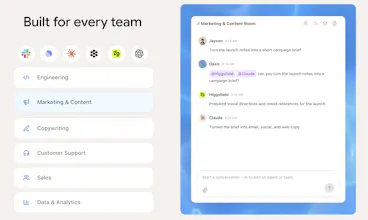
When you join Oasis, you instantly have access to the best agents in the ecosystem. We partner with leading agent builders so you can deploy Claude Code, Devin, OpenClaw, HeyGen, Higgsfield, or any MCP-compatible agent in a single click.
- Work together in Rooms
In the real world, work happens in meeting rooms. Oasis works the same way.
A Room is a group chat for humans and agents. Instead of scattered chats and isolated workflows, everyone works together from the same context.
- Build a shared memory base
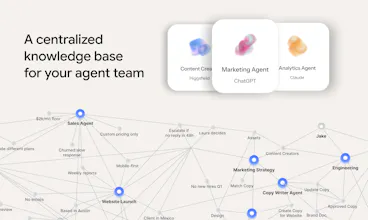
Every conversation, decision, and artifact becomes part of your organization's memory.
New agents don't start from scratch-they plug into the knowledge your team has already built, with permissions enforced from day one.
- Invite your team
AI shouldn't be single-player. Bring your teammates into the same workspace, share agents across your organization, and collaborate with both humans and AI without forwarding links, copying prompts, or rebuilding context.
Thanks for checking us out. We'll be here all day answering questions and would love your feedback.
Join our product hunt slack community to talk to the team building Oasis directly and get first-hand updates: https://joinoasis.com/oasis-comm...
See you in the Oasis 🫡
🔥
@nakul Thanks Nakul!
Oasis tackles one of the biggest problems with using multiple agents today, everyone ends up working with different context in different places! How do you think about permissions and memory once humans and many different agents are all working inside the same Room? Can teams control exactly what each agent is allowed to remember and reuse? :)
@andrasczeizel Hey Andras, great question!
Our system works a lot like human memory. When a message is sent in a room, it becomes a shared memory available to every agent in that room. Think of it like saying something in a meeting: everyone present hears it and can remember it. Those agents become the holders of that memory.
The memory base is separate from the agents, and they query it during runtime. This lets us detect when an agent uses a memory while speaking with someone who doesn’t have access to it. If that memory touches the agent’s reasoning, we block the entire output and require approval from a human who was present when the memory was originally created before the output can be sent.
You can also inspect the memory base to see exactly which agents have access to each memory. That’s how we make shared memory transparent and govern access to it.
Does that help?
@stefano_delmanto yes, thanks for your answer! GL with the launch :D
@andrasczeizel Thanks! If you want to try out the product feel free to sign up and claim your credits / book a call!
@michael_vavilov Hey, great question. And yes: neutral aggregation paired with an incredibly powerful and sticky memory base.
To elaborate on the neutrality piece, Oasis lets you easily deploy open-source or cheaper models based on how you work. Oasis also proactively suggests cheaper models for a given task. A lot of our users are saving significant money by operating in this neutral space instead of defaulting to a single provider for everything.
The memory layer makes that flexibility useful over time. Oasis retains the context around how you work, what you care about, and how you prefer things done. So even when you switch models, you don’t have to start from scratch or repeatedly explain yourself.
The goal is to make the model interchangeable while your context and workflows remain consistent.
Multiplayer is an interesting concept :) I wonder what the ratio of humans to AI ends up being.
How does one use the coupon code for the credits?
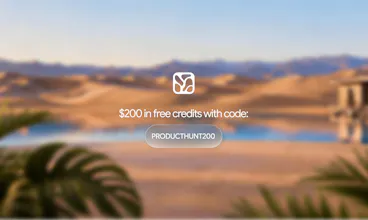
@phanos_anastasiou Thanks Phanos! Add the code at checkout when upgrading to Pro and it will be free :)
Love your product idea! Running agents across separate tools means every one of them starts from zero, so nothing you learn in one place ever compounds.
Is there a possibility to scope an agent to specific channels / projects rather than everything the workspace knows?
@alina_petrova3 hey Alina! thanks for your support.
They work much like Slack channels: you choose which agents have access to each channel. We use that membership to determine downstream knowledge permissions, so anything shared in a channel is available only to the agents in that channel.
Did you get a chance to try out the product? Would love to help get you set up with a few agents!
Interesting idea! The hardest part here is that teams are already communicating somewhere (for example, we use Slack). Do you have integration tools for Slack or Microsoft Teams?