


The problem isn't invoicing. It's leverage
I freelanced for years and tried every invoicing tool out there. Sent invoices faster. Added late fees. Wrote polite follow-ups. Nothing really moved the needle.
Then I realized something: the moment I delivered final files, I had nothing. The client had everything they needed. My invoice was just another task on their list, competing with a hundred other priorities.
The issue wasn't how I invoiced. It was when I invoiced - after all my leverage was gone.
The fix: make payment part of the workflow
I started breaking projects into stages. Each stage has a deliverable. Client reviews, approves, pays - then the next stage unlocks.
Simple concept. But it changed everything:
Clients knew exactly when payments were due (no surprises)
I never delivered more work than I'd been paid for
The awkward "just following up" emails disappeared
Bad clients filtered themselves out early
Most clients actually preferred this. It gave them clarity too.
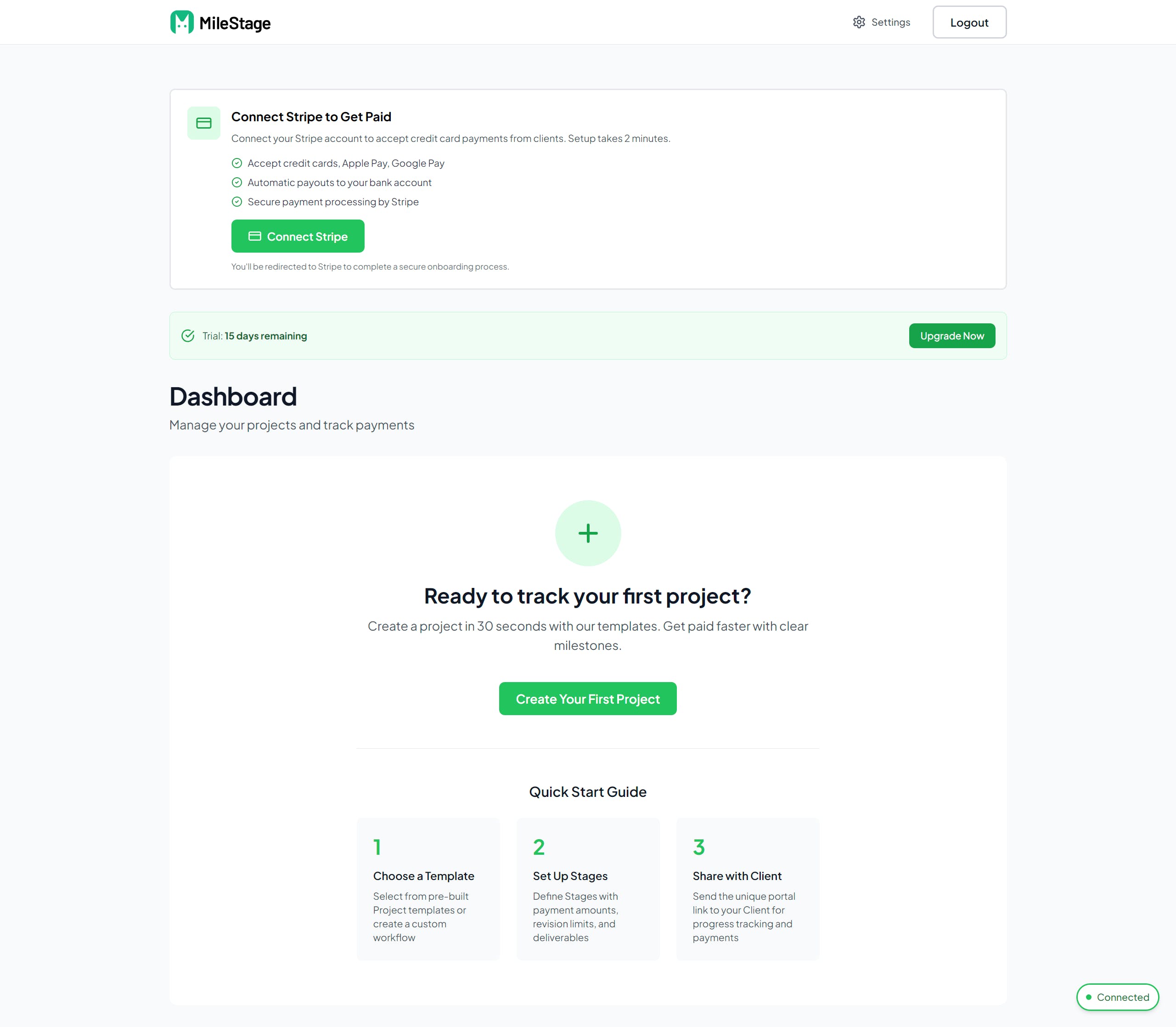
Why I built MileStage
Managing this manually was a mess. Spreadsheets, reminders, tracking what was paid, what wasn't, who needed a nudge.
So I built MileStage to handle it:
Stage-based projects - break work into clear milestones
Client portal - clients see progress, approve work, pay in one place
Automatic locking - next stage won't unlock until current one is paid
Automated reminders - system sends follow-ups so you don't have to
Zero transaction fees - payments go straight to your Stripe account
That last part matters. Most platforms take 2-3% of every payment. MileStage doesn't touch your money. Flat subscription, that's it.
What MileStage is NOT
Not an invoicing tool (plenty of those exist)
Not an all-in-one project management suite
Not for hourly billing
It does one thing: helps you get paid stage-by-stage without chasing clients.
Who it's for
Freelancers who work in stages - designers, developers, content creators, photographers, consultants. Anyone who's ever delivered work and then waited weeks (or months) for payment.
If you bill hourly or work with big corporate clients who have 60-day AP cycles no matter what, this probably isn't for you.
But if you work with small businesses and individuals who just need a nudge and a clear structure? This might save you a lot of headaches.
I'd love your feedback
This is a solo project. Built it nights and weekends because I needed it myself.
If you try it, I genuinely want to know:
What's confusing?
What's missing?
What would make you actually use this?
Replies