

Product Hunt, TLDR: A Comparison Guide

According to @Supabase's State of Startups 2025, founders follow newsletters like TLDR.
ICYMI Product Hunt isn’t just a launch platform. It’s also a collective of newsletters.
As we’re gearing up for 2026, you might be planning your marketing strategy. So, I compared both options and did the math. Here’s what I found.

Fig. 1: Product Hunt also is a collective of newsletters
Overview
TLDR is a collective of 12 newsletters on topics like AI, DevOps, and more.
Product Hunt, on the other hand, maintains 3 newsletters:
The Leaderboard, Product Hunt’s daily digest
The Roundup, a weekly summary featuring the top launches
The Frontier, a weekly, AI-focused newsletter
Let’s compare the two AI-focused newsletters, their audiences and performances.
Larger audience on TLDR, founder-first on Product Hunt
TLDR reports 920,000+ subscribers to their AI newsletter,
Product Hunt has “only” 425,000+ subscribers to The Frontier.
Looking more into detail, both audiences are mostly US-based, resp. 64% for TLDR and 53% for Product Hunt. Product Hunt has a significant proportion of founders (19%) and subscribers are more likely to work in early-stage companies under 100 people (59% vs. 29% for TLDR).
Higher open rates on TLDR, cost-effective on Product Hunt
TLDR reports a 44% open rate (OR)
Product Hunt: 41% OR
Looking at the ad opportunities, TLDR offers 3 different placements. The primary placement at the top of the newsletter includes a logo, 3 URLs, and up to 100 words. Pricing ranges from $6K to $24K per sent, i.e. $7-$26 cost per mille (CPM). Product Hunt has less options: 1 placement at the top, including an image, 1 URL, and around 150 words (fig. 2). Pricing also is simpler: starting at $10K, 4 issues, $2.5K per sent, i.e. $6 CPM.
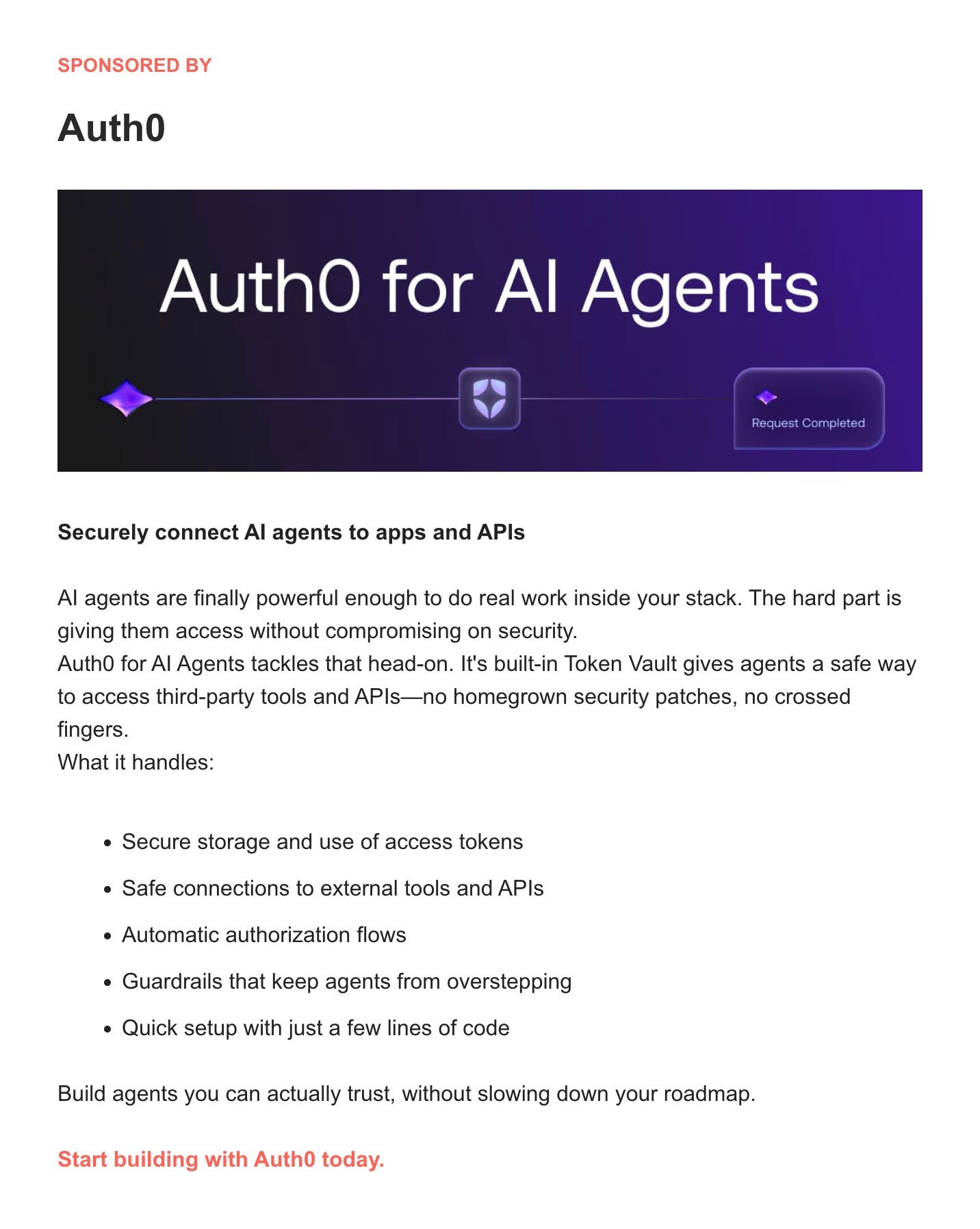
Fig. 2: Example of an ad in The Frontier, Product Hunt's weekly, AI-focused newsletter
Recap
If you want to reach a large audience, the TLDR AI newsletter is worth considering. This has a higher cost, though.
If you’re targeting early-stage companies and looking for a cost-effective channel, sponsoring Product Hunt’s AI newsletter might be a good option.
Over to you! What channels are you planning to explore in 2026?
Replies
Vozo AI — Video localization
Really enjoyed this — thanks for sharing. One angle I’ve found helpful is product–channel fit.
ph newsletters seem to work best for builder-first, easy-to-try products where the value clicks quickly. That often overlaps with to-developer tools?
Curious how others here think about matching product type to ph channel.
Kilo Code
@lightfield thank you! Product Hunt definitely is a great place for developer tools.
This is a really helpful breakdown.
From a founder’s perspective, I’ve learned that distribution quality matters more than raw reach. Product Hunt tends to bring more feedback-driven, early-adopter conversations, while newsletters like TLDR feel better for consistent brand exposure over time.
What’s worked best for me so far is not choosing one channel, but aligning the channel with the goal — feedback vs. traffic vs. credibility.
Curious if you’ve noticed any difference in long-term retention or follow-up engagement from readers vs. Product Hunt users?