
 •
6mo ago
The simplest free Word to PDF converter — no Microsoft Office needed
Hey PH!
Not everyone has Microsoft Office installed. But everyone needs to send PDFs.
Our Word-to-PDF converter works directly in your browser no software required.
Preserves formatting
Batch conversion
Password protection option
No account needed
 •
3mo ago
Lessons learned from building a hyper-local demand forecasting engine
Hey PH community!
While working on local inventory optimization, we hit an interesting technical bottleneck: standard time-series models struggle with neighborhood-level demand spikes caused by micro-weather shifts, local events, and regional supply chain delays.
To tackle this, we shifted our architecture to blend real-time sales signals with regional contextual data.
A few key takeaways from our build process:
 •
3mo ago
Vecta Compute - free version
Hi Product Hunters
We are Vecta Compute, a zero-trust execution environment to safely deploy agents, govern them, track your AI spend and for Audit-compliance readiness. Our product requires zero code changes. We hope any of you who is building agents/agentic services benefits from this product, especially if you are a small business. We will launch soon with an all open source version. If you want to try the product and can provide any feedback, it will help immensely. Please visit https://vectacompute.ai/try-free or vectacompute.ai for more info.
Thanks!
Team Vecta
 •
3mo ago
I built a crypto-native social network where the feed algorithm is a user setting
No ads. No phone, no face scan - a username and password is the whole signup.
Three things I think are genuinely different:
1. The For You feed ships with real settings - freshness window, follow boost, social signal weight. You tune the algorithm, not the other way around.
2. Fame-weighted curation: established accounts' votes move posts further than day-old accounts'. It's written in the ToS, not hidden.
 •
6mo ago
I built InteliAds because KDP Amazon Ads are too easy to waste money on.
 •
3mo ago
Chadence — preserve your voice, memories, and legacy
I built Chadence because I know what it feels like to lose someone and wish you still had more of their voice, stories, memories, and messages.
Chadence is a digital legacy platform designed to help people preserve the parts of themselves they want their loved ones to keep including voice recordings, photos, videos, stories, memories, and personal messages.
The goal is simple: give people a way to leave more than photographs behind.
Chadence is live now, and I d genuinely appreciate feedback from other founders and makers.
 •
3mo ago
Solving Marketplace Compliance Issues for Sellers
I know sellers who list food, skincare, medicine, and supplements some of the most regulated categories on Amazon and EU marketplaces.
Here's the thing that surprised me most: most of these platforms check structure, not law. Schema, required fields, image specs that's what gets validated at upload. A listing missing its GPSR responsible person, a health claim that isn't supported, a lithium battery attribute left blank a lot of it uploads clean anyway, and doesn't get caught until an enforcement bot finds it after the fact. Then the listing's down while you wait through a compliance review that can take 15 business days.
That gap is what I've been building against v1 is a tool that runs deterministic rules against your own listings export, in your browser, before any of that happens.
If you're a seller or just interested, feel free to leave any questions or feedback.
 •
3mo ago
Did adding an iOS app actually bring you new users — or just keep the ones you had?
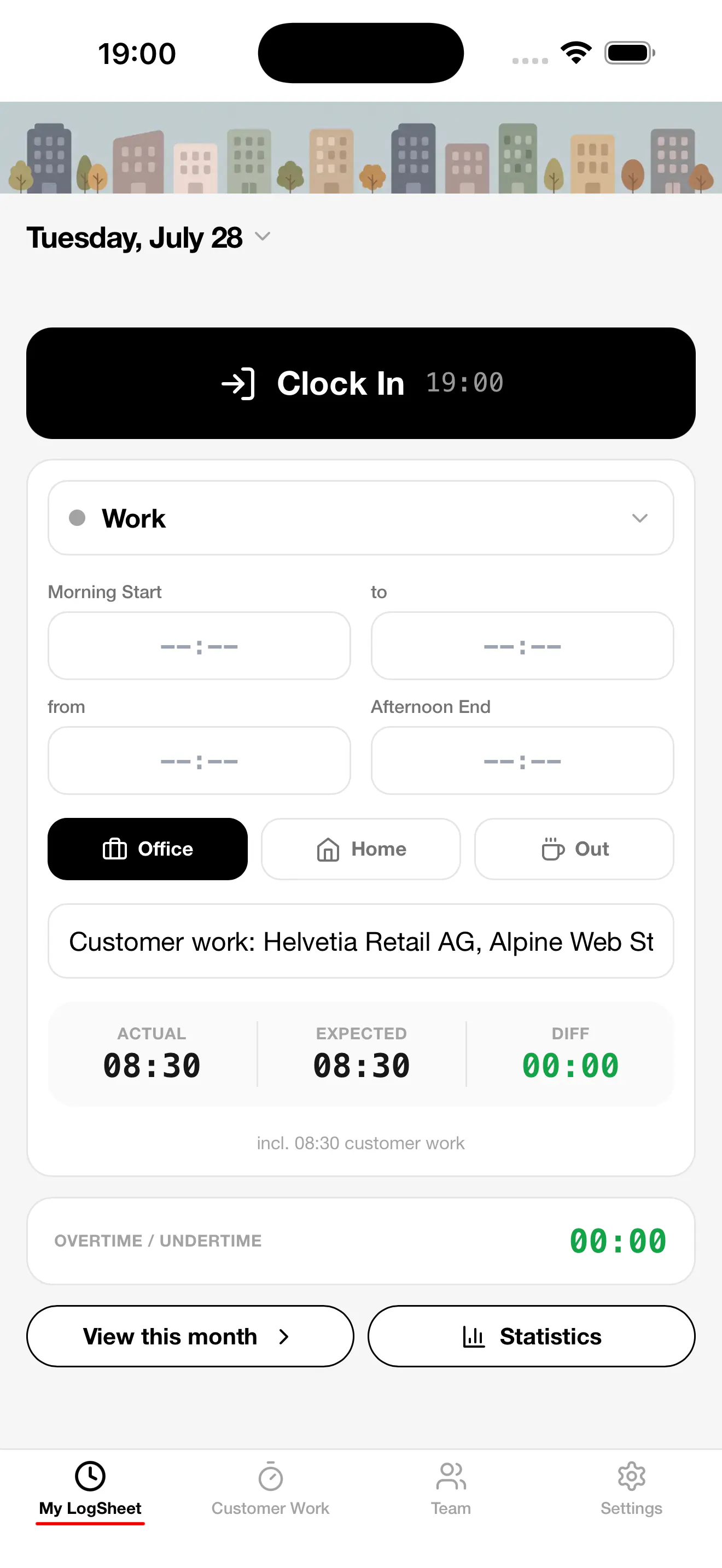
I run LogSheet, a time-tracking tool for small companies a company admin sets it up, employees log their hours, the month exports to Excel and then locks so it stays auditable. It has been a web app from the start.
Ten days ago I shipped the iPhone app. 6 Downloads...
What I genuinely can't tell yet is this: did the app bring new companies in, or did it just make the existing ones happier?
My honest expectation was the second, because most people arrive already invited by their employer. You can start from the app the login screen has both "register a company" and "I'm self-employed", so someone who finds LogSheet in the App Store first isn't stuck but both hand off to the website in the browser, and then you come back to sign in. It works. I just have no idea what that round trip costs. I built the app anyway, for three reasons:
People kept asking. "Can I clock in from my phone" was the single most common question I got.
Being in the App Store is a trust signal. When a small company is deciding whether a one-person vendor is real, an app on the store is evidence.
The web app worked on a phone browser, but it was never good.
So, three things I'd like to hear from anyone who has done this:
1. You added a mobile app to a web-first B2B product. Did new-user acquisition actually move or did retention move and you told yourself it was acquisition?
2. Did App Store search ever send you anyone meaningful, or was it all traffic you already had?
3. My app sends people to the website to create an account and asks them to come back to sign in. If you've made the same handoff, do you know what it costs you? And has anyone here built real in-app sign-up instead and found it was worth the duplicated flow?
If it helps to see what I'm describing, it's at logsheet.ch and the app is LogSheet on the App Store. Happy to put whatever numbers I have in the comments including the unflattering ones.
If you want to see the app and leave a score!
apps.apple.com/app/id6795027347
Thanks
Ben
 •
3mo ago
I nodded along when I signed my mortgage. I had no idea what I'd actually agreed to.
Five years ago I signed the biggest financial commitment of my life and was too embarrassed to admit I didn't understand it. I nodded along in the meeting. I told people I "knew what I was doing." Really, I just knew the monthly number and I was scared to ask what happened to that number if rates went up, because asking felt like admitting I'd made a mistake I couldn't afford to have made.
Then one night I actually sat down with a notebook and worked through the maths myself. I understood so much more than I expected to and that's when it hit me: if I was struggling with this, there had to be a lot of people going through the exact same thing, quietly, without telling anyone either.
So I built something. At first just for myself, but with the thought that it might help others too something that shows you what's actually principal, what's interest, what an overpayment really does, what a rate rise really costs, without having to say any of that out loud to a bank, a broker, or anyone else.
It's called Mortgage Insights. Everything stays on your phone no account, no one on the other end. The basics are free, permanently, because I don't think understanding your own mortgage should cost anything.
 •
7mo ago
You can ship an MVP in 4 weeks. Most teams just aren't structured for it.
Hey PH , Sunil here.
Something I've seen repeatedly: founders spending 3 6 months on an MVP that could've shipped in 4 weeks.
The issue usually isn't the engineering. It's the structure around it, when QA happens, how scope is controlled, how fast decisions get made.