

When is a single-image 3D preview accurate enough for a product page?
I work on Mugen3D at SumeruAI, where we generate rotatable 3D previews from a single product photo.
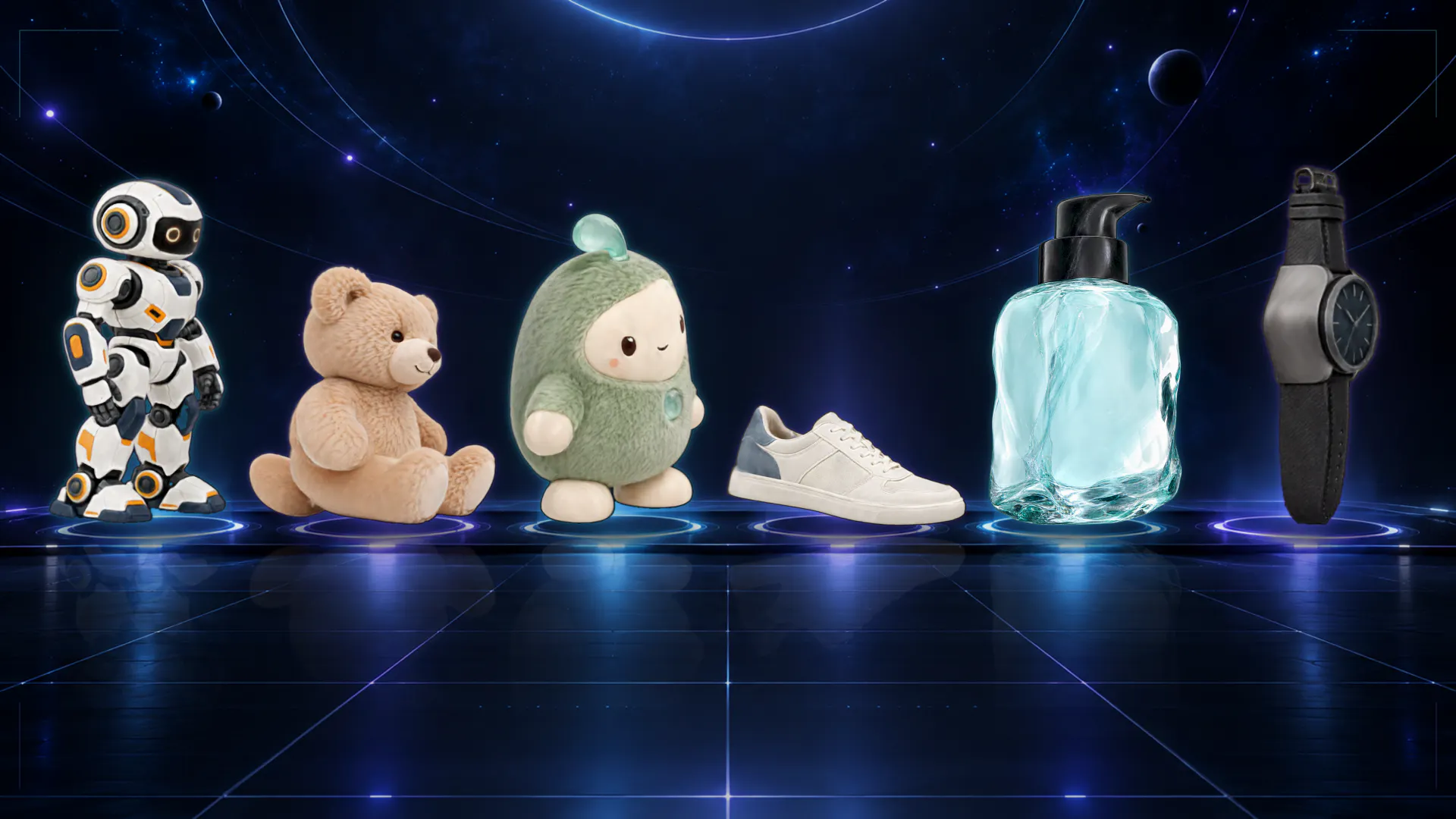
A small exploratory test across six product categories left us with a harder question: how do you validate a view that the input photo never showed?
What we observed
Robots, plush toys and collectible figures: shapes and material appearance held up better in these examples.
Shoes: promising from some angles, but hidden structures and side views still needed review.
Cosmetic bottles and watches: transparency, reflections, labels and fine details were harder to reproduce reliably.
These are observations from a small set of examples, not a quantitative benchmark.
The product decision
A convincing rotation does not establish that an unseen surface matches the real item. We still review results from multiple angles before considering them for a storefront.
The validation checklist I would propose is:
Compare generated views with additional photos of the actual item.
Check the silhouette, labels, logos and material details.
Test loading and interaction in the intended mobile web viewer.
That creates a tradeoff: extra reference photos improve verification, but add work to a workflow that starts with one image.
For people who have shipped 3D product viewers: would you require reference photos for every displayed angle, or allow inferred views if clearly labeled? What review process has worked for you?
Replies
Be the first to reply
Have a question or a thought to share? Add a comment above to start the conversation.