

Flipbook Software Features That Actually Matter in 2026
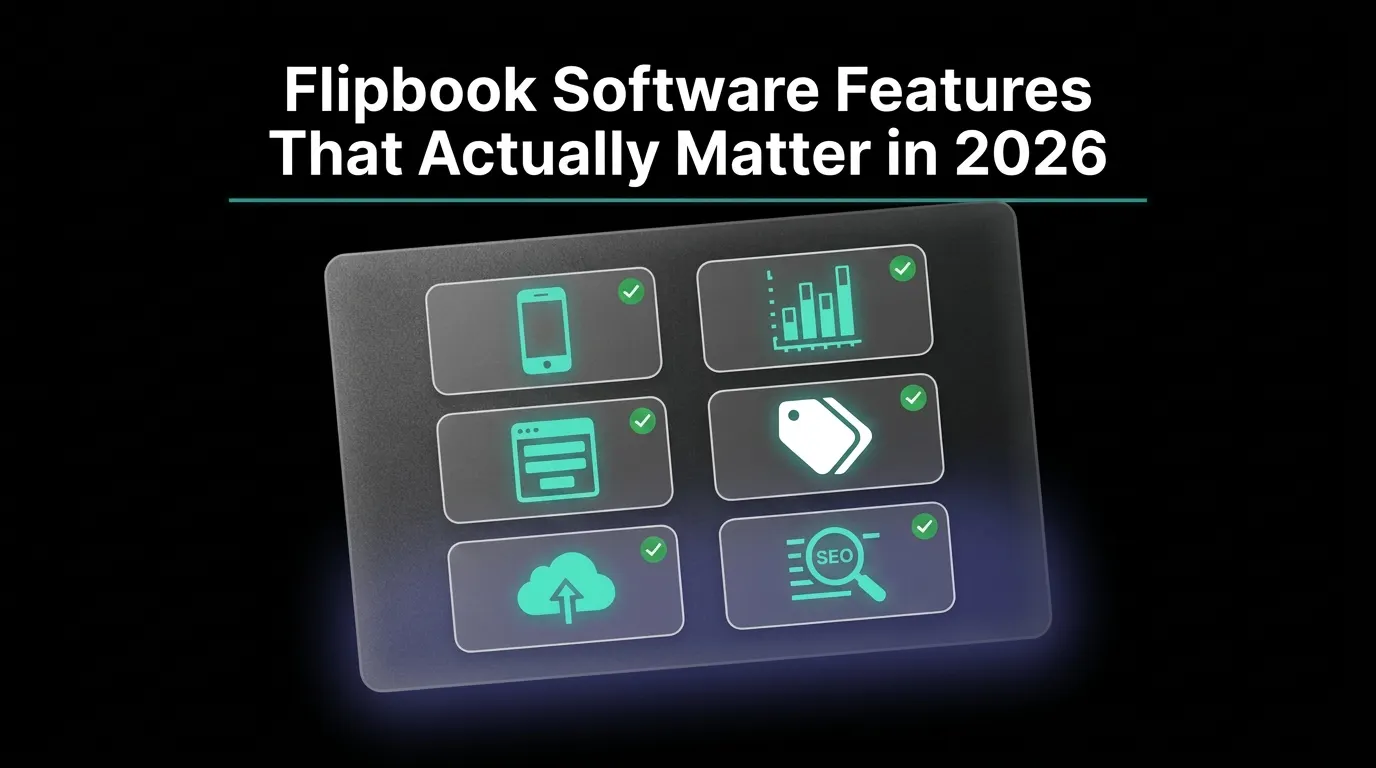
The flipbook software category has matured significantly. What used to be a simple PDF-to-page-turn converter is now a proper publishing platform category with meaningful differences between tools. But most buyers still evaluate on surface-level criteria.
Here is what actually matters when you push these tools into real workflows.
Total views is not analytics. A lot of tools in this category offer view counts and not much else. Page-level engagement data is what actually drives content decisions - knowing which pages readers spend time on, where they drop off, and which links they click tells you something useful. Knowing that 340 people opened your report tells you almost nothing about whether it worked.
Accessibility is a compliance issue, not just a nice-to-have. A tool that converts a PDF into a visual flipbook without retaining the underlying text structure loses the accessibility compliance of the source document. For organisations publishing annual reports, educational content, or government communications, WCAG-aligned output is often a legal requirement. It is easy to miss in a demo and expensive to discover after you have committed.
Mobile rendering is not a given. For readers who prefer to read on their phone - which is a growing majority - a publication that does not adapt to their screen creates an immediate friction point. Text becomes too small, layouts feel cramped, and the reading experience breaks down before they have even reached the content.
SEO visibility is not automatic. If a platform renders flipbook pages as static image layers or locked canvas elements, search engines cannot read the content regardless of how well-written it is. For any team investing in digital publishing as an organic channel, this matters - a publication that cannot be indexed cannot earn organic visibility.
The practical checklist before you commit
Does it render correctly on mobile without pinching or horizontal scrolling?
Does it give you per-page engagement data, not just total opens?
Can you embed lead capture forms inside publications natively?
Does it support white label branding with no platform badges anywhere?
Can you embed video and audio without external iframes or workarounds?
Is it cloud-hosted with live-update capability on published content?
Does it serve publications from your own domain, not the platform's URL?
Does it produce accessible output compatible with screen readers?
Is the text inside publications crawlable by search engines?
Does it connect to your existing CRM, analytics stack, or marketing tools?
A Note On How We Approached This At ZenFlip
These gaps are actually what shaped how we built ZenFlip. Every feature on this checklist - mobile rendering, page-level analytics, embedded forms, white labelling, accessibility compliance, SEO architecture - came from real conversations with publishing teams who had run into these exact walls with other tools. It is not a perfect platform but it is built around the right problems.
If you want to explore how ZenFlip approaches these features, more information is on our website - zenflip.io - happy to answer questions here as well.
What are you seeing in your evaluations?
A lot of people here have been through this process. Curious whether the features above match what you found actually mattered - and whether there are dimensions I have not covered that came up for your team.
Replies
Be the first to reply
Have a question or a thought to share? Add a comment above to start the conversation.