

How we increased patient intake capacity by 50% for healthcare providers with ChikitAI

Hi PH 👋 Sujit here, Founder of NyuktAI, builders of ChikitAI (launching today).
Every healthcare provider we talk to wants the same thing: see more patients, without burning out the staff or hiring people who don't exist in the market. Everyone assumes the answer is more doctors. It isn't. It's the 25 minutes that get wasted before the doctor ever speaks.
Most healthcare AI aims at the glamorous part, diagnosis, imaging, discovery. We went the other way and attacked intake, history-taking, and triage. That's where the capacity is hiding.
What we found building this:
1. The bottleneck isn't clinical, it's administrative. ~80% of primary consultations are non-critical, but they consume 40–50% of GP time. Doctors spend 20–30 minutes per visit collecting foundational history instead of diagnosing. That's not a medical problem. That's a data-capture problem wearing a lab coat.
2. Language is the silent failure point. In GCC and India, patients describe symptoms in their own language, in their own idiom — then it gets lossily translated into a clinical note by someone under time pressure. Roughly 30% of patient care drops through improper triaging, and language is a big part of why. Our multilingual layer converts patient-speak into medical terminology at the source, not after the fact.
3. General-purpose LLMs are genuinely dangerous here — and we say that as an AI company. Unpredictable outputs, no longitudinal patient context, reasoning that doesn't follow real clinical pathways. That's why we built our own clinical-grade LLMs with a probabilistic reasoning layer, rule-based causal logic, red-flag escalation, and explainability baked in. In regulated care, "usually right" is not a spec.
4. Federated beats centralised. Hospitals will not hand over patient data, and they shouldn't have to. We train where the data lives. Every new deployment makes the model better without a single record moving.
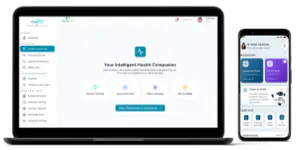
The math on capacity: patient does structured intake remotely before arriving. Doctor gets a clinician-ready summary, chief complaint, history, probable diagnosis with confidence scores, red flags, before the patient sits down. Intake time drops 50%+; consultation goes from 15–20 minutes to 4–5. Same clinician, same hours, roughly double the patients through the door. We also see 70% less time on discharge summaries and 40% fewer scheduling errors.
23 deployments, 2,170+ MAUs, 15% MoM growth. Built out of Dubai (DIFC), Winner of EurekaGCC, ET and DIFC Startup of the Month.
What I'd genuinely like this thread to argue about:
→ Where's the line? Intake and triage feel like safe ground for AI. Diagnosis feels like it isn't. But that line is moving fast — where do you think it should sit, and who decides?
→ For the clinicians here: would a structured AI summary before the patient walks in actually help you, or is it one more thing to verify?
→ For the builders: has anyone shipped federated learning in a regulated industry without it becoming an infrastructure tarpit? War stories welcome.
→ For everyone: what would it take for you to trust an AI with the first ten minutes of your own care?
I'll be in the comments all day. Come at me with the hard ones — especially the sceptical ones. 🙏

ChikitAI
Agentic AI for Healthcare Triage and Care Automation
Check it out on Product Hunt →
Replies
Be the first to reply
Have a question or a thought to share? Add a comment above to start the conversation.