I hope your sunday scaries aren't hitting too bad on this fine morning. In today's Roundup, we've got a fresh DeepSeek model, Microsoft flexing on everyone, some trending discussions, and of course, some of the most stand out products from this week. Let's go.

Sunday, Feb 23
Presented byCloudflare ClairicLeaderboard highlights


 14 •
 Productivity


FROM THE FRONTIER

DeepSeek just introduced Native Sparse Attention (NSA), a new way to make long-context AI models faster and cheaper. It reduces the compute needed for training and inference while keeping up with full-attention models in benchmarks. If it works as advertised, it could make large-scale AI more accessible without the usual hardware demands.
But the timing isn’t great. The U.S. government is already scrutinizing DeepSeek, with the National Security Council reviewing its risks and multiple states banning it from government devices. NASA and the Department of Defense have followed suit, and other countries—including Italy, Australia, and South Korea—are placing restrictions over privacy and security concerns.
WAIT, WHAT?
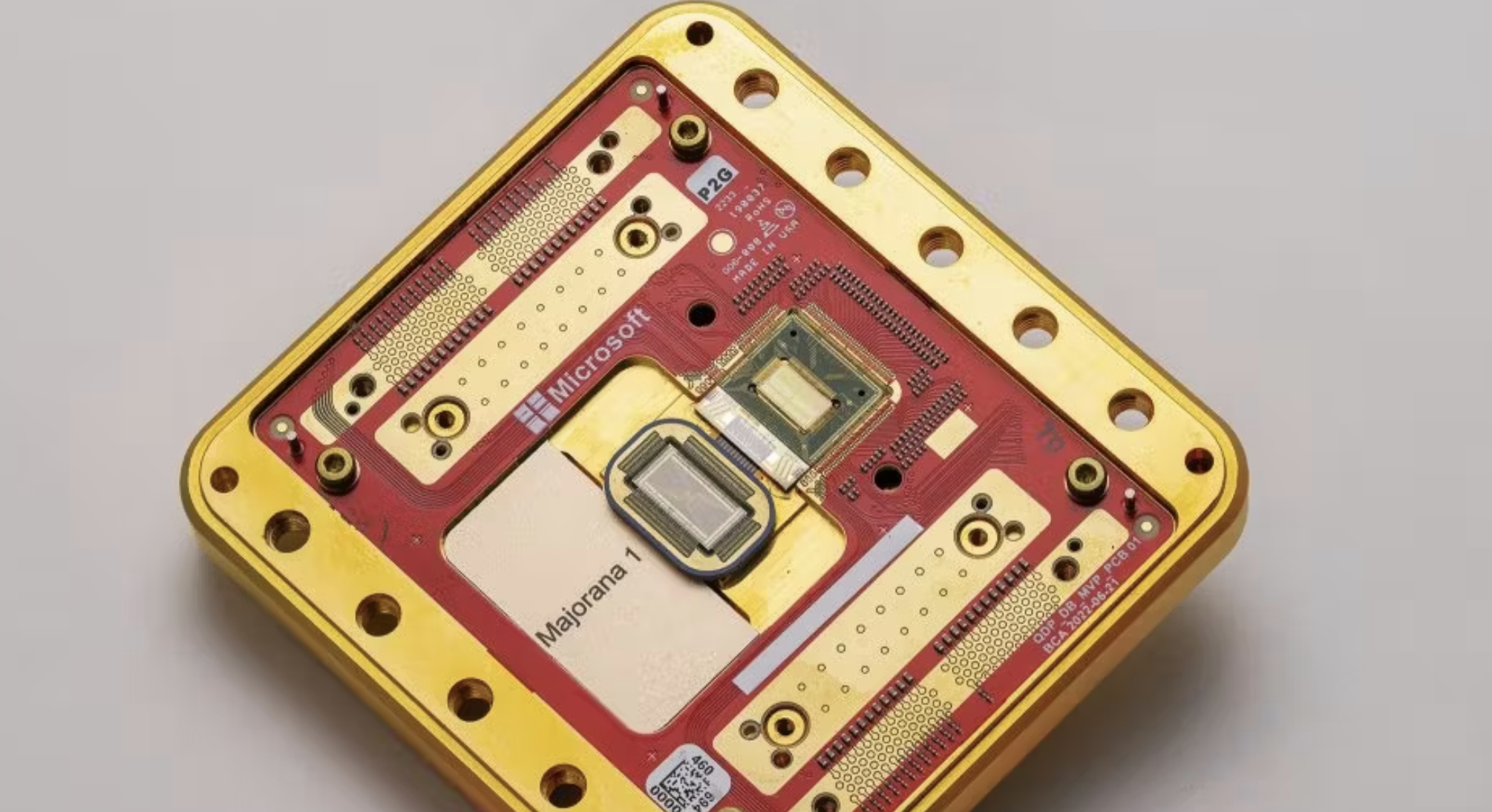
Microsoft just dropped what might be their wildest claim yet: they’ve invented a whole new state of matter. While Apple is busy shaving millimeters off the iPhone, Microsoft says they’ve built a quantum chip powered by “Majorana particles” (which, if real, would mean a massive leap in quantum computing). Their new Majorana 1 chip uses a topological core to create more stable qubits—essentially the key to making quantum computers practical instead of just expensive science projects.
The stakes? If this works, quantum computers could one day crack problems today’s supercomputers wouldn’t solve before the heat death of the universe. That includes AI breakthroughs, next-gen materials, and, probably, some wild cybersecurity implications. But here’s the catch: the physics world isn’t entirely convinced yet. Microsoft has been betting on Majorana particles for years, but proving their existence (and their usefulness) is still up for debate.
So, either we’re on the verge of a quantum revolution—or Microsoft just pulled the tech equivalent of claiming to have seen Bigfoot.