
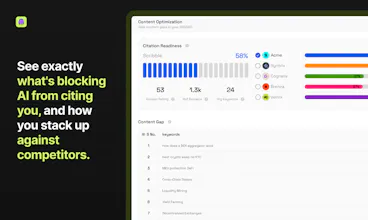
Your customers ask AI before they ask Google, and most brands have no idea whether they show up or lose to a competitor. Every other tool hands you a visibility score and stops there. Scribble does the whole loop: audit where you're invisible across every AI engine, create content that closes the gap, and amplify it through 50,000 creators who only get paid when AI cites them. A gap report won't win customers. Being the cited answer will.




Forum Threads


View all
Congrats on the launch team!
Curious, When AI engines start updating their citation logic (which they do constantly), how quickly does Scribble's visibility tracking pick that up and adjust the content strategy?
@abod_rehman Thanks Abdul!
AI answers need fresh content. Every head of product at the labs companies keep saying that good authentic content is all we need to worry about. I guess the problem starts to become real when we try and optimize too much and that's the sort of stuff that gets weeded out during algo updates. As long as the creator posts are authentic, it will be cited. (so far)
Congratulations on the launch :) I really like the focus on AI visibility, it's something I've been thinking about a lot lately. I'd love to understand whether this could be a fit for a brand like mine, which sits in a fairly different space from the projects I've seen you work with. I'm curious how the creator content usually comes across: does it read as genuine, first-hand experience?
@alieksia If you could explain a bit more about your brand, we'd love to see how we can support you in your venture. :)
Our bounties are opt-in, creators pick products they'll actually try. The economics push everyone toward writing what they actually experienced, and the engines have their own filter, honestly, content that doesn't read as genuine doesn't survive.
Congrats on the launch. Instantly showing visibility insight is a nice touch. I wonder how you quickly find out the highest-intent queries? This sounds quite challenging to cover all kinds of brands in a wide range of verticals / markets.
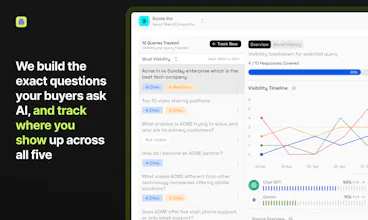
@chenlh Thanks! Here's how it works: when someone enters their domain, we crawl the site and build out ICPs (audience segments, problems they have, how they'd talk about them) straight from the site content - no manual setup. From those ICPs, we generate the actual search queries a real prospect in that segment would type, phrased the way people actually search rather than how a marketer would describe the product.
That's what makes it vertical-agnostic; no manual query banks per industry, it's all derived from the site itself. Tradeoff is it's only as good as what's on the site though.
Congrats on the launch. The distribution angle is what makes this interesting to me: most GEO tools stop at reporting visibility, but the hard part is creating credible source material that AI systems actually trust. How do you think about quality control across creator posts so the push for citations does not turn into thin content, especially when a brand is trying to close a lot of query gaps at once?
@wesc Thanks! The base layer is the same as always: engines recycle sources constantly, thin content falls out on refresh, and creators only get paid when a piece holds as a source three times in a week. But your scale point is the real, it's not a one-time effort. This is ongoing work, certain queries get focused each month, just like SEO, honestly. So there's never pressure to flood 50 gaps with content at once; the model itself spreads the work over months, which is exactly what keeps quality up.
That payout and holding-source mechanism is a useful guardrail. The monthly pacing point also makes sense because it turns GEO into an editorial operating rhythm instead of a content flood. Appreciate the detail.
Curious how the creator amplification side actually works in practice. Do the 50,000 creators pick topics themselves or do you assign briefs, and is there any way to see which AI engines ended up citing the content they publish?
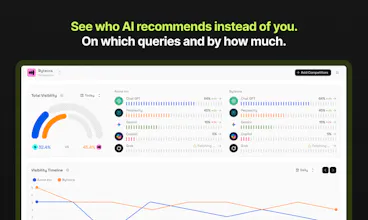
@sadkakcakohl2k Both, kind of! We build briefs from the queries a brand is losing, and creators opt into the bounties they want, so it's brief-driven but self-selected. And yes, that's the fun part: the dashboard shows exactly which engine cited which piece, per query. One creator post getting picked up by Copilot, Gemini and Perplexity at once is a real thing we've watched happen 😄
the query-and-log-citations approach is the missing piece in this space, most tools still proxy through SEO metrics like you said elsewhere in the thread. question the answers above didn't cover - what happens when two of your customers are competing for the same query? does Scribble end up running bounties against itself, or do you screen for that before taking a client on
@galdayan Love how you're thinking about this.
We want to be an open platform and simply a facilitator between cited creators and brands. Competing brands advertise on instagram or any ad platform and it won't be any different here. But you do bring up a good point on being able to prove to competing brands that data and intelligence from each campaign is private and not even visible to us - will work on this.
How does Scribble measure whether its content and creator network actually improve a brand's visibility and citations across different AI assistants, given that their ranking and citation methods vary?
@satyam_raina1 We don't infer, we observe. Every query gets fetched every 24 hours across all five engines, and we log which sources each model actually cites. Content goes live; you watch if it appears and holds. The engines varying is exactly why we track them separately.