
Polygraph
Let AI agents see cross repo and maintain session memory.
5.0•10 reviews•345 followers
Let AI agents see cross repo and maintain session memory.
5.0•10 reviews•345 followers
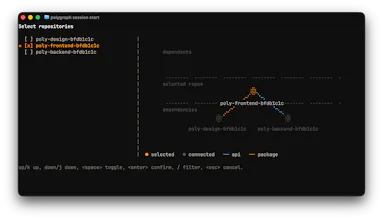
AI coding agents are limited to how autonomously they can work because they have no model of the codebase as a whole. Polygraph is a meta-harness that gives agents what they're missing: Visibility across every repo boundary and memory that survives the session. Connect all your repos, private and public, into a unified dependency graph without moving any code. Resume, reference or build on any session created by any developer, on another machine, even on different agents.






Strong launch. The part I’d pressure-test is the handoff receipt after a session gets resumed: repos touched, CI state, what changed since the pause, and what the next agent or developer is allowed to do.
That’s the difference between “we preserved context” and “this is safe to continue.”
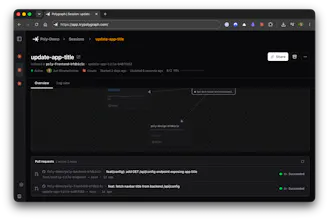
@blah_mad when you create PRs with Polygraph, they are linked to that session, including CI statuses that come with them. Then when the initial agent created the PRs, it will update the overall description of the session. This description will include different sections; Goal, Current progress, What worked/What didnt, and Next Steps.
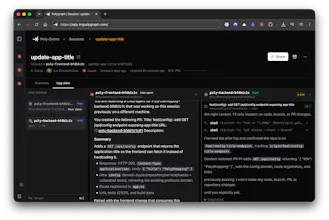
All this information, PRs and their status, overall description, and session logs will be used to create the session when resuming.
So if you want specific instructions for the next person, you can just tell the initial agent and it will be including in that overall description.
I've been using Polygraph daily for the last few months, can genuinely say it's been a big upgrade from my old way of working. It's so easy to start working on a change and get everything I need set up immediately, so I can start working on the actual problem right away. Especially when I need context from a coworker's session or need to make a PR to another repo for some config related to a change I'm making, Polygraph makes it so easy I don't need to think about it. Amazing work team 🤩
If sessions can be resumed by a different developer on a different machine using a different agent, what's actually being preserved, is it raw conversation history, a structured summary, decisions/rationale, or something closer to a full state snapshot? That distinction matters a lot for whether "resuming" actually picks up where the original left off or just gives vague context.
@ansari_adin it's a full state snapshot including all prompts and responses, sub-agent work, state of the repository(s) but also references to other sessions and their states (like building a hive mind). You can resume the work as if you were running it from the start.
Session memory is awesome, especially if it can be configured to be used in a safe manner for OSS maintainers as it will make reproductions a little easier.
Curious if access control has been considered for large enterprise organisations where contributors to some repos may not have access to other repos that are downstream of changes they want to make.
It currently feels like it’ll work wonders for contributors and orgs that allow access to all repos, but there seems to be unknowns right now around how this would work for orgs with stricter access policies.
@coly010 Hey Colum!
Max touched on this a little bit in another thread. Right now you can only have access to sessions where you already have permission to access those repos attached to it. You can generate shared linked for external people if all the repos are public for bug repro sharing with maintainers, so maintainers can quickly check the session as well and not blindly re-use the session.
Providing context from a repo without having access to the repo is quite an interesting thought though!
@coly010 @caleb_ukle yeah we were tossing an idea around where you could share access to a repo via delegation remotely without actually giving access to the source. That way you could share debugging capabilities with your customers for example and any interaction with the repo would happen through an agent and then another sentinel agent watches the communication and makes sure nothing is leaked.
The security model is tough to figure out though so so far it's just an idea...
cross repo memory is the missing peice. nice 👏 solo devs or teams using it more?
@petrkovacik
Thank you!
Much bigger impact for teams but also useful for solo devs.