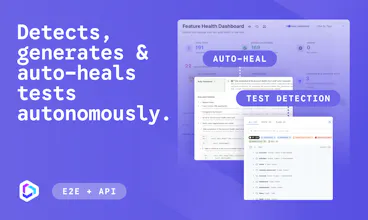
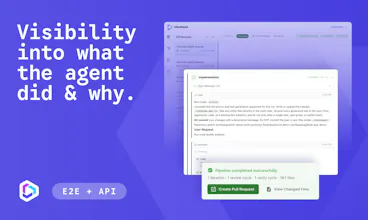
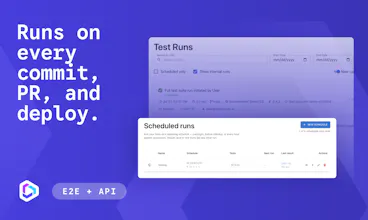
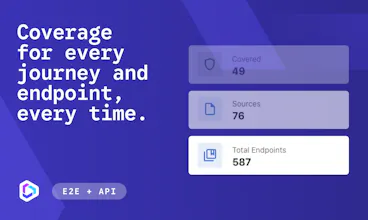
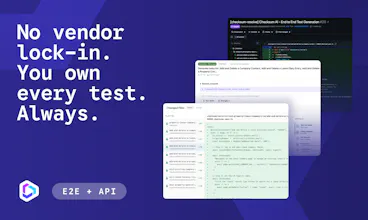
Checksum is an AI-native continuous testing platform for engineering teams shipping faster than manual QA can keep up. It generates, runs, and auto-heals end-to-end and API tests on every pull request, all as standard Playwright code in your own repo. When a test fails, Checksum tells you whether it found a real bug or a stale test, then fixes the false failures so your suite keeps pace with your coding agents.
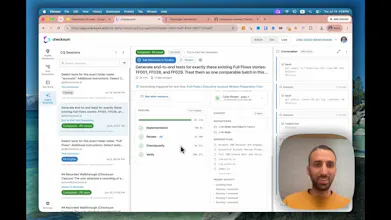
What surprised me: I came in assuming the hard problem was generating tests. It isn't — models will write plausible-looking tests all day. The hard problem is that "plausible" and "green" are both terrible proxies for "actually proves the feature works." A big part of my job turned out to be making the system distrust its own passing tests.
The moment that sold me: a test broke after a routine frontend change, and the obvious move — the one every human on every team makes ten times a week — was to update the assertion to match the new behavior and get back to green. The agent refused. It walked the diff, decided the new behavior wasn't an intentional change but a regression, and filed it as a product bug instead of "fixing" the test. It was right. A human reviewer would have rubber-stamped the assertion update, the suite would have gone green, and the bug would have shipped with a passing test standing guard over it.
Why verification is the unglamorous problem: when it works, nothing visible happens. There's no demo moment for "this green check is real." So everyone builds the flashy generation demo and quietly ships suites that decay into checkmarks nobody trusts. But an untrusted suite is worse than no suite — you keep paying the maintenance cost and get none of the confidence. Solving that is the actual product, and it's the part nobody wants to put on stage.
Shipping the generated tests as standard Playwright in the team’s own repo is a really strong call. Makes it feel like part of the engineering workflow, not some vendor-owned test layer. Also love the real bug vs stale test distinction, that’s exactly where a lot of CI pain comes from. Congrats on the launch!
@rnagulapalle Thank you! You picked out two of the things we care most about. Keeping it in your repo means it lives in the engineering workflow instead of sitting beside it as a separate system someone has to trust or manage on faith. And the real-bug-vs-stale-test distinction is exactly where most of the CI pain exists, most tools stop at "test failed" and leave you to figure out why. Appreciate you being here for launch day!
Checksum AI
I work at checksum so grain of salt, but my take:
What surprised me: I came in assuming the hard problem was generating tests. It isn't — models will write plausible-looking tests all day. The hard problem is that "plausible" and "green" are both terrible proxies for "actually proves the feature works." A big part of my job turned out to be making the system distrust its own passing tests.
The moment that sold me: a test broke after a routine frontend change, and the obvious move — the one every human on every team makes ten times a week — was to update the assertion to match the new behavior and get back to green. The agent refused. It walked the diff, decided the new behavior wasn't an intentional change but a regression, and filed it as a product bug instead of "fixing" the test. It was right. A human reviewer would have rubber-stamped the assertion update, the suite would have gone green, and the bug would have shipped with a passing test standing guard over it.
Why verification is the unglamorous problem: when it works, nothing visible happens. There's no demo moment for "this green check is real." So everyone builds the flashy generation demo and quietly ships suites that decay into checkmarks nobody trusts. But an untrusted suite is worse than no suite — you keep paying the maintenance cost and get none of the confidence. Solving that is the actual product, and it's the part nobody wants to put on stage.
Checksum AI
@daniel_harkin Thanks for sharing!
FetchSandbox
Shipping the generated tests as standard Playwright in the team’s own repo is a really strong call. Makes it feel like part of the engineering workflow, not some vendor-owned test layer. Also love the real bug vs stale test distinction, that’s exactly where a lot of CI pain comes from. Congrats on the launch!
Checksum AI
@rnagulapalle Thank you! You picked out two of the things we care most about. Keeping it in your repo means it lives in the engineering workflow instead of sitting beside it as a separate system someone has to trust or manage on faith. And the real-bug-vs-stale-test distinction is exactly where most of the CI pain exists, most tools stop at "test failed" and leave you to figure out why. Appreciate you being here for launch day!
Netlify
Auto-healing Playwright tests for coding agents is a brilliant fix for test suite maintenance. Huge congrats on the launch!
Watch Something
@thisiskp_ Thanks!