
AgentOS
Manage AI agents, tasks, workspaces from one control layer
166 followers
Manage AI agents, tasks, workspaces from one control layer
166 followers
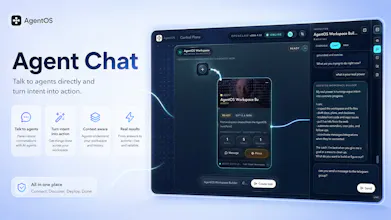
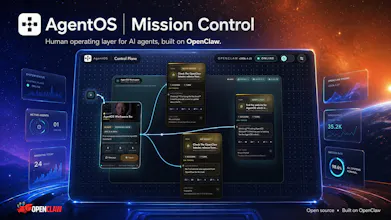
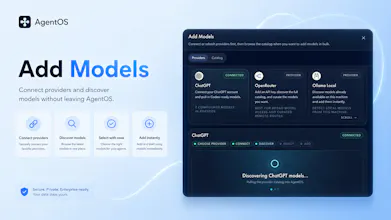
Run AI agents like a company. AgentOS helps you coordinate workspaces, agents, tasks, jobs, approvals, and runtime visibility from one local-first control surface built on OpenClaw.







@AgentOS running agents like a company paradigm completely shifts the narrative from individual capability to true operational coordination. Since multiple OpenClaw-backed agents in a workspace can share global policies while running independent tasks, how does AgentOS handle state consistency if two agents attempt to mutate or write to the exact same directory or dependency path concurrently? Is there a localized file-locking or state-synchronization layer to prevent race conditions during execution?
@puneeth_b1 Great question. This is exactly the kind of execution-safety problem we think multi-agent systems need to handle carefully.
We don’t want AgentOS to encourage blind concurrent writes into the same project root or dependency path. The intended direction is to treat shared filesystem/dependency mutations as controlled resources: clear task ownership, observable diffs, policy checks, and eventually explicit locking / conflict-resolution around high-risk paths.
So the honest answer is: we are intentionally conservative here. AgentOS is designed around coordination and visibility first, and stronger file-locking / state-synchronization primitives are part of the execution-safety layer we want to harden as multi-agent workflows become more autonomous.
the "run agents like a company" framing makes sense because that's where things are heading. one agent is easy, five agents doing different things across different workflows gets chaotic fast. curious how you handle cost visibility though... like if one agent starts looping and burning through tokens, is there a way to set per-agent spending limits or kill switches before the bill surprises you
@tina_chhabra Exactly — this is one of the core problems we’re trying to solve with AgentOS.
OpenClaw is powerful, and our goal is to make it more manageable, transparent, and accountable for real operations.
Today, every agent already has visibility around which model it uses, task/session activity, token usage, and task-level execution details. From there, the natural next layer is operator controls: per-agent budgets, task-level cost tracking, spend alerts, loop detection, and kill switches before anything gets out of hand.
So yes — the goal is not just “run more agents.”
It’s to make agent work visible, measurable, and controllable.
Once multiple agents share a workspace, coordination seems to become more important than raw model capability.
Are users spending more effort defining agent roles, or managing the shared context between them?
@akgulkazim That's exactly where our thinking has been heading as well. Once multiple agents are involved, the challenge feels less like capability and more like keeping everyone aligned on the same state and objectives.
We're building something in the AI workflow space and have found that reducing coordination overhead often creates bigger gains than improving the individual agents themselves. Looking forward to seeing how AgentOS evolves this.