
Openbase
Manage your team of AI agents by voice, from anywhere
340 followers
Manage your team of AI agents by voice, from anywhere
340 followers
Openbase lets you manage a team of AI coding agents by voice, from anywhere; no screen, no desk. AI agents can work async, but supervising them still pulls you back to a laptop. OpenBase fixes that. Dispatch tasks, steer agents mid-work, and approve changes just by talking. The agents write code, control your computer, open PRs, commit and push; you stay in control from your phone. Works across providers and syncs to your machine, so you pick up at your desk right where you left off.



Hey Product Hunt 👋 I'm Lucas, co-founder of OpenBase.
We built this because we live in Claude Code and Codex all day, and kept hitting the same wall: the agents could keep working while we were away, but supervising them meant going back to a laptop. Every time. So we built the thing we wanted; a way to run our agents by voice, from anywhere.
You talk, the agents build, you approve the important calls out loud. Kick off a feature from a walk, steer it, approve the PR, all without a screen. It works across providers and syncs back to your machine so nothing's lost when you sit down.
It's open source (AGPL-3.0) and in private beta/waitlist today.
Try it out here: https://openbase.cloud
@lucaszhao Congrats looks awesome , i'll check
@lucaszhao Quick question: since you’re enabling voice-driven approvals and remote steering of agents, how do you handle auditability, security, and accidental voice commands? Specifically, what safeguards do you recommend or have built in to prevent unintended actions and make approvals legally and operationally traceable?
@lucaszhao @swati_paliwal Sensitive actions require explicit approval, and each approval is logged in the thread with the action and outcome for traceability. You can also set a private safety word to reduce accidental voice triggers, while we continue strengthening speaker verification and replay protection.
@lucaszhao The phone approval flow is the part I would want to stress-test. If an agent is about to commit, push, or open a PR from a voice command, do you keep an audit trail of the exact instruction plus diff summary before approval? That would make this a lot easier to trust outside toy repos.
Love the idea! I even hoped for something quite similar about a week and a half ago while at work. The 'no screen, no desk' part hit me harder than you probably intended, because I'm not a developer.
I work in a bakery. Factory rules mean my phone stays in the locker room, and my hands are busy for the whole shift. In the week before I launched my own app, some of my best thinking happened while I was working, ideas, prompts, things I wanted to try, all of it fully formed in my head and completely stranded until I clocked out or took a break. I kept thinking how good it would be to just talk it into a headset and have the work already moving by the time I got home.
The honest reason I haven't tried agents yet is different from the reason you're solving for. It isn't that supervising pulls me back to a laptop. It's that I don't understand them well enough to trust one unsupervised, and I'm afraid of something getting deleted or overwritten without me noticing until much later.
So my question is about the approval layer. When an agent is working and I'm not looking at a screen, what actually stops a destructive change from going through, and how much does it explain out loud before it commits? For someone like me, that answer matters more than the speed.
@satchmo_saunders Yeah of course! So anytime there is a potentially dangerous change the agent (or super agent) is trying to make, it will pause its work and explain to you what it is trying to do. It will tell you "if you'd like to continue, say 'yes proceed'".
If the agent's explanation is not clear enough, you can continue probing and asking it questions about the change until you fully understand, then say "yes proceed". Of course, it will not perform the change without those words, so you don't have to worry about the agent making highly destructive changes without your knowledge.
@lucaszhao That's exactly the guarantee I was missing, thank you. The fact that it stops and waits for specific words, rather than a generic confirmation makes a real difference, and being able to keep probing until I actually understand the change is the part that would make me trust it.
One thing I'm curious about from a noisy environment: how sensitive is it to mishearing? My workplace has machinery running constantly, and I'd want to know that 'yes proceed' can't be triggered by background noise or a half-similar phrase in a conversation happening next to me. Is there anything guarding against a false positive on the approval?
@satchmo_saunders For the most part, it's pretty difficult for background noise to mimic the words "yes, proceed" exactly enough for the AI to pick it up, and also similar phrases in conversations will most likely be too far away for your headset mic to register as well.
@lucaszhao That makes sense, and good to know the mic proximity does most of the filtering.
One thing that might be worth testing though: my workplace isn't English speaking. Everyone around me speaks Finnish, and the Finnish word for excuse me is 'anteeksi,' which comes out close enough to 'yes please' that I noticed it myself. It's also a word people say constantly on a factory floor, every time someone squeezes past someone else.
Not saying it would trip your exact phrase, but it made me wonder how the approval word holds up in a room where the background language isn't the one it's listening for. Might be worth throwing a few non-English work environments at it before someone finds out the fun way :D
@satchmo_saunders This is such a thoughtful use case, and you’re right: trust matters more than speed here.
Today, Openbase does NOT let the agent silently approve its own sensitive actions. When it reaches something like a shell command, file change, commit, or push that requires permission, it pauses and asks you before continuing. It tells you what action it wants to take and why, and you can approve verbally with a "safety word" or reject it by voice.
The part we’re still improving is how much context can be safely summarized without a screen, especially for larger changes. We want the spoken approval to be specific enough that you know what may be changed, not just “approve this command.” For someone like you working with your phone in a locker, we may also need a stricter mode that queues risky actions until you can review them later.
If that queue mode existed, what would you want waiting for you after your shift? A quick spoken recap of everything the agent accomplished, or a written list of anything still waiting on your approval?
@zoky_zhou Written list, without hesitation.
When I get to my phone I have about five minutes. Text lets me scan the whole thing in seconds, stop on the one item that worries me, and read it twice if the wording is ambiguous. A spoken recap makes me sit through everything in order at its own pace, and if I miss a detail I have to hunt back through audio to find it. My break room is also loud enough that listening to anything is a small ordeal.
One request if you build that queue: sort the risky items to the top, separate from what the agent already finished on its own. What I need to know first is what is waiting on me and whether it could break something, not a chronological account of the shift. The accomplishments summary is nice, but I'd read it second.
If that mode existed I'd genuinely try it. Pause and explain, plus a review queue, is the first version of this I could imagine trusting :)
@satchmo_saunders This is incredibly helpful. Thank you, we'll definitely keep this in mind as we build the review queue!
@zoky_zhou Happy to help. If you do build the queue mode and want someone to test it in a genuinely hostile environment, factory noise, five minute breaks, no screen for hours, I'm your guy. Good luck with the rest of launch day
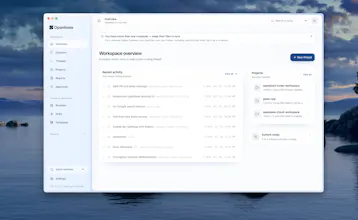
@thys_beesman Yeah good question! So we have a view called "Threads" and there you can see the agent's transcript and code diffs across multiple files.
Currently with our hosted version, it's a free trial then $20/month for the voice/TTS models, but we also offer a dev pathway where you can clone our git repo and run a script, which will automatically configure to free local models such as Kokoro.
@thys_beesman the instructions on how to setup the developer pathway is in our Github repo readme.md
this solves a real problem, I live in Claude Code all day too and the "still tied to a laptop to babysit it" gap is exactly right. question that's more about reliability than the approval-safety angle everyone's asking about: what happens if you lose connectivity mid-flow, say you're walking and your phone drops signal right as an agent is waiting on a voice approval. does it just pause and wait indefinitely for you to reconnect, timeout and roll back the pending action, or keep going with whatever the last confirmed state was?
@galdayan If your phone drops right as an agent is waiting on approval, the agent stays blocked at that approval checkpoint. The pending request is stored in the local approval queue on your Mac, and when the phone reconnects it shows back up in the Approvals tab.
Already completed work isn’t rolled back, but the gated action also does not run unless an approval actually made it through. If the approval was recorded before the signal dropped, the agent continues from that confirmed state. If not, it waits.
@ridhwikvinod Oh yeah I do the same haha. In general, Openbase doesn't give an interpretation by default; it's pretty good at following along despite corrections or half sentences. But you can always ask at the end of your prompt for Openbase to confirm what it understood from your prompt, and we're also adding a system instructions setting as well so that can be something you can put in there.
@ridhwikvinod @lucaszhao Exactly. And once you save that instruction as a Skill, the confirmation can become part of the workflow instead of something you add to every prompt. For example: “Always summarize the task back to me before starting any long-running work.”
the safety word answer above covers accidental triggers, but what about a garbled connection mid-approval, like walking through a spot with bad signal while saying yes to a PR merge? if the transcription comes back partial or mangled, does it fail closed and ask you to repeat, or is there any path where a mis-heard word could get treated as an approval for something you didn't actually confirm
@omri_ben_shoham1 It fails closed. A partial or garbled transcription is not treated as approval, so the action stays paused and Openbase asks you to repeat. We’d rather re-ask than guess on something like a PR merge.
How you handle approvals for changes that could affect multiple files. Is there a way to quickly review the important parts before saying yes? I'd also love to see short voice summaries of what each agent finished since the last check-in.
@freya_jensen_d Both of these are central to how we’re thinking about approvals.
For multi-file changes, you don’t have to approve blind. The related diffs are grouped together in the Thread, so you can review the affected files and jump into the parts that matter before approving. Sensitive actions like writes, commits, and pushes can still require their own approval rather than being covered by one blanket yes.
And yes, short voice recaps of what each agent finished since your last check-in are exactly where we’re headed. The goal is to let you catch up hands-free, then ask for more detail (i.e. a step-by-step summary of everything it did) only where you need it.